
Sequoia National Park in Winter: What’s Open & Worth It
I was ridiculously excited to visit Sequoia National Park in winter. Like, checking the forecast constantly, hoping for fresh snow, please-let-the-trees-look-like-a-snow-globe excited.
And somehow, the weather actually delivered.
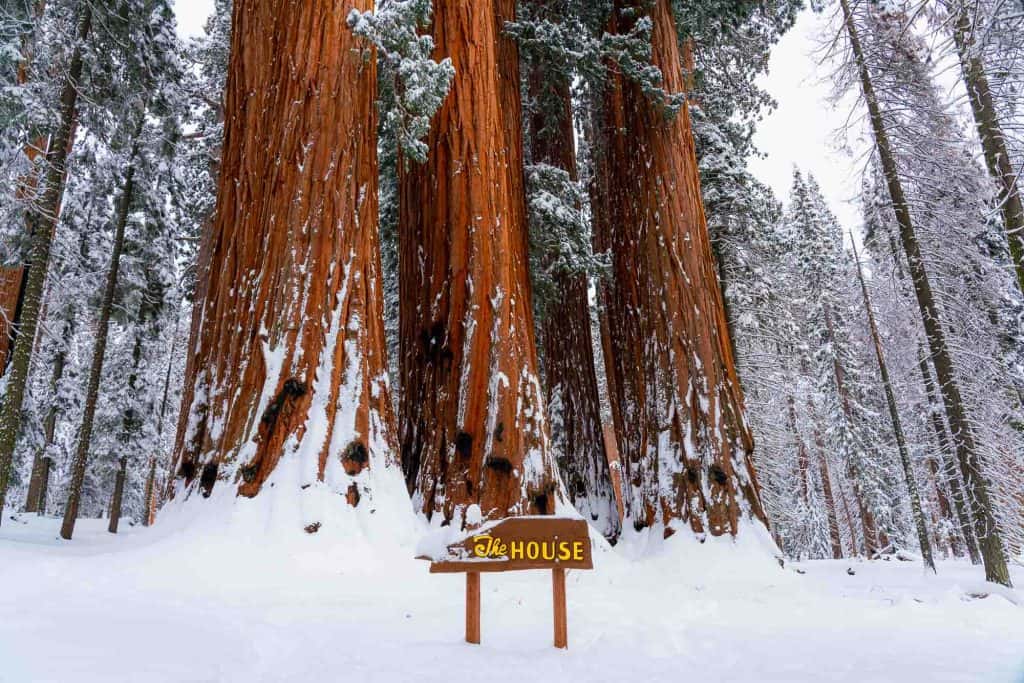
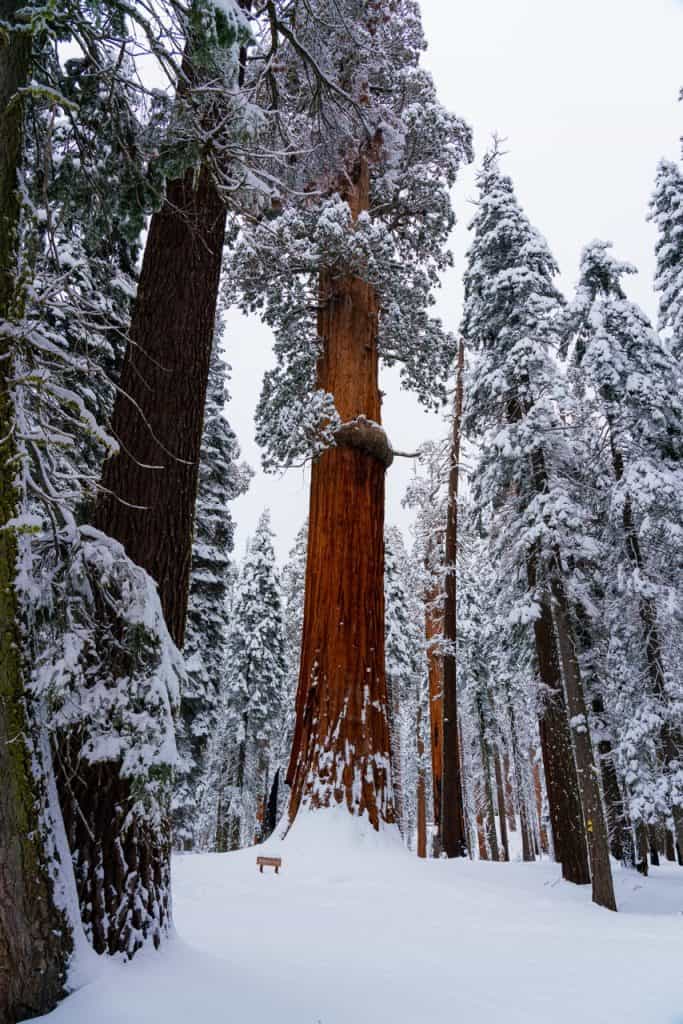
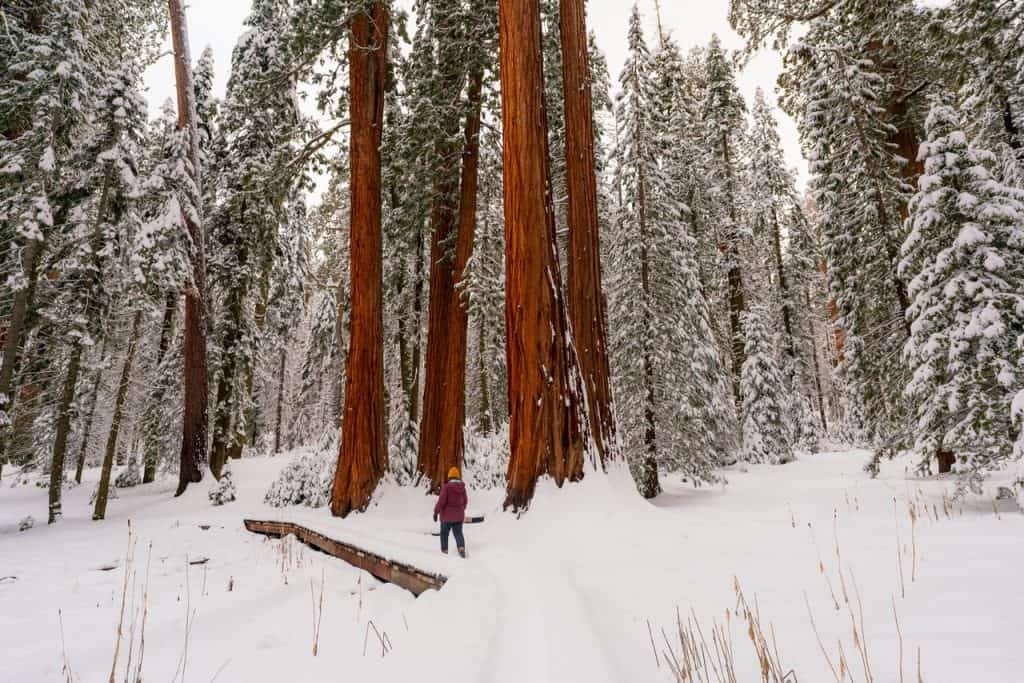
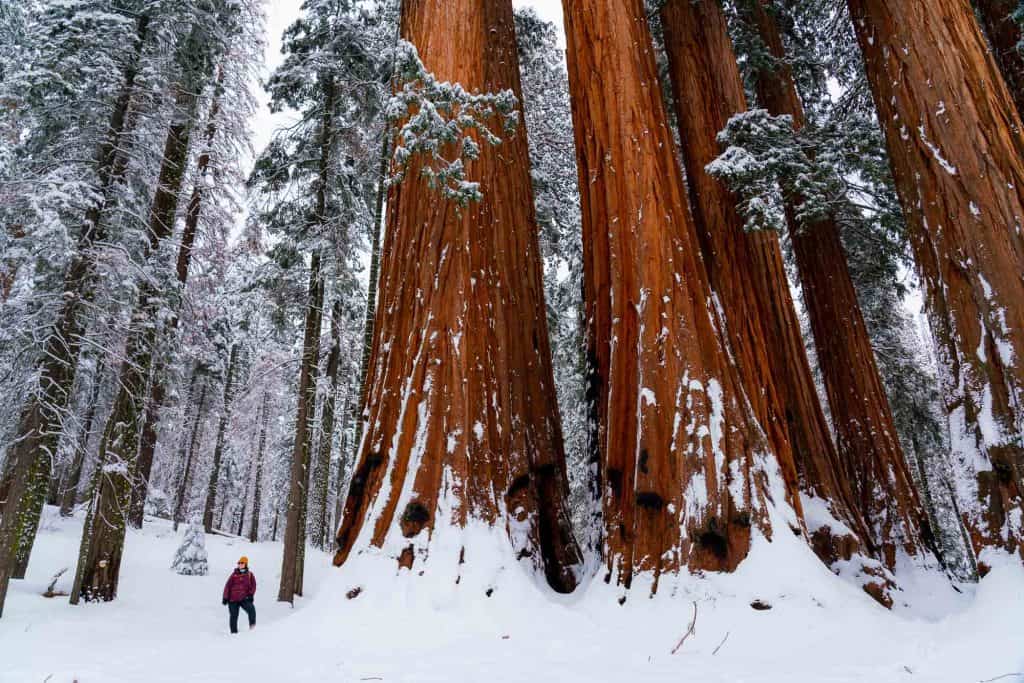
When I visited in early March, there was fresh snow on the ground, snow actively falling in the Giant Forest, and those massive reddish-orange sequoia trunks looked even more dramatic against all the white.
It was magical. But winter Sequoia is not a show-up-and-wing-it kind of trip.
Roads can close, tire chains may be required, services are sparse, and the higher elevations can still feel like full winter even when the rest of California is acting like spring has arrived.
I still think Sequoia National Park is absolutely worth visiting in winter — especially if you want to see the General Sherman Tree in the snow, snowshoe through the Giant Forest, hike quiet winter roads to Tunnel Log and Moro Rock, and experience the park with fewer crowds.
In this guide, I’ll walk you through what Sequoia is really like in winter, what’s open and closed, how winter driving works, the best things to do, where to stay, what to pack, and exactly how my early March itinerary played out so you can plan a winter trip that feels magical instead of stressful.
Backcountry Emily contains affiliate links and I may receive compensation - at no extra cost to you! As an Amazon Associate I earn from qualifying purchases. See my Privacy Policy for more information.
My Honest Take: Is Sequoia Worth Visiting in Winter?
Yes, I do think Sequoia National Park is worth visiting in winter.
Honestly, this might be a hot take, but I’ve visited Yosemite multiple times in winter, and I think I might have loved winter in Sequoia even more.
There is something so amazing about seeing those massive sequoia trunks surrounded by fresh white snow – it doesn’t matter if it’s sunny or gloomy – it’s still magical.
When I visited in early March, there was snow on the ground and snow actively falling in the Giant Forest, and it felt like walking through some kind of fairy tale forest.
But I don’t want to oversell it.
California winters are not predictable enough for me to promise you a perfect snow globe experience. You might get fresh snow covering the trees, or you might get old, icy, dirty snow on the ground covered in pine needles.
So yes, Sequoia is absolutely worth visiting in winter if you’re flexible, prepared for snow, and comfortable with winter mountain driving.
But would I fly across the country only for winter Sequoia and expect perfect conditions? Probably not.
What Winter Weather in Sequoia Is Actually Like
Winter in Sequoia is a complete mixed bag. That’s probably the most important thing to understand before planning a trip.
California winters are not consistent. Some years, the mountains get an early snowstorm in November and it feels like full winter by Thanksgiving. Other years, snow doesn’t really start sticking around until December.
And spring? Could be anything.
During my early March visit, Sequoia felt like a totally different park from one day to the next.
The first day, we were snowshoeing through fresh snow in the Giant Forest.
Then less than 24 hours later, the sun came out, the snow started melting, and we were hiking in microspikes instead of snowshoes because there wasn’t enough deep snow anymore.
It can be a snow globe. It can be icy and patchy. It can be sunny but still freezing. So, I hate to say it, but it really depends.
Best Months to Visit Sequoia in Winter
- November: shoulder season, maybe snow, maybe not, highway to Kings Canyon could still be open
- December: festive, snowy, holiday crowds possible, Wuksachi Lodge could still be open
- January–March: most wintery, best snow odds, most logistics, most road closures
- April: transition month, still snowy in higher elevations, snow storms are still possible
If you want the best chance to see sequoia trees covered in snow, I’d plan for a visit between January and early April.

What’s Open and Closed in Sequoia in Winter
Winter Sequoia is a very DIY-style trip. Services are limited, some roads close seasonally, and you’ll want to bring everything you need for the day into the park with you.
That said, the main winter experience — seeing the Giant Forest in the snow — is still very doable on most trips!
Roads
Every winter, the road between Kings Canyon and Sequoia closes, so the easiest way to get to the Giant Forest is via Visalia and the Foothills.
The Generals Highway between the Foothills and the Giant Forest is usually open, but it can close during storms for safety. This road is steep, winding, and gains a lot of elevation fast, so winter conditions are a real thing here.
During my early March trip, the road closed at Hospital Rock, one of the last major stops in the Foothills area before the climb up to the Giant Forest.
Another major winter closure is Crescent Meadow Road, which connects the Giant Forest Museum area to popular stops like Tunnel Log, Moro Rock, and Crescent Meadow.
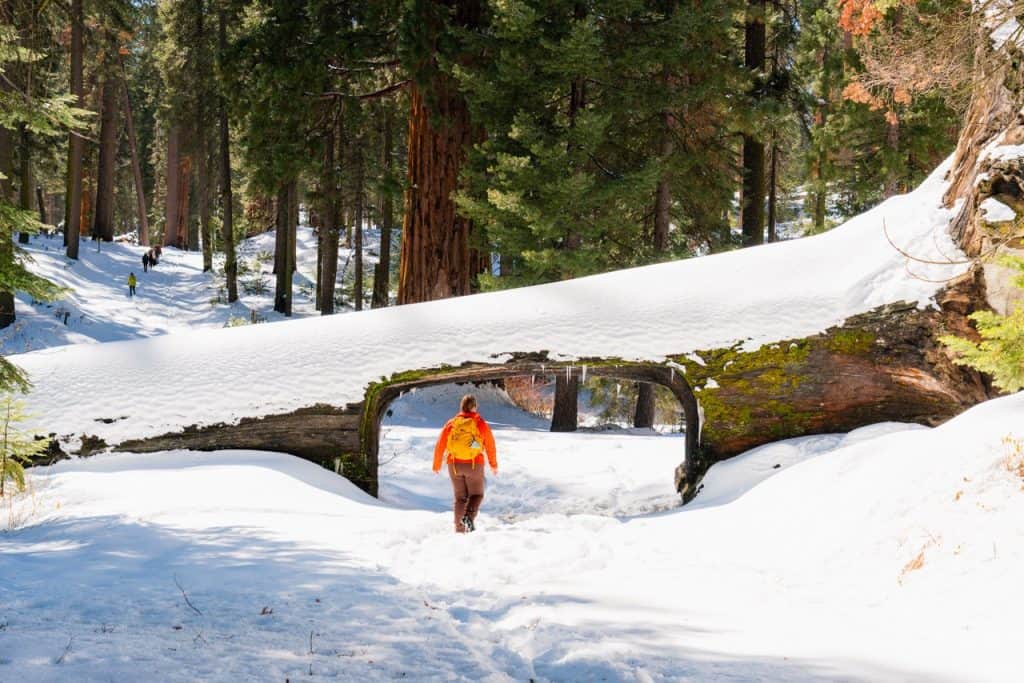
In winter, this road closes to cars and becomes a hiking, snowshoeing, and cross-country skiing route.
And honestly, walking Crescent Meadow Road without cars was one of the coolest parts of the trip, so this closure is pretty awesome and lets you take in more views that you’d otherwise drive right past.
Parking Lots
There are 2 main parking lots open in winter: Giant Forest Museum and Wolverton.
The handicap-only summer parking for the General Sherman Tree and the Big Trees Trail allow all cars to park there in the winter, but it’s still very limited parking in these areas.
The main General Sherman summer parking lot does close in winter.
While parking is much more limited, there’s also way less people visiting in the winter, and we didn’t have issues finding parking during our visit.
Food and Lodging
Food and lodging are much more limited in winter. Wuksachi Lodge closes for part of the season, and you should not assume there will be food or full services available inside the park.
For most winter visitors, I’d plan to bring food into the park and stay in Three Rivers or Visalia unless you specifically want to camp at Potwisha.
Park Shuttles
The shuttles still run in winter, but unfortunately only on holiday weekends. Be sure to check the park’s website for the official running dates, but plan to do all the driving yourself.
Winter Driving in Sequoia: What to Know Before You Go
The winter access road is the Generals Highway between the Ash Mountain Entrance and the Giant Forest. It’s steep, winding, and full of hairpin turns.
During my early March trip, the road to the Giant Forest had been closed in the morning. We drove up in the late afternoon shortly after it reopened, and while it wasn’t awful, it was definitely a little nerve-wracking. Some shaded sections were slick and icy, and the narrow curves felt much more serious in winter than they would on a dry summer day.
That said, I don’t want to make this sound more terrifying than it is. If you’re comfortable driving winding mountain roads, have the right traction gear, drive slowly, and pay attention to conditions, you’ll probably be fine.
If winter mountain driving makes you nervous, I’d either wait for a clear-weather window or consider visiting in a different season.
Whatever you do, make sure you adhere to the tire chain restrictions and always carry chains/cables:
- R1: Traction devices must be installed unless your vehicle has at least two snow-tread tires on the drive wheels.
- R2: Traction devices must be installed on your vehicle unless your vehicle is all-wheel drive or four-wheel drive with snow-tread tires (M+S) on all four wheels.
- R3: Traction devices must be installed on all vehicles. No exceptions.
Best Things to Do in Sequoia National Park in Winter
Winter is one of the most special ways to experience Sequoia because you’re not just checking off viewpoints – you’re seeing the Giant Forest in a completely different mood.
It’s an excellent time to enjoy a slower trip: notice the light, breathe in the fresh air, and be in awe of this place.
But, there’s still plenty of adventure to be had too, if you’re up for it!

See the General Sherman Tree in the Snow
If you only do one thing in Sequoia in winter, go see the General Sherman Tree.
The walk to the tree is one of the most popular areas in the park, so the snowy path is usually pretty packed down compared to less-traveled trails. With winter boots and traction, most people should be able to do this short walk safely.
And honestly, seeing the largest tree in the world surrounded by snow is just magical.
You also get to walk through the small loop around the fenced area, see fallen sequoia roots, and take in the scale of the Giant Forest without committing to a bigger winter hike.

Snowshoe in the Giant Forest
If there’s enough snow, snowshoeing through the Giant Forest is one of the best winter experiences in Sequoia.
The Congress Trail is especially beautiful because you can snowshoe past the President Tree, McKinley Tree, and the House and Senate groups. In summer, this is already one of my favorite sequoia hikes. In winter, it feels even more special.
Just make sure you have offline maps downloaded and know where you’re going. Trails can be much harder to follow when everything is covered in snow.
There are also occasional ranger-led snowshoe walks in winter, which would be an amazing option if they’re running during your visit. We weren’t able to do one during our trip, so we explored on our own, but I’d definitely check the park calendar before you go.

Hike the Big Trees Trail
The Big Trees Trail is one of the easier winter options in the Giant Forest.
It’s a short loop on a raised boardwalk, and when we visited, there was enough snow to cover the boardwalk but not enough that we needed snowshoes. We just wore winter hiking boots and did totally fine.
This is a great option if you don’t want to rent snowshoes or want something easier than the Congress Trail.

Visit the Giant Forest Museum
The Giant Forest Museum is a great cold-weather break.
It’s indoors, teaches you about sequoia trees, and has a small store where you can buy souvenirs. This is also one of the best places to talk to rangers in the Giant Forest area and ask about current conditions, open trails, and what’s realistic for your visit.
Basically, if you’re cold, confused, or need a quick reset, stop here.
Snowplay at Wolverton
Wolverton is the main snowplay area in Sequoia.
This is where I’d go if you’re visiting with kids and want to sled, build a snowman, or have a snowball fight. It’s also used as an access point for more experienced winter travelers heading into the backcountry.
We drove up there, but it wasn’t really our vibe. It felt more like a snowy parking lot than a scenic stop.

Explore the Foothills
The Foothills are a completely different experience from the Giant Forest in winter. This area is lower elevation, so it’s usually much warmer and more accessible.
You can stop at Tunnel Rock, Hospital Rock, the Foothills Visitor Center, and several lower-elevation trails.
When we visited in early March, the Foothills were gorgeous. Everything was green, the river was flowing, and it felt like spring while the Giant Forest was full winter.
That contrast is one of the coolest parts of visiting Sequoia this time of year.
I’d also stop at the Foothills Visitor Center on your way in. It had bathrooms, a small gift shop, rangers for questions, and Wi-Fi, which is nonexistent elsewhere in the park during winter.

Photography
If you’re into photography, winter Sequoia is unreal.
Fresh snow in the Giant Forest makes the trees look even more dramatic, and the contrast between the red bark and white snow is gorgeous.
I’d bring a wide-angle lens if you want to capture the scale of the sequoias, plus a tripod if you’re planning sunrise or sunset shots.
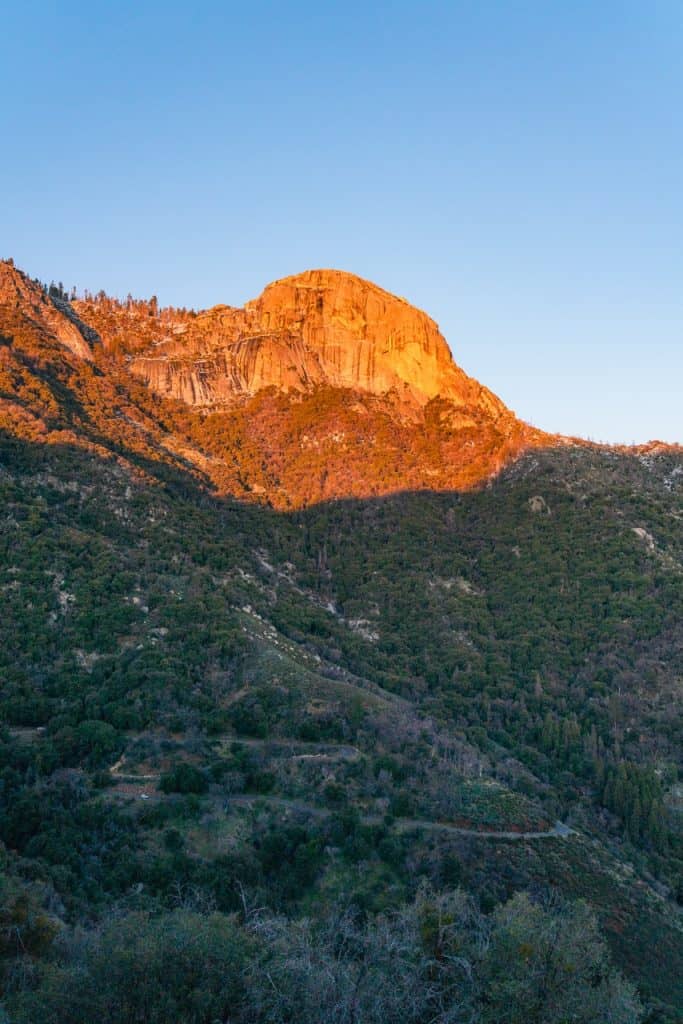
I didn’t do sunrise photography on this trip, but I did shoot sunset at Beetle Rock and Amphitheater Point. Beetle Rock is a short walk from the Giant Forest Museum, and Amphitheater Point is an easy pullout on the Generals Highway.
Both were beautiful, but if you get fresh snow in the trees, honestly, even just walking around the Giant Forest with a camera is enough.
How Many Days Do You Need for Sequoia in Winter?
For most people, one day is enough to see Sequoia in the snow.
If your main goal is to see the giant trees looking all magical and wintery, you can absolutely do that in a day. Go see the General Sherman Tree, walk the Big Trees Trail, and, if you want something a little more adventurous, snowshoe the Congress Trail.
That’s a pretty great winter Sequoia day.
But if you’re hoping for the best weather window, I’d give yourself two to three days if you can. That gives you a better chance of catching good winter conditions and lets you experience more than just the main tree stops.
With extra time, you can explore both the Foothills and the Giant Forest, snowshoe longer trails, check out Moro Rock, and not feel like your whole trip depends on one perfect day.
Below, I’ll walk you through exactly what I did on my early March winter trip so you can get a better idea of how long things actually take.
My Early March 4 Day Sequoia Winter Itinerary
Here’s exactly how my early March trip worked out, including the parts we changed because of road closures, melting snow, and shifting trail conditions.
You don’t need to copy this hour-for-hour. Instead, use it as a realistic example of how much you can fit into a winter Sequoia trip when conditions are working in your favor.
Day 1: Arrival Half Day
We drove from the Bay Area to Sequoia and arrived at the Ash Mountain Entrance in the mid-afternoon.
At the entrance gate, the ranger told us the road to the Giant Forest was closed, so we started with the Foothills area instead.
We stopped at Tunnel Rock, walked around a bit, and then drove to Potwisha Campground to set up camp.
We were about to head over to Hospital Rock when the road to the Giant Forest reopened in the evening. So obviously, we went.
We drove up to the Giant Forest, hiked the short loop to the General Sherman Tree, and got to see it around sunset with fresh snow everywhere. It was absolutely stunning and such a perfect first-night introduction to winter Sequoia.
After that, we drove back down to Potwisha and had dinner at camp.

Day 2: Snowshoeing the Congress Trail
Day 2 was our full Giant Forest snow day.
We had breakfast at camp, drove back up to the Giant Forest, and started snowshoeing the Congress Trail around 11:30 am.
The snow was fresh and soft, so snowshoes were definitely necessary. Without them, we would have been sinking all over the place.
On the Congress Trail, we snowshoed past:
- McKinley Tree
- House and Senate groups
- Chief Sequoyah Tree
- President Tree
- General Sherman Tree
This was easily one of the best parts of the trip. The Giant Forest in fresh snow is just unreal.
We finished around 3:30 pm and still needed to kill some time before sunset, so we visited the Sentinel Tree outside of the Giant Forest Museum, and we walked the Big Trees Trail. It was short, easy, and beautiful, and we were done by about 5:15 pm.
Then we made hot chocolate in the Giant Forest parking area with our Jetboil and waited for sunset. Sunset started around 5:40 pm, and we stayed until about 6:10 before driving back down to Potwisha for dinner.
Honestly, a pretty perfect winter Sequoia day.
Day 3: Tunnel Log, Moro Rock, and Amphitheater Point
Day 3 was another Giant Forest day, but the snow and weather was completely different.
The day before, we needed snowshoes. This day, the sun was out and the snow had already started changing, so we ended up hiking Crescent Meadow Road in microspikes instead.
We started around noon, hiking to Tunnel Log first and got there around 1:45 pm. It was really fun to see it without cars driving through, and the walk itself was beautiful with fallen sequoias, snowy trees, and little forest views along the way.
After Tunnel Log, we continued toward Moro Rock and got there around 2:30 pm.
Quick safety note: Moro Rock can be genuinely dangerous in winter. The stairs can be packed with snow and ice, and parts of the route are exposed. I only recommend attempting it with microspikes, a trekking pole, winter hiking experience, and the willingness to turn around.
We finished the full Crescent Meadow Road outing and got back to the Giant Forest Museum area around 5:15 pm.
Instead of staying at Moro Rock for sunset and hiking back in the dark, we drove down Generals Highway and stopped at Amphitheater Point for a stunning sunset. Moro Rock and the Great Western Divide were glowing, and the snow on the surrounding foothills was a nice touch.

Day 4: Kings Canyon Half Day
On our last day, we decided to check out Kings Canyon because I had never visited it in winter.
We left Potwisha and the Three Rivers area around 10:00 am and got to the Grant Grove area around 11:30 am.
The drive was not my favorite. Google Maps took us on smaller, windy roads between Three Rivers and the Big Stump Entrance, and I wouldn’t necessarily recommend doing that. If you’re adding Kings Canyon in winter, I’d probably stick to the larger highways, even if it takes a little longer.
Once we got there, we stopped at the Kings Canyon Visitor Center and walked the short General Grant Tree loop.
The General Grant Tree is absolutely worth seeing, but after a few quiet days in Sequoia, this area felt much busier and more crowded. It was still nice, but it didn’t feel nearly as magical as the Giant Forest had felt in fresh snow.
After that, we drove down to Hume Lake.
The drive had some pretty canyon and mountain views, but Hume Lake itself was kind of underwhelming in winter. Nothing was really open, the trails were icy, and there wasn’t much to do besides look at the lake for a few minutes.
Then we started the drive home.

Should You Visit Kings Canyon in Winter Too?
Honestly? I don’t think Kings Canyon needs to be a major focus of a winter Sequoia trip.
I love Kings Canyon in summer, and I absolutely think it’s worth visiting when the road to Cedar Grove is open. But in winter, most of what makes Kings Canyon so incredible is inaccessible.
Grant Grove is cool, and if you live nearby or have extra time, sure, go see the General Grant Tree in the snow.
But if you’re planning a winter trip around Sequoia, I’d spend most of your time in Sequoia itself and save the deeper Kings Canyon experience for summer.
Where to Stay for a Winter Sequoia Trip
You’re picking how much winter driving you want to deal with every day, how close you want to be to the park entrance, and whether you want actual restaurants and amenities after a cold day in the snow.
After camping at Potwisha in early March, I think I’d stay in Three Rivers next time.
Inside the Park – Limited Options
In-park options are very limited in winter. Wuksachi Lodge may be open in very early or late winter, but it typically isn’t something I’d count on for the heart of winter.
For most winter trips, the main in-park option is Potwisha Campground in the Foothills. We stayed there, and it was fine, but next time I’d probably stay in Three Rivers instead since you still have to do the long drive up to the Giant Forest either way.
Three Rivers – Best to be Close and Have Amenities
Three Rivers is where I’d stay on a future winter Sequoia trip. It’s right outside the Ash Mountain Entrance, so you’re still close to the park, but you get real beds, restaurants, coffee, and an easier end to the day.
You’ll still need to bring lunch, snacks, and winter gear into the park, but you won’t have to be completely self-sufficient like you would while camping.
➡️ Check hotel availability for your trip
Visalia – Most Availability and Amenities, but Longer Drive
Visalia has the most hotels, restaurants, grocery stores, and general amenities, so it can be a good option if Three Rivers is too expensive or booked out.
The downside is the drive. You’ll have a longer commute to the park entrance, and then you still have to drive the winding Generals Highway up to the Giant Forest.
What to Pack for Sequoia in Winter
Pack for winter, but dress in layers.
Even if it’s sunny, you’re still at elevation, and I would not plan on warm spring temperatures in the Giant Forest during winter.
I’d be prepared for cold air, snow, ice, and wet conditions. But I’d also dress in a way that lets you adjust if the sun comes out and you warm up while hiking.
Clothing Layers for Winter Hiking
- Breathable hiking shirts: Alpaca and merino are my favorite fabrics for winter. They wick moisture super well while keeping my core warm, but not overheated. >This is my favorite for winter hiking.
- Softshell hiking pants: I like wearing thicker pants in the winter that have DWR water repellent added. >These are my go-tos.
- Base layer bottoms: To layer underneath your softshell hiking pants if it is really cold. I like merino wool or polyester. >My top pick.
- Mid Layer Fleece: Layers are key in the winter! I prefer a fleece zip-up jacket since it’s easy to take on/off if I’m changing up layers. >My favorite active fleece.
- Insulated Jacket: You definitely want a puffy jacket in the winter! You need to trap your body heat and stay warm and toasty. >Check out this jacket.
- Rain Jacket: Rain and snow are common in the winter! You need a waterproof shell to keep you and your layers dry. >This is a great option.
- Rain Pants: I would only bring rain pants if it’s forecasted to rain. Otherwise, your softshell hiking pants will repel snow really well! >These are my pick.
- A beanie: Keep that head warm! It makes such a difference. >I love this classic style.
- Gloves: Keeping your extremities warm is so important in the winter. This is a do-it-all for winter sports. >Like these ones.
- Socks: Quick drying and sweat-wicking is key here. It might be cold, but your feet will sweat with all the walking you’ll be doing, and those cotton socks will not be comfy! >These are my favorites.
Pro tip: Learn how I dress for winter hiking in snowy conditions ➡️
Outdoor Essentials to Bring in Winter
- A water bottle: I prefer bottles to reservoirs since in the cold temperatures, the drinking tube in a reservoir can freeze! >Can’t go wrong with this bottle.
- A headlamp: Shorter days mean you might be out later than normal exploring! A headlamp is important for finding your way when it gets dark, plus it’s just handy to have! >I like this one.
- A backpack: You’ll want something that can carry your layers and all of your hiking snacks and camera! >I love this day pack.
- Handwarmers: So nice to have when it’s cold! >I love these new electronic ones.
- Sunscreen: Snow reflects sun! Make sure you lather up and get tricky places like under your chin and nose! >Try this one.
- Chapstick: Winter = dry weather! Nothing worse than getting chapped and sunburned lips on vacation. > Unscented, easy to apply
- Sunglasses: Winter days can be really bright, especially if you’re hiking in the snow. Make sure to protect your eyes! >These are my go-tos.
- Phone charger: Phone batteries die faster when its cold. Make sure you keep yours charged, especially if you’re using hiking apps like AllTrails! >This is my favorite lightweight external battery.
- Garmin inReach: Such a great device, even if you aren’t hiking. You can use the Garmin to call for help without phone service and it will ping the nearest search & rescue and authorities. A must-have for any winter exploring – even just driving – when an accident could turn deadly in cold weather quickly. >Buy one here.
For Snowy + Icy Conditions
- Waterproof, insulated boots: When it’s really cold and you’re walking on snow all day, an insulated boot really does make a difference. No snow on the ground? Your regular hiking boots will be fine. >These are my go-tos.
- Microspikes: You’ll need these if you want to hike icy trails like Moro Rock. >I swear by this brand.
- Trekking poles: You’ll want trekking poles for harder hikes and for snowshoeing! >These are great all-around poles.
- Snow Pants: If it’s really cold or snowing, you might just want insulated waterproof snow pants instead of hiking pants! >This is a great entry-level pair.
For Driving
- Tire chains/cables/socks: Required to be carried in your car from November – March! Don’t be without them, and make sure you size them for your tires. >These are the ones I carry. Never had to use before!

Winter Safety Tips for Sequoia National Park
Winter Sequoia is magical, but it’s still a mountain national park in winter — so this is the part where I put on my responsible adult hat for a second.
So yes, go enjoy the snow-covered trees. But also, please prepare.
None of this is meant to scare you out of going. It’s just what helps you enjoy the magical parts without being stressed the whole time.
Download Offline Maps Before You Go
Do not rely on cell service in Sequoia.
I would download offline driving maps, hiking maps, and the park map before you enter the park. I’d also bring a physical map if you’re snowshoeing or hiking anywhere beyond the most obvious packed-down paths.
This is especially important in winter because snow can completely cover the trail. On the Congress Trail, for example, you may not always be able to see the normal dirt path, so you need to know where you’re going.
Try AllTrails+
Download offline maps, preview trails in 3D, access National Park guides and more! Use code “backcountryemily30” to get 30% off of AllTrails+.
Carry the 10 Essentials
Even if you’re “just doing a short hike,” bring the 10 essentials.
Winter makes everything slower and more serious. A trail that feels easy in summer can feel very different when it’s covered in snow, icy, or hard to follow.
At minimum, I’d make sure you have extra layers, food, water, a headlamp, navigation, first aid, sun protection, emergency shelter, and a way to start a fire in an emergency.
And yes, even if you’re only planning to be out for a couple of hours.
Bring Microspikes
Microspikes were one of the most useful things I brought on my trip. They’re little spikes that you attach to your shoes and help with grip on ice and snow.
Some areas had enough snow for snowshoes, but other areas were packed down, icy, or slushy. I would not rely on regular hiking boots alone if you’re planning to walk on snowy trails, icy roads, or Moro Rock – just pick up some microspikes and thank me later!
Avoid Avalanche Terrain
Unless you have avalanche training and the proper rescue gear, do not travel in or directly below avalanche terrain.
That means I would not treat places like Tokopah Falls, the Lakes Trail, or Alta Peak as casual winter hikes. Save those for another season unless you genuinely know what you’re doing.
Consider Carrying a Satellite Device
If you’re going beyond the busiest areas, hiking closed roads, traveling solo, or snowshoeing somewhere less trafficked, I’d strongly consider carrying a Garmin inReach or another satellite device.
Most people probably don’t need one for the General Sherman Tree or Big Trees Trail. But for longer winter routes, having a way to contact help when your phone has no service is a very good idea.
Check Weather Every Day
Winter Sequoia is not a “check once and forget it” kind of trip. Check current park alerts before driving in each day, especially after storms or overnight freezes.
I personally use the NPS app and weather.gov, and call the park conditions hotline at (559) 565-3341.
Keep Your Gas Tank Full
There is no gas inside Sequoia National Park. Three Rivers is the closest place to get gas, so make sure your tank is full before driving into the park.
➡️ Get more general Sequoia National Park tips in my full guide on visiting Sequoia.

What I’d Do Differently on a Future Winter Sequoia Trip
I wouldn’t change that much about our winter Sequoia trip.
I actually think we planned it really well, especially because we didn’t try to treat it like one of my usual national park itineraries where I’m like, “Cool, wake up for sunrise, do three hikes, eat a granola bar while walking, collapse later. Repeat.”
Most days, we started our actual hiking closer to noon, picked one main thing to do, and then stayed out for sunset. That pace worked really well.
We weren’t rushing around trying to check off every possible stop, and we still got to snowshoe the Congress Trail, hike Crescent Meadow Road to Tunnel Log and Moro Rock, see the General Sherman Tree in the snow, and enjoy some really beautiful sunsets.
So if you have two and a half to three days in Sequoia in winter, I’d recommend doing it that way: one main winter activity per day, plus sunset if conditions are good.
The things I would change are more about logistics.
Stay in Three Rivers vs. Camp at Potwisha
Potwisha was fine, but in hindsight, I don’t think there’s a huge advantage to camping there in winter when Three Rivers is so close.
You still have to do the long drive up to the Giant Forest every day either way, and staying in Three Rivers would have meant restaurants, a real bed, and not having to make every single meal at camp.
Next time, I’d stay somewhere in Three Rivers, eat dinner in town, and bring lunch and snacks into the park each day.
Bring More Hearty Snacks
Speaking of snacks, I’d still lean into the parking-lot tailgate meal vibe. One of my favorite moments was making hot chocolate with our Jetboil before sunset.
But next time, I’d pack real lunch food instead of mostly energy bars: PB&Js, wraps, or car-charcuterie would have made the long snowshoeing day much better. Nothing fancy, just more substantial food to hold us over before dinner.
Skip Kings Canyon
I’m glad I saw Grant Grove in the snow, but if I could redo that last morning, I’d stay in Sequoia and hike something in the Foothills instead — probably Marble Falls.

Final Verdict: Is Visiting Sequoia in Winter Worth It?
You should visit Sequoia in winter if you’re flexible, prepared, and genuinely excited about snow.
This is not the season for easy logistics, dry trails, or checking off every classic stop from a summer Sequoia itinerary.
But if you’re already in California, can watch the forecast, and are willing to plan around current conditions, winter Sequoia can be absolutely incredible.
For me, seeing the Giant Forest in fresh snow was one of the most special national park experiences I’ve had. It was quiet, moody, beautiful, and honestly felt a little unreal.
So yes, I think Sequoia National Park is 100% worth visiting in winter.
Just go in with realistic expectations, bring the right gear, check road updates, and don’t get too attached to one exact plan.
If winter sounds like more logistics than you want to deal with, I’d plan a warmer-weather trip instead. You’ll have more trail options, easier driving, and better access to the classic highlights in Sequoia and Kings Canyon.

