
15 Best Things to Do in Sequoia National Park
So you’re planning a trip to Sequoia National Park and thinking “what else is there to do here besides looking at sequoia trees?” – right?!
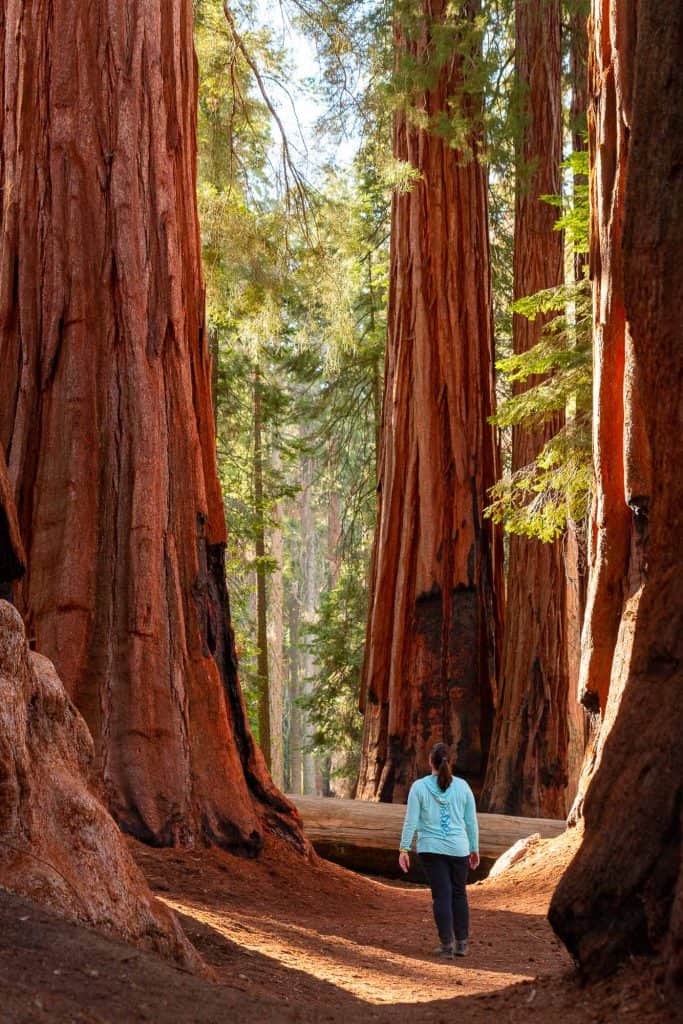
I totally get it. When the park is named after a tree – it kind of seems like that’s all there is to do. And yes, you definitely need to see the trees (even if you’ve seen them elsewhere). They’re incredible.
But Sequoia is so much more than that—and most people barely scratch the surface. After visiting in both winter and summer, backpacking deep into the park, and exploring it on quick trips, I’ve found the spots that are actually worth your time (and what’s not) – including some underrated spots.
In this guide, I’m sharing the best things to do in Sequoia National Park: from the must-see highlights to those lesser-known spots, and helping you figure out what’s right for your travel style and how long you have to explore.
Backcountry Emily contains affiliate links and I may receive compensation - at no extra cost to you! As an Amazon Associate I earn from qualifying purchases. See my Privacy Policy for more information.
1. See the General Sherman Tree
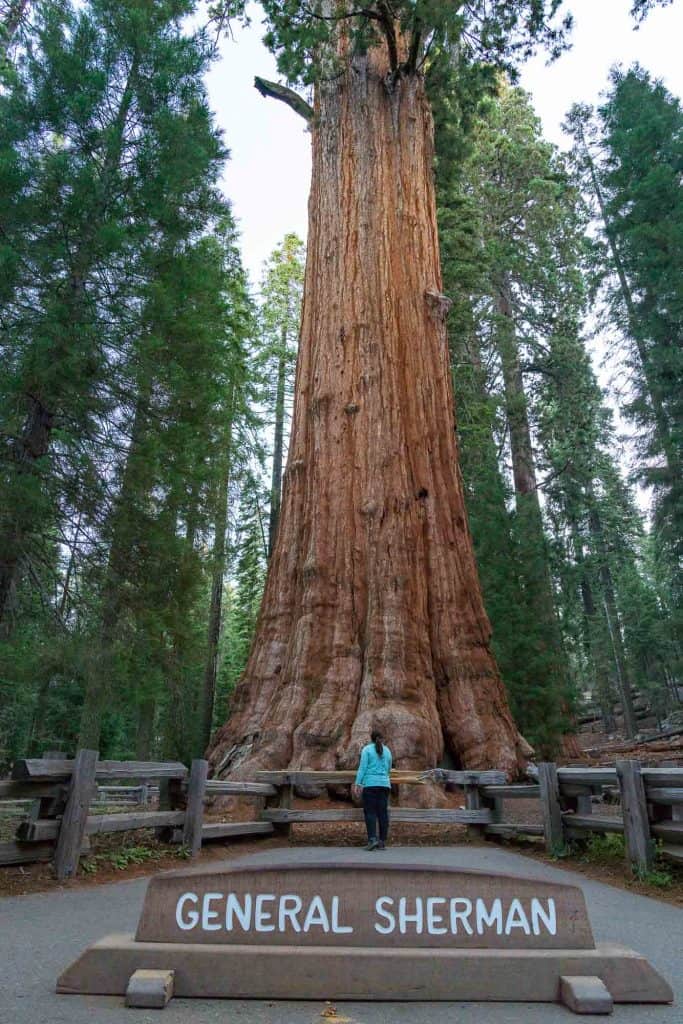
The General Sherman is the world’s largest tree by volume. And this thing is massive. It’s hard to describe the scale until you’re standing there. I’ve visited it four different times and it doesn’t get old – it’s the top must-see in the park!
Make sure you walk around the entire Giant Forest area immediately around the Sherman Tree and read the interpretive signs so you can learn all about sequoia trees and what makes them so special: like why they grow here specifically and how resilient they are to fire.
There’s 2 hiking options to see the General Sherman. One is about a mile with 200 ft of elevation gain/loss: the stairs back to the parking lot are definitely strenuous – so take your time. Or take the short route where the shuttle drops you off on the side of the General’s Highway. If you want a longer hike, the Congress Trail, which departs from this area, is a must-do.
Pro Tip: this is the most popular sight in Sequoia, so expect crowds. The one time I went when no one was there was at sunrise on a weekday in the summer.
2. Tour Crystal Cave
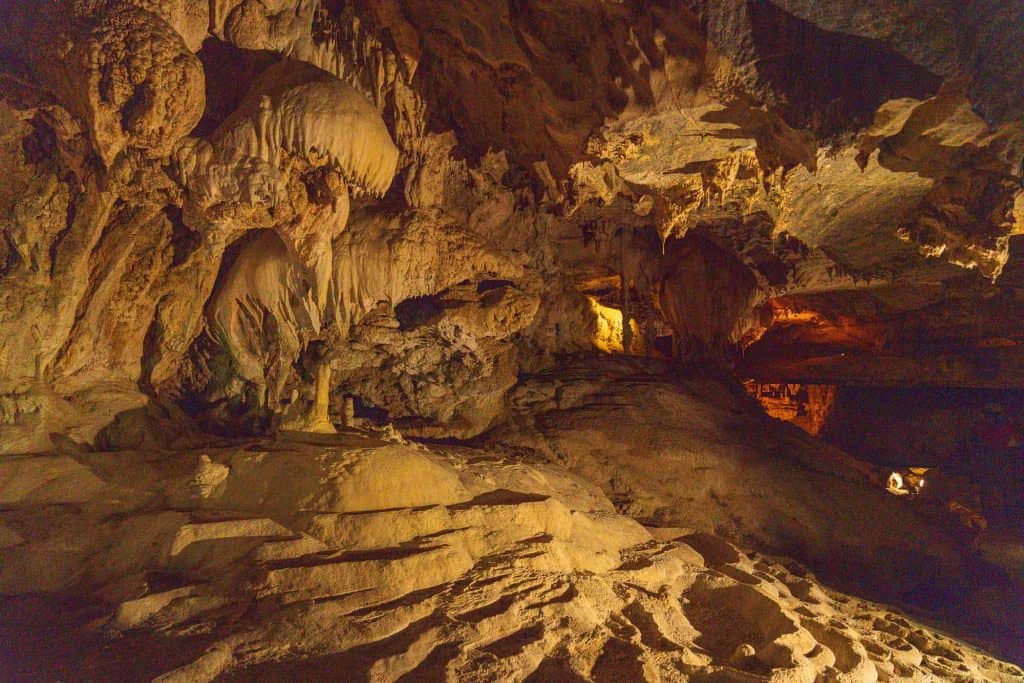
Did you know that Sequoia National Park was hiding marble caves in its mountains?! The Crystal Cave is such a unique experience. Granted, I haven’t been to the super popular caves in the USA like Carlsbad Caverns – but I thought the Crystal Cave was well worth a visit.
The tours are led by the Sequoia Parks Conservancy and require reservations. There are 2 tour options as of 2026 – one “wild”/adventure one and a less expensive and shorter one that suits the majority of people. You can book reservations for visits when the cave is open between May and November. Make sure you read the booking page very carefully – there are some important rules to keep the bats healthy.
I did the basic tour because that was all that was available to me in 2025 when the park re-opened the cave, and I think it’s definitely enough to experience the wonders of the cave! I’d probably only do the longer, more expensive tour if you’re really into caves and want to crawl into small spaces (kids aren’t allowed on this tour though!).
Important: You must hike 0.5 miles to the cave (and back to the parking lot) – there are multiple steep steps along the way – so make sure you’re able to do that before committing to the tour!
3. Visit Crescent Meadow & Tharp’s Log
Crescent Meadow is a beautiful alpine meadow flanked on both sides by sequoia trees. It basically marks the southern end of the Giant Forest, and it’s also the western trailhead for the High Sierra Trail thru-hike!
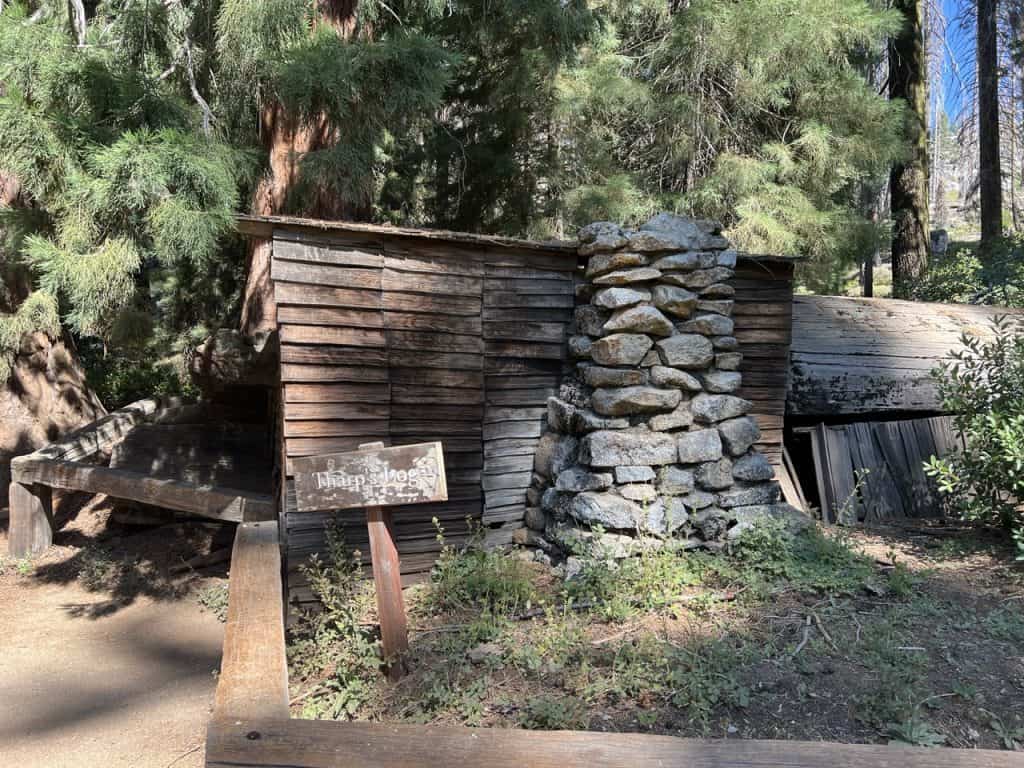
Instead of hiking the Crescent Meadow Loop, I’d actually hike along the eastern side of the meadow to Chimney Tree, then take the trail to Tharp’s Log. This is a living quarters that was built in a fallen sequoia tree! Pretty wild, and you should definitely see it – just don’t enter the log in order to preserve the site. Then, you’ll take the trail along Log Meadow back to the trailhead.
Pro Tip: Driving along this road is closed to private vehicles during certain times of the day, but you can take the free park shuttle directly here in the summer!
4. Walk the Big Trees Boardwalk Trail
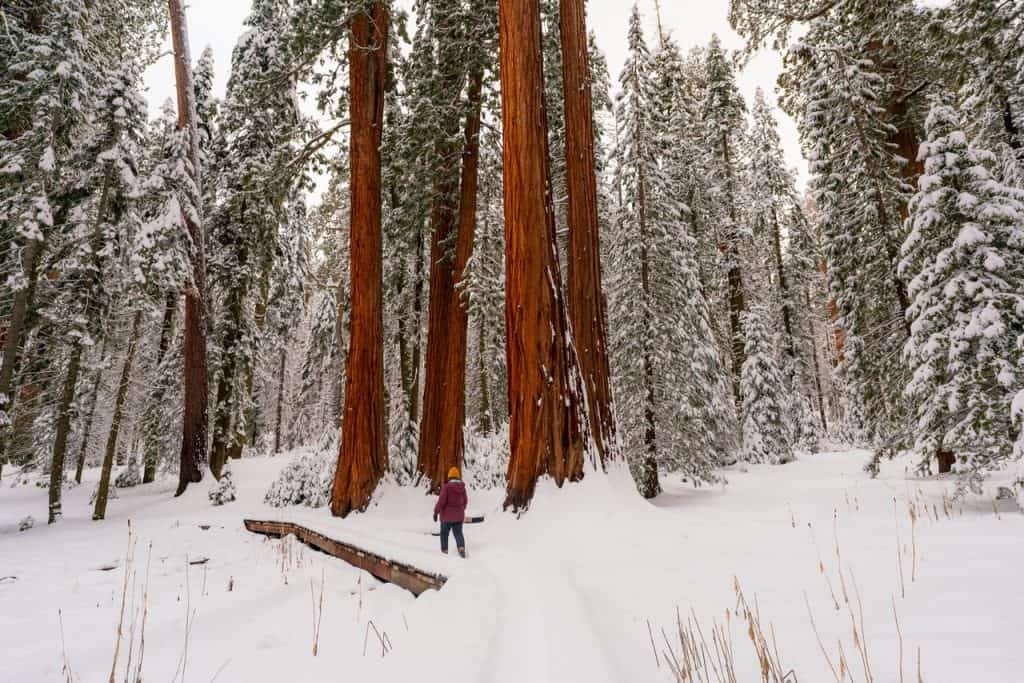
The Big Trees Trail is one of the easiest ways to experience the sequoia groves, thanks to its flat, 0.75-mile loop with a mix of boardwalk and paved paths.
I’ve only done this trail in the winter, and it was one of my favorite easy walks in the park—quiet, peaceful, and a completely different experience compared to the busier areas around the General Sherman Tree. I’d imagine it’s much busier in the summer, but it’s still a great option if you want something accessible.
This is a good choice if you’re traveling with kids, need a stroller- or wheelchair-friendly trail, or just want a low-effort way to see the trees. If you’re looking for something more immersive, I’d prioritize the Congress Trail instead.
Pro Tip: The parking lot is only for accessible vehicles in the summer. If you don’t have a placard, you’ll walk an extra 0.25 miles from the Giant Forest Museum parking lot.
5. Watch Sunset from Beetle Rock
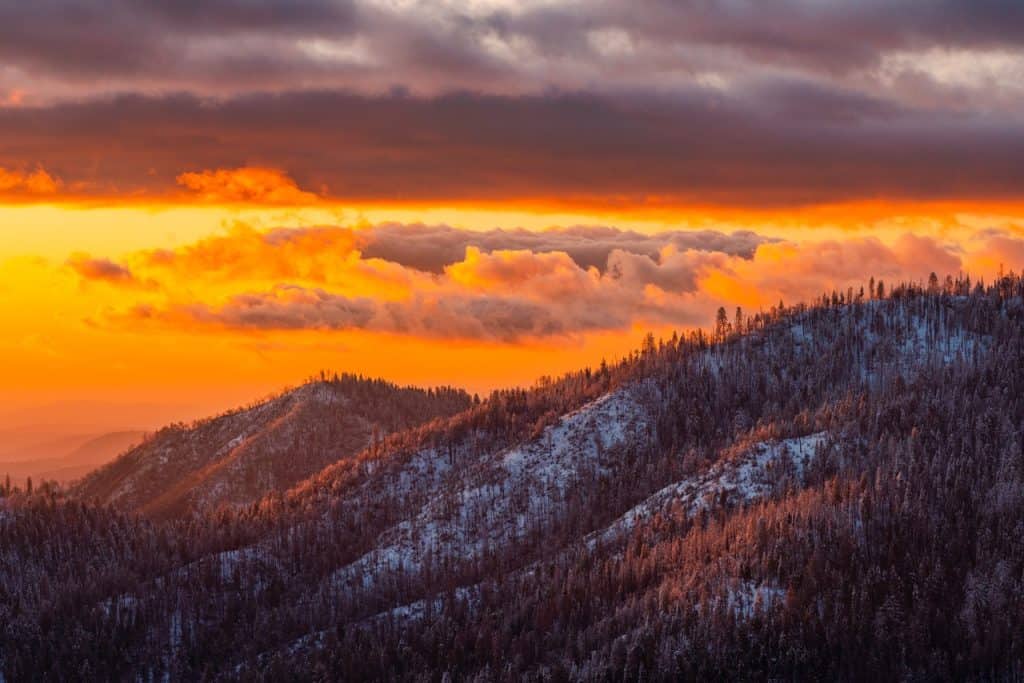
I wasn’t sure if Beetle Rock was going to be worth it: it was a super short walk from the Giant Forest Museum Lot – but wow – I witnessed one of the most amazing sunsets of my life from this spot.
Visiting in winter probably made it even better, but still – I recommend checking it out for an easy sunset spot.
6. Drive the General’s Highway
This highway winds through the vast majority of Sequoia National Park and travels from the Ash Mountain Entrance down in the Foothills all the way up to the Giant Forest and beyond into the National Monument and Kings Canyon National Park!
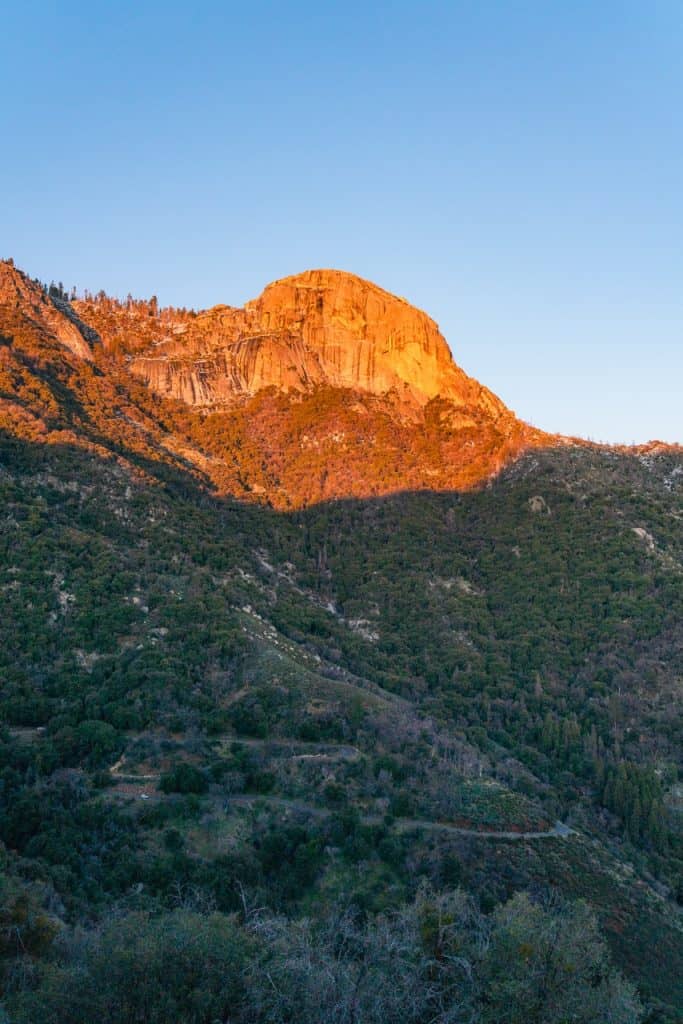
I think the drive is most impressive between the Giant Forest and the Foothills. The views of the Kaweah River, Moro Rock, and Castle Rock Spire are incredible. You should definitely stop at pull-outs along the way to take in the view, especially Amphitheater Point. I watched the sun set here on a trip in the winter and it was stunning.
7. Relax by the Marble Fork of the Kaweah River
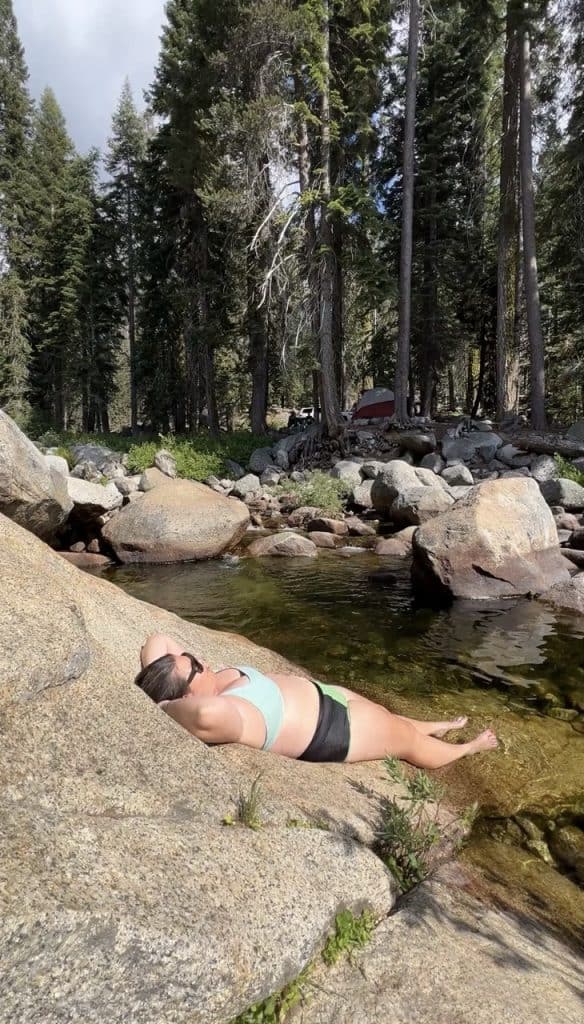
It gets hot in Sequoia in the middle of summer, and there’s no better way to cool down than to hang out next to a creek.
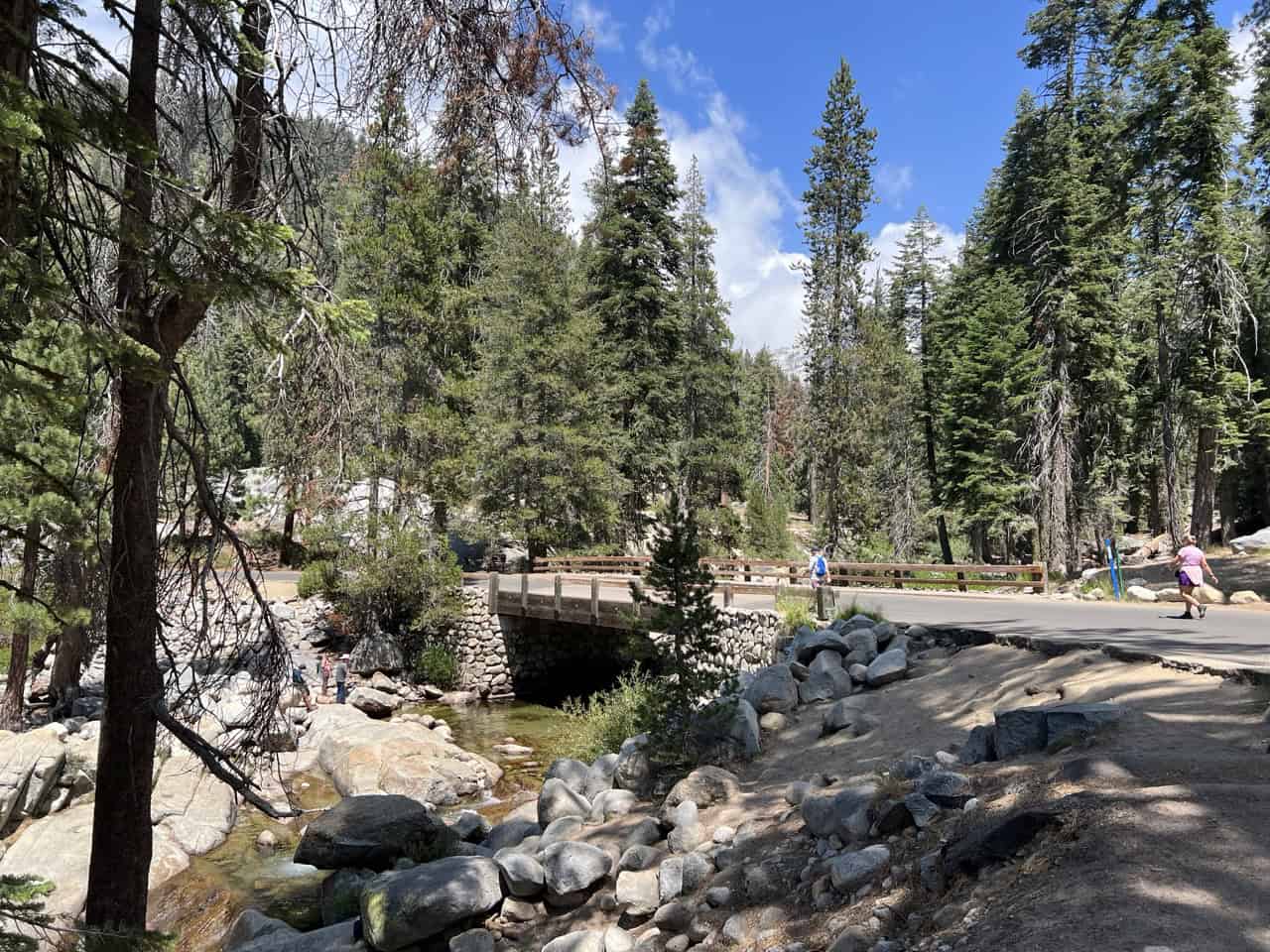
I found so many swimming holes in the first half mile of the trail toward Tokopah Falls – but there were people swimming at the rocks underneath the bridge too and Lodgepole Campground has some sites that have direct access to this portion of the creek.
Just make sure you’re practicing safe swimming – this is a creek that can flow heavily – supervise children, and remember that this is pure snowmelt – so the water is cold!
8. Visit Mineral King Valley
Mineral King is a region of Sequoia that is definitely off the beaten path. The road to Mineral King starts in Three Rivers, a few miles before the Ash Mountain Entrance. It’s 30 miles and incredibly windy – so a head’s up if you get carsick – and the drive takes about 1.5 hours one-way.
So why go all the way out here? It’s a stunning valley with mountains flanking it and almost zero people. There’s a few day hike options for experienced hikers and two small campgrounds, but its claim to fame is being the starting point for some extraordinary backpacking trips.
It’s also a slice of California history. Walt Disney had clocked it for a Disney ski resort back in the 1960s – the history and timeline is really interesting, no matter which side of the conservation vs. recreation debate you fall on.
Personally, I’m happy it’s preserved for nature, but I think the ideas that were being thrown around of an electric rail vs. a state highway for moving people into the valley and prohibiting cars were good ideas and it could have been a model for car-less recreation across the country!
Pro Tip: Stop by Silver City Mountain Resort to grab some lunch and homemade pie after a day of hiking (pie might not be available until dinner – I was sad to find out after finishing my backpacking trip).
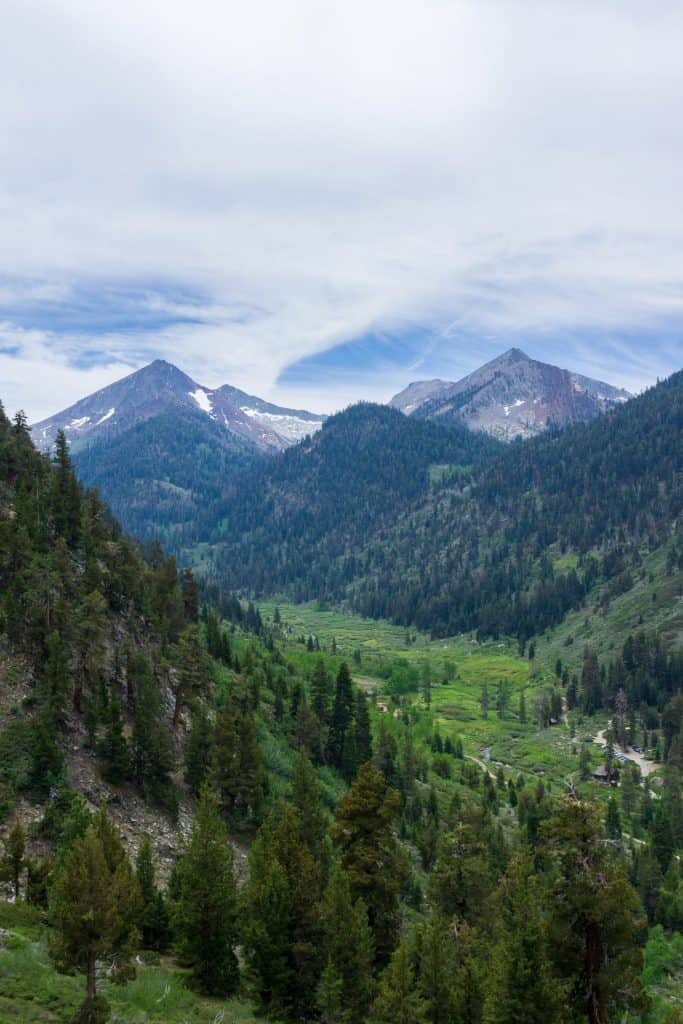
9. Camp at Lodgepole Campground
If you’re looking for a summer camping trip, Lodgepole should be on your list! It’s practically in the center of the park, with great access to hiking trails and the sequoia trees. All the sites have picnic tables, flush toilets, a fire ring, and water spigots.
Plus, the Lodgepole Market is nearby for buying firewood and s’mores fix-ins and has coin-operated showers!
You can make reservations 4 months in advance to the day. For example: on April 20th, you can book a site beginning August 20th.
Pro Tip: Loop A is my least favorite loop (and the one I’ve camped in both times) because it’s the most exposed to sun and the main road – I’d try to score a site further back.
10. Hike Moro Rock
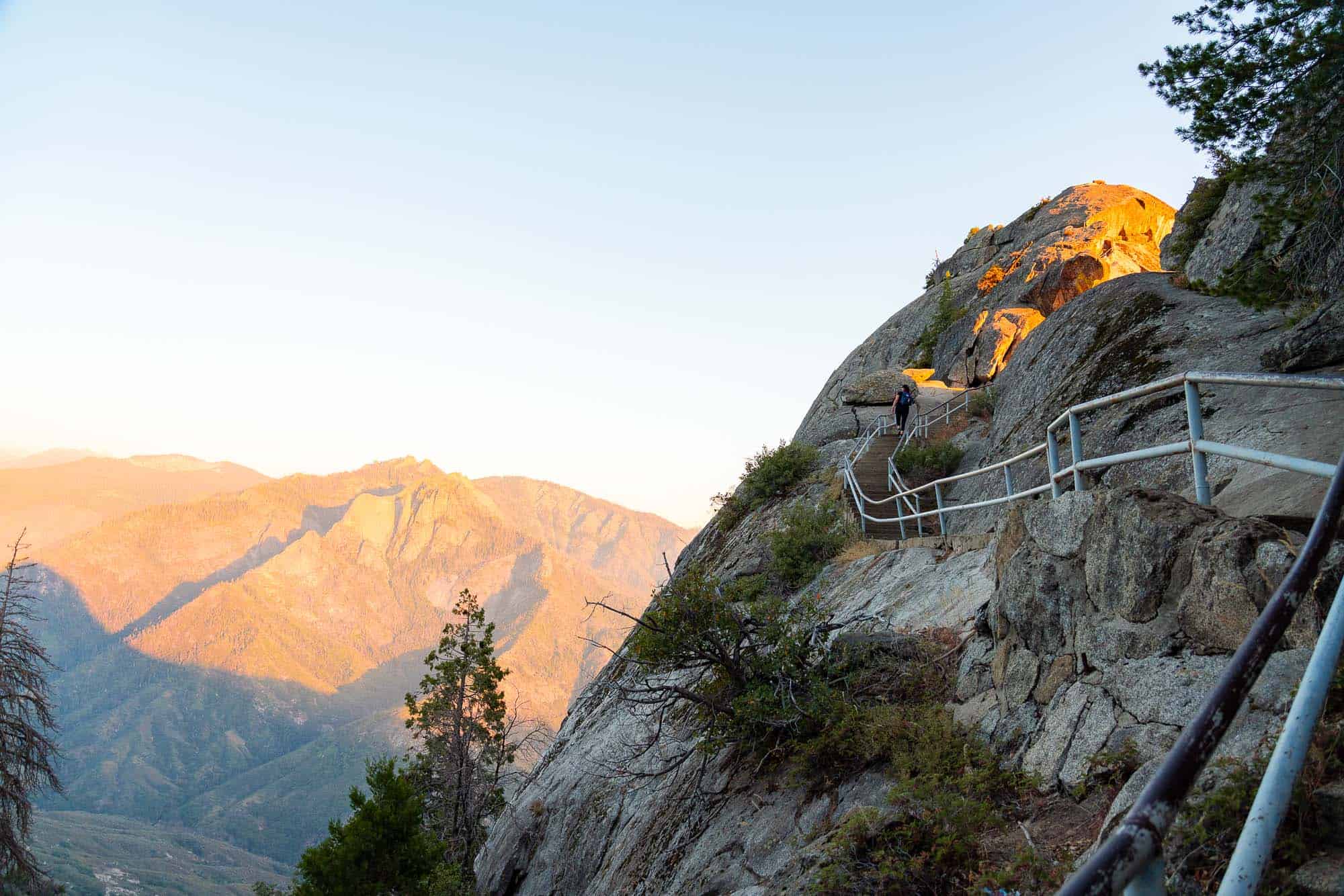
Moro Rock is like the little Half Dome of Sequoia. But nowhere near as scary or hard to climb! It’s still pretty steep – the steps are carved right out of the granite, and looking down off the side can be a little vertigo-inducing but the views at the top are so worth it!
I’ve hiked this in summer and winter – if you’re visiting in winter, you should bring microspikes for your hiking boots and be prepared to turn around if there’s too much snow. A slip and fall here has the potential to be life-threatening.
Parking/driving heads up: Moro Rock is on the road to Crescent Meadow, which is closed to private vehicles during certain times of the day and seasons. The shuttle runs here during the day in the summer.
If you want to visit at sunrise or sunset, the road is open to private vehicles—but the parking lot is very small. Be prepared to wait for a spot or arrive early.
In the winter, this becomes a much longer hike starting from the Giant Forest Museum.
Pro Tip: Sunset is especially beautiful here, but it’s also one of the most popular times to visit—so expect to share the summit with a lot of other people. Still, I think it’s worth it for the views.
11. Drive Through the Tunnel Log
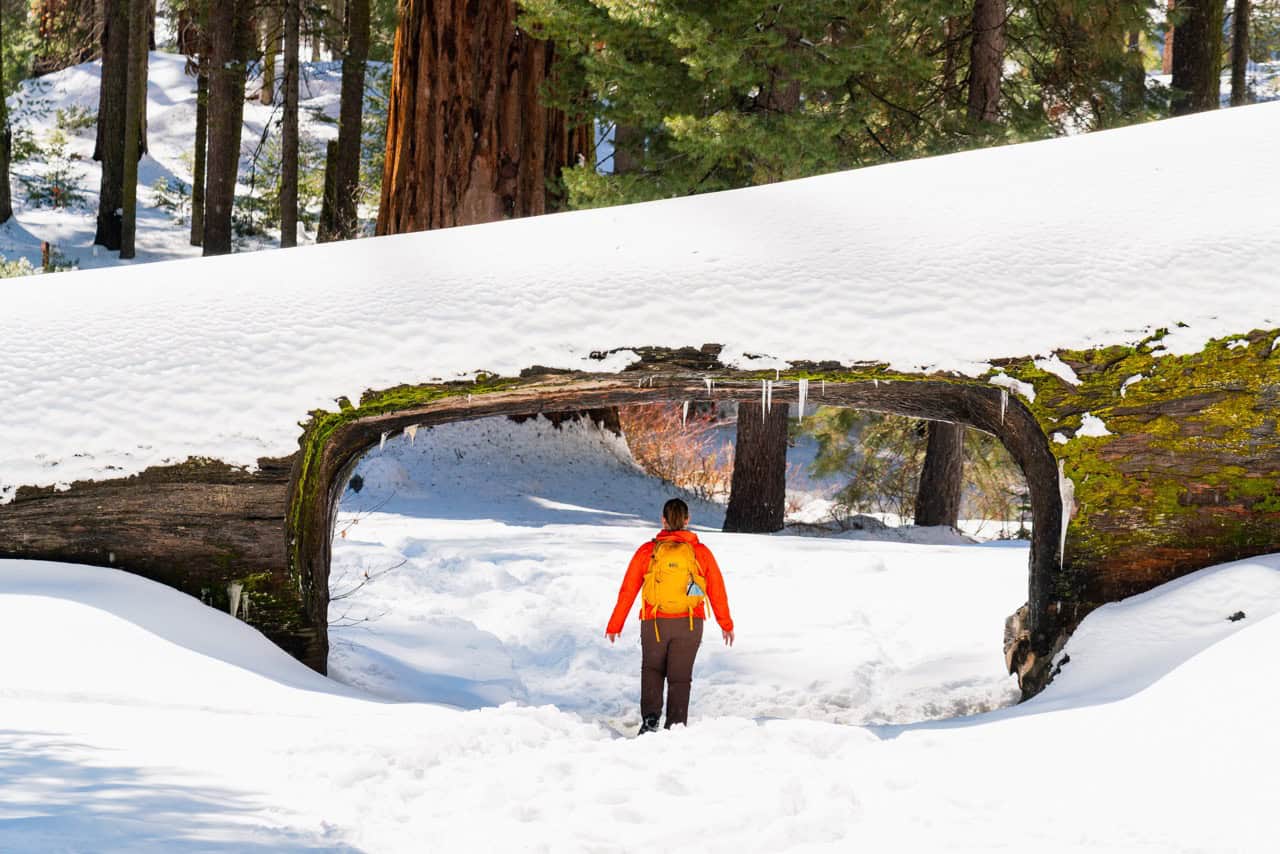
The Tunnel Log is one of those classic Sequoia photo spots. A fallen sequoia tree with a tunnel carved through it that you can drive through (if your car is under 8 feet tall).
I haven’t been able to drive through it myself yet, but I did walk through the log in the winter when the road was closed to vehicles. Even on foot, it’s a cool way to see just how massive these trees are up close.
This is a quick stop rather than a major destination, and you can only get there in your own car when the road is open to private vehicles, so I’d only include it if you’re already exploring this area of the park in the early morning or evening.
Pro Tip: There’s a bypass next to the log for cars taller than 8 feet.
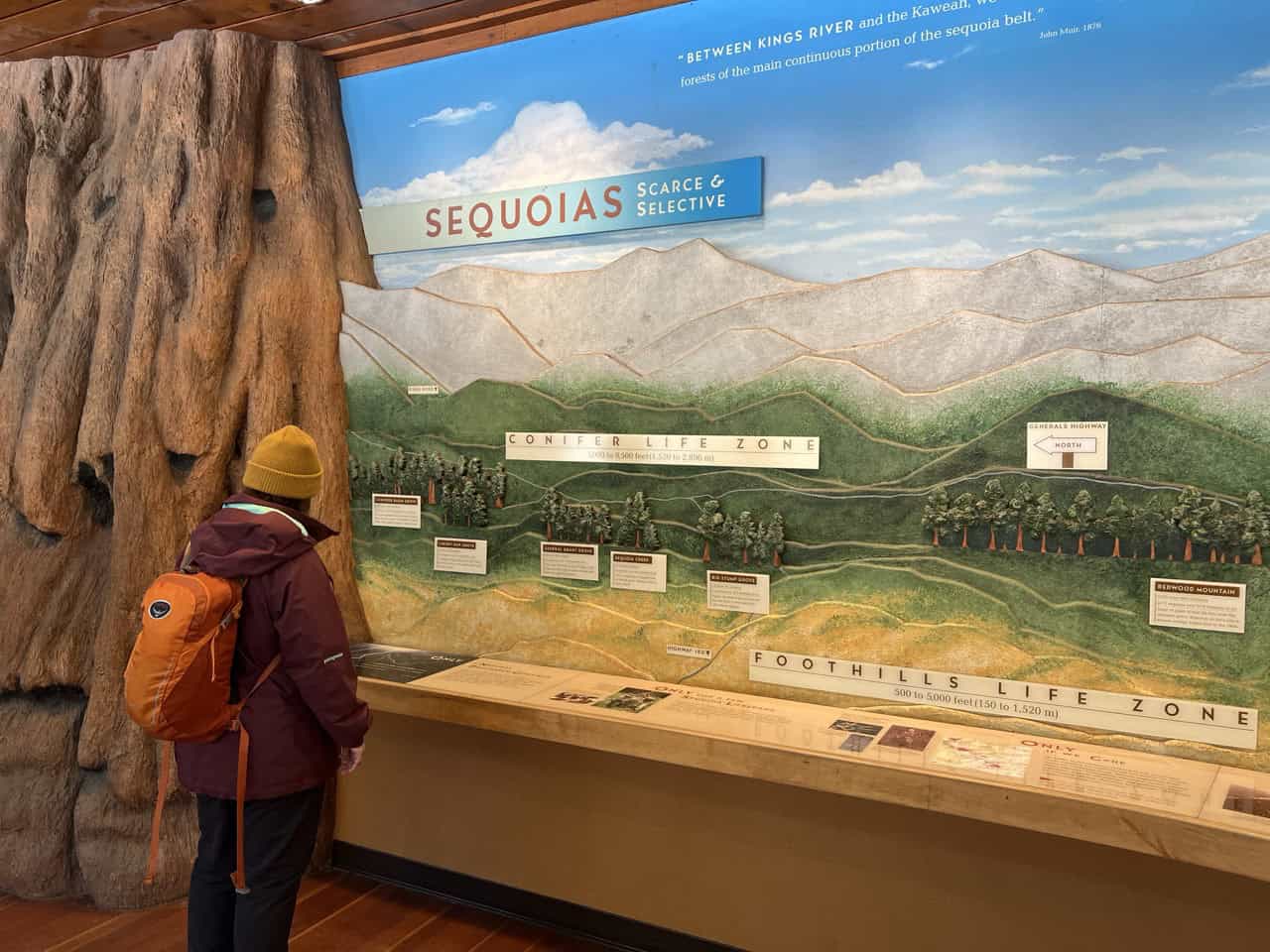
12. Visit the Giant Forest Museum
If it’s your first visit to Sequoia, you should definitely make a stop at the museum. There’s so much information about the life cycle of the trees, the symbiotic relationship with wildlife, and so much more – I won’t spoil the fun 😉.
There are also rangers stationed in the museum right at the door so you can ask questions about hikes, the weather, and the trees. They’ll also have information about ranger-led hikes and programs you can participate in! There’s also a small gift shop in here to buy little trinkets.
13. Visit the Lost Grove
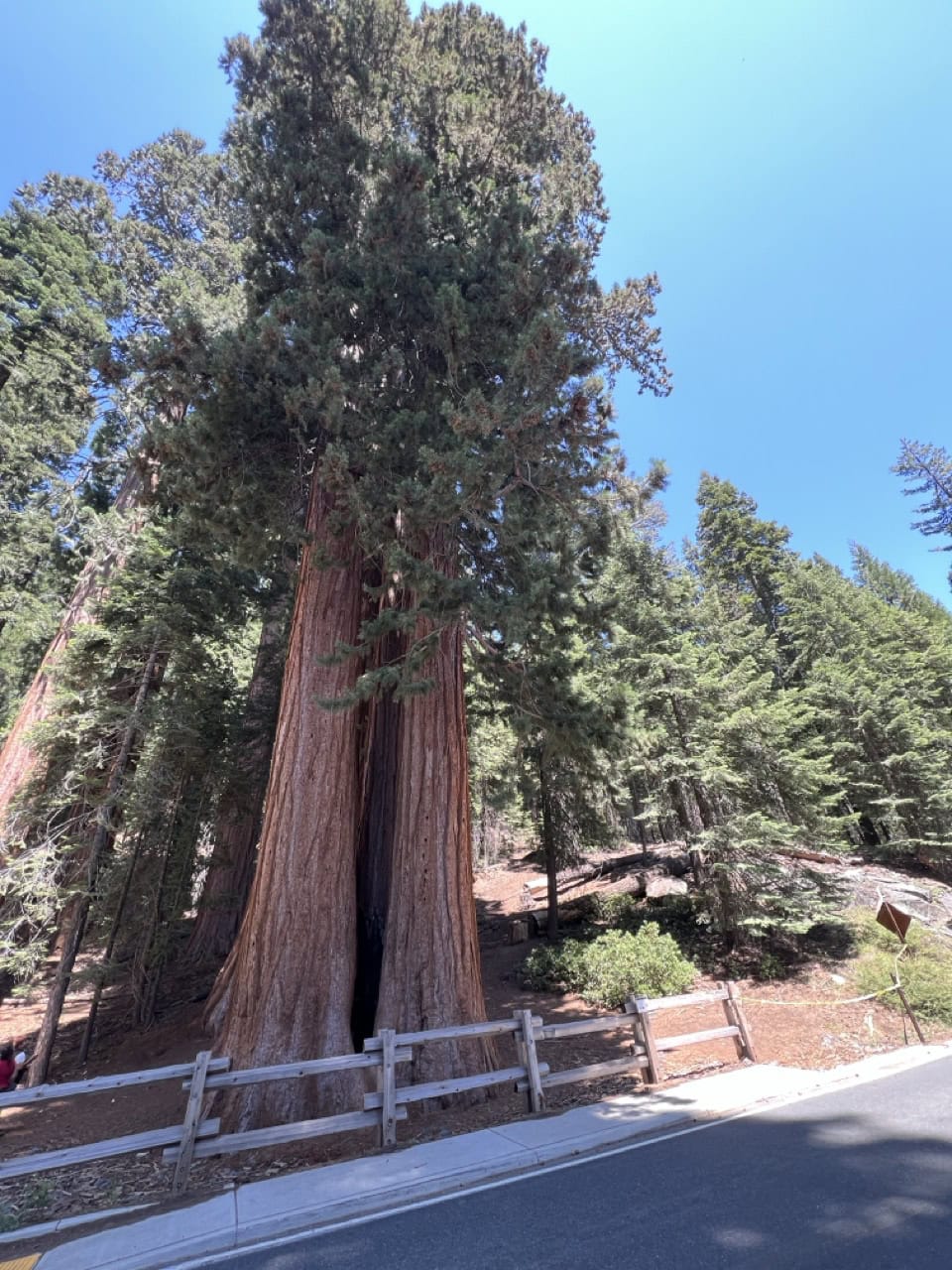
The Lost Grove is a smaller roadside grove of sequoia trees near the northern entrance of the park. Most people just drive by it, but that’s also what makes it a nice stop if you’ve been dealing with crowds elsewhere.
I like this spot as a quick break when driving through this part of the park on the way to Kings Canyon. It’s not as impressive as the Giant Forest, but it’s much quieter. Plus, there’s pit toilets here.
If you’re short on time, I wouldn’t go out of your way for this. But if you’re already driving through the area, it’s a peaceful place to stretch your legs and take a breather from the busier sections of the park.
14. Summit Mt. Whitney
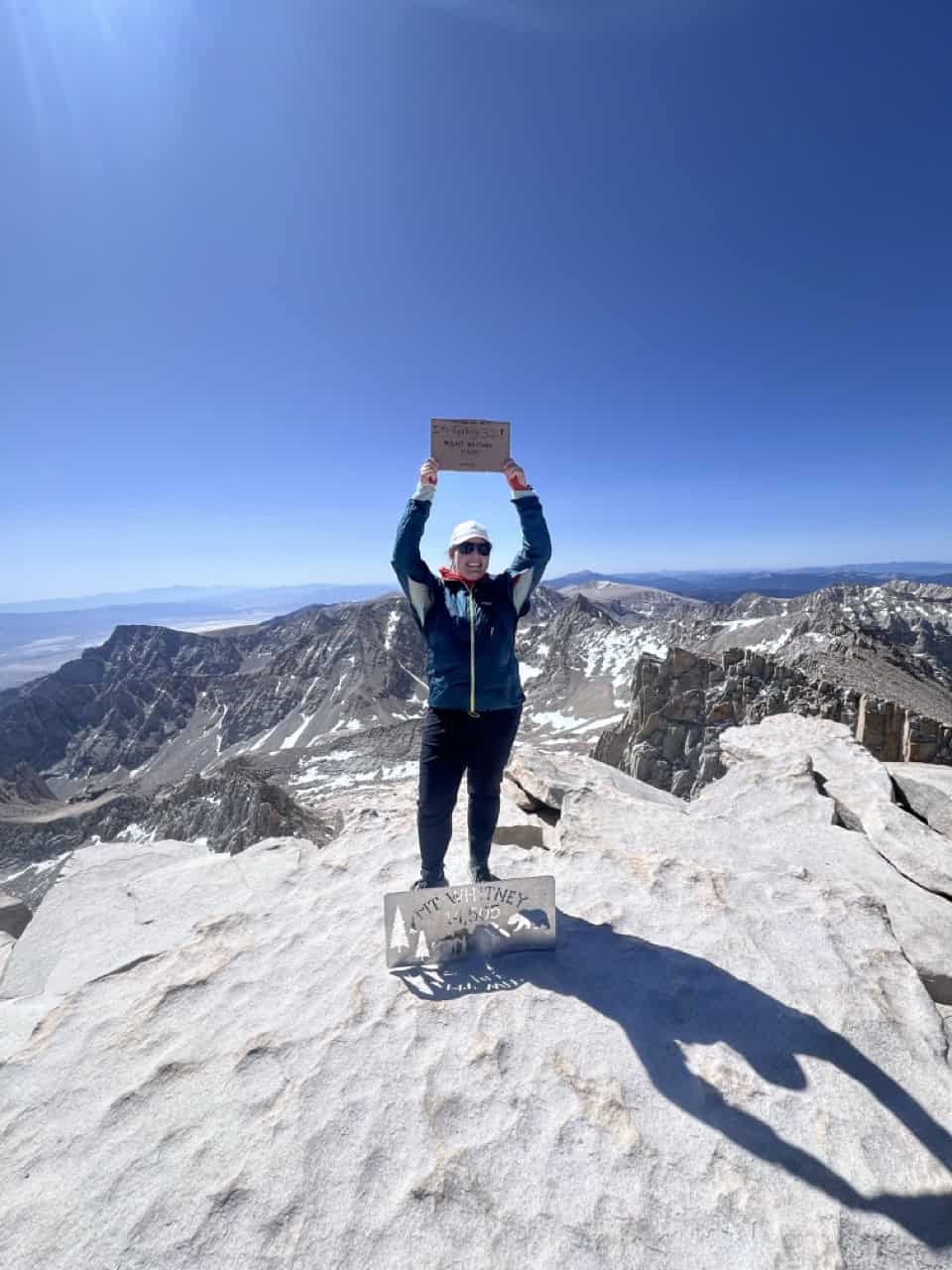
Mt. Whitney is the tallest mountain in the lower 48 United States – the summit is at 14,505 feet above sea level! I’ve had the joy of summiting this peak 4 times. It’s definitely a bucket list hike and not for the faint of heart – it’s a 22 mile hike with over 6,000 feet of elevation gain and needs serious training to attempt!
Mt. Whitney is not in the main area of the park and you can’t see the mountain from the western areas. You can get views of Mt. Whitney from the east in Inyo National Forest. This area is a 4.5 hour drive from Three Rivers and is definitely worth a visit if you’re doing a longer California road trip!
Pro Tip: You need a special permit to hike Mt. Whitney. You can apply for the lottery every February for the summer months.
15. Go Backpacking
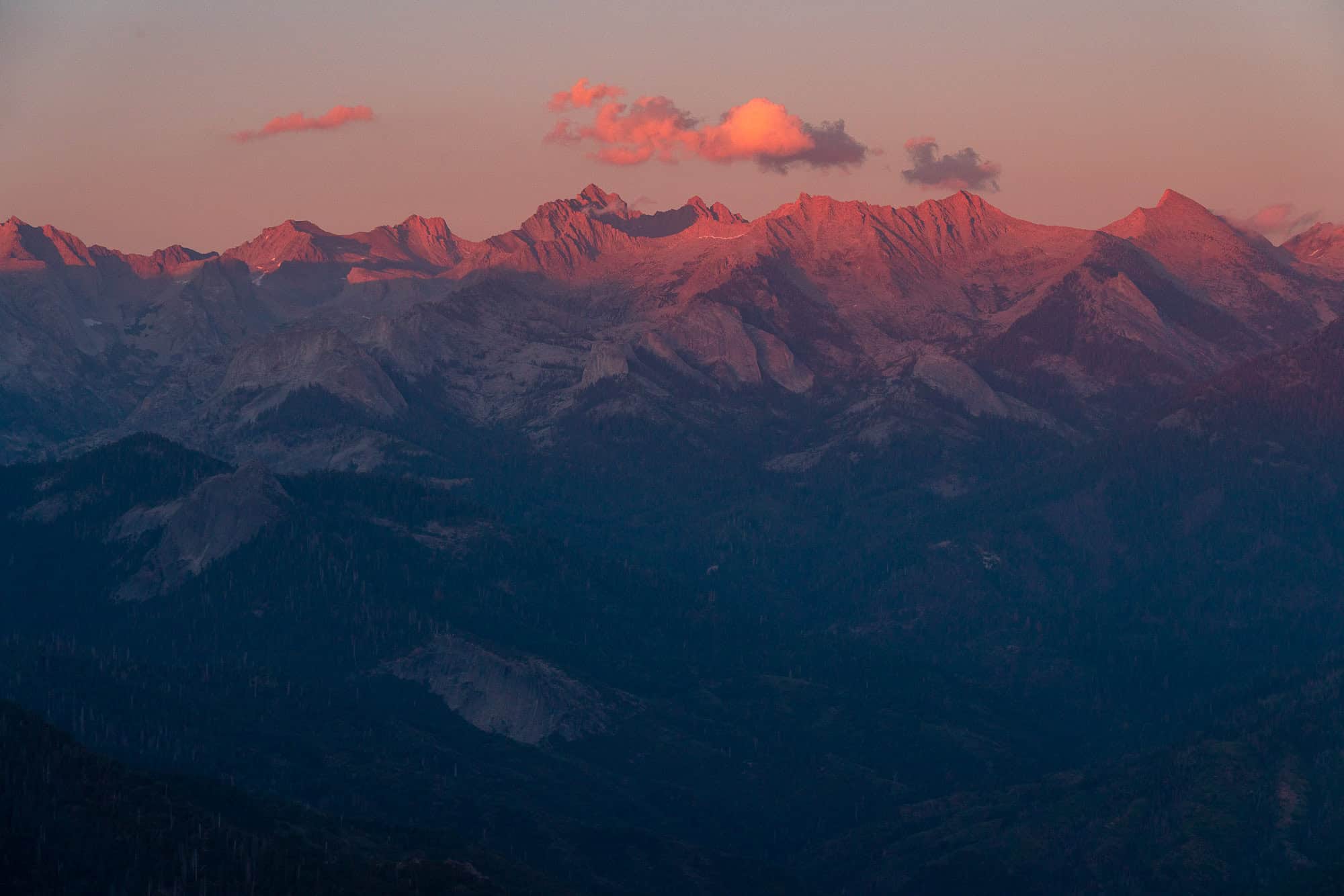
The sequoia trees in the park are magnificent – but there is so much to explore in the backcountry. Mountain peaks, alpine lakes, and glacier-carved remote valleys await in the wilderness.
I’ve backpacked the High Sierra Trail and the 5 Lakes Loop in the park and I’ve also hiked through on the John Muir and Pacific Crest Trails. I highly recommend all of those trails. Sequoia’s backcountry is enormous and there are so many gorgeous places to see – you’d need a lifetime to explore it all!

How to Choose What to Do in Sequoia National Park
If you only have 1 day:
Time to hit up the most high-reward spots in the park! If you only have one day, you need to prioritize seeing the sequoia groves and learning about sequoia trees! And Moro Rock. This is one of my favorite features in Sequoia and hiking up for sunset is a must-do!
Because the park is so spread out, sticking to the Giant Forest area is your best bet. Most of the park’s iconic sights are concentrated here, and it’s where I’ve spent the majority of my time on shorter visits.
If you’re up for a longer hike, the Congress Trail is one of the best ways to experience the sequoia groves beyond just the General Sherman area. If you want something shorter, the Big Trees Trail and Crescent Meadow are both great options that are much easier.
This is what I’d recommend if you’re short on time:
- Drive the General’s Highway
- Hike to the General Sherman Tree and the Congress Trail
- Visit the Giant Forest Museum
- Check out Crescent Meadow
- Hike Moro Rock for sunset
If you have 2-3 days:
Definitely make sure you see everything from the one day itinerary first. Those are the highest-reward spots in the park. With extra time, you can start layering in longer hikes and a few experiences that take more time to get to.
If you’re an experienced hiker, I’d recommend doing some of the longer trails into the alpine – like the trail to Pear Lake or Alta Peak – these give you a taste of the other side of Sequoia.
Because Sequoia is so spread out, some activities take up a lot more time than you’d expect. For example, when I visited Crystal Cave for a 9:30 tour, the whole process—from driving there to finishing the tour—took about 3.5 hours. It’s definitely worth doing, but it’s something I’d only add if you have extra time.
The same goes for Mineral King—it’s an incredible area, but it’s realistically a full-day commitment. The drive alone is long and tiring, and if you’re planning to hike, you won’t want to rush it.
👉 Check out this itinerary if you’re trying to see both Sequoia and Kings Canyon in 3 days.
With a few more days, I’d prioritize:
- Touring Crystal Cave
- Hiking to Tharp’s Log
- Longer hike through the Giant Forest or alpine
- Hike to Tokopah Falls
- Swimming in the Marble Fork of the Kaweah River
- Ranger-led or Sequoia Conservancy special tours
- Day trip to Kings Canyon National Park
Best Things to Do in Sequoia Based on Your Travel Style
What to see if you’re a first-time visitor:
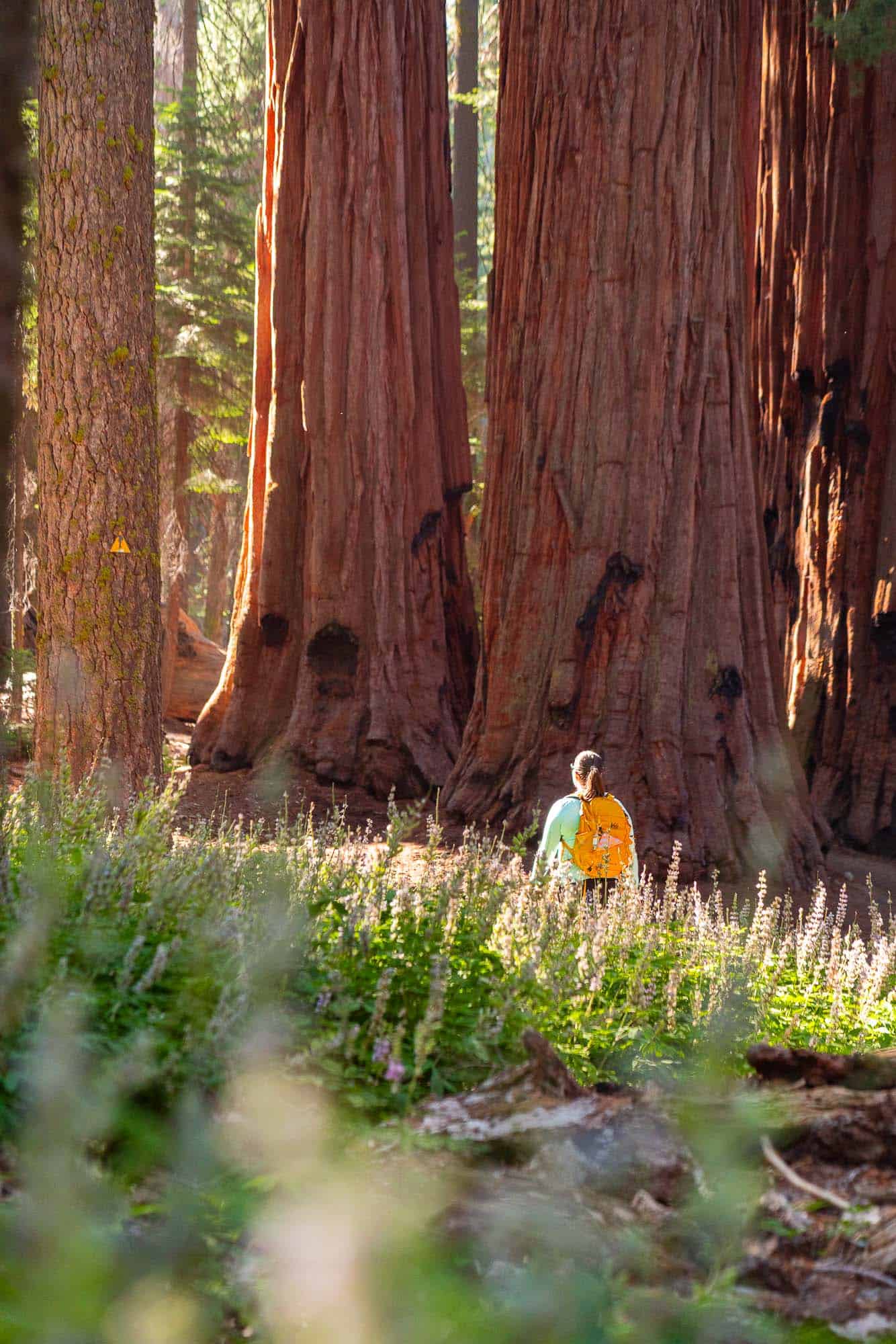
If it’s your first time in Sequoia, focus on the iconic sights in the Giant Forest—this is where you’ll get the classic experience of the park.
- General Sherman Tree & Congress Trail
- Giant Forest Museum
- Moro Rock
Best places to watch the sunset:
These are easy-access spots with big views—perfect if you don’t want a long hike at the end of the day (ok sunset rock is a little longer – swap it for Amphitheater Point if you don’t want to hike at all).
- Beetle Rock
- Moro Rock
- Sunset Rock
Best easy hikes:
These trails are short, family-friendly, and still give you a great feel for the park without a big time commitment.
- Big Trees Trail
- General Sherman
- Crescent Meadow
Best hidden gem spots:
These take a bit more effort to reach—but are worth it if you want to get away from the main crowds.
- Crystal Cave
- Mineral King Valley
- Little Baldy
What Should I See in Kings Canyon?
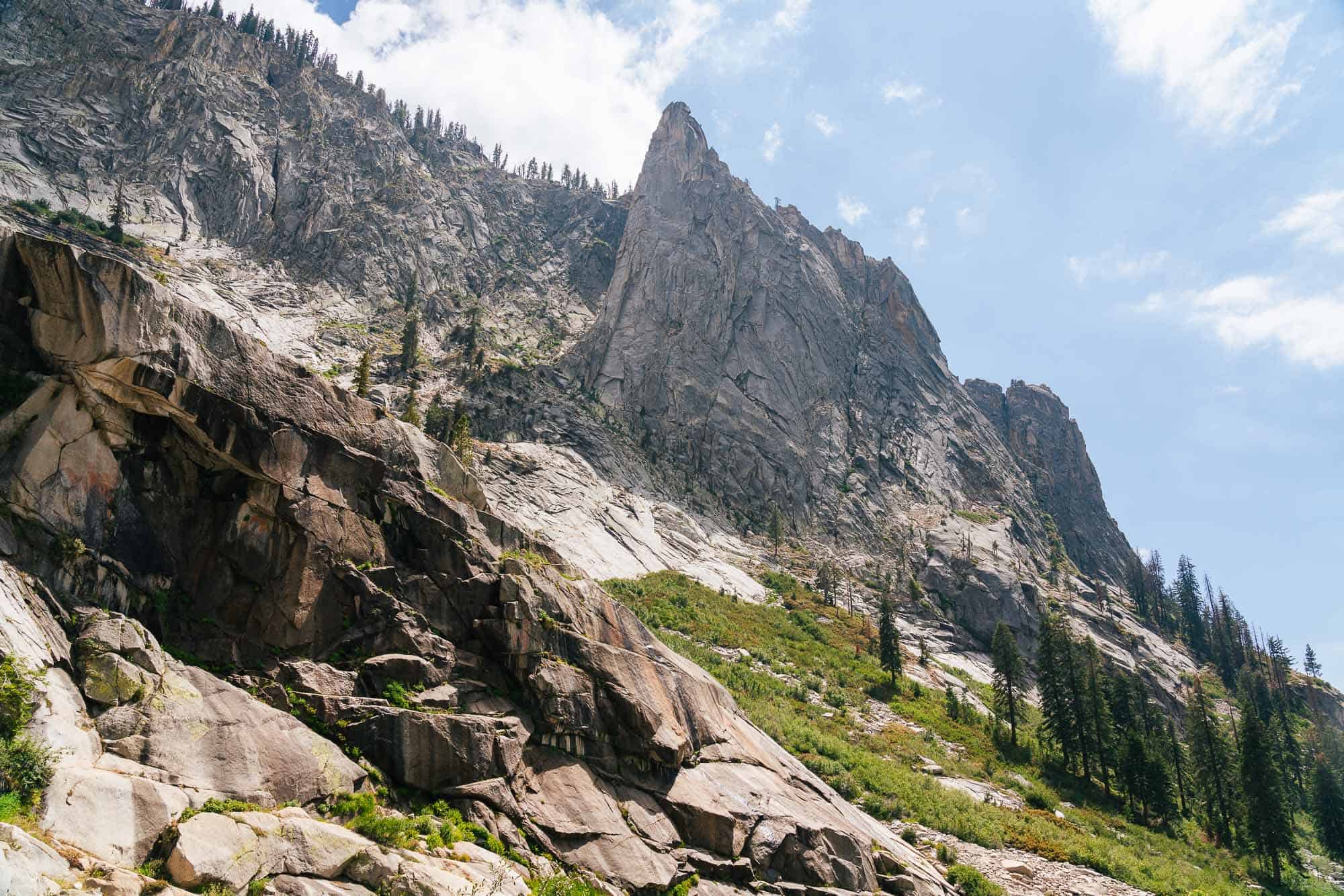
Kings Canyon is technically a separate park even though it’s managed with Sequoia. The General’s Highway connects the two parks with the Giant Sequoia National Monument and Jennie Lakes Wilderness splitting them in the middle.
I’d recommend spending at least one full day exploring Kings Canyon – more if you love hard hikes! You’ll want to check out the Big Stump Trail, the General Grant, and drive down the canyon to the Cedar Grove area at Road’s End at the very least.
Plan Your Perfect Sequoia Trip
Sequoia National Park might be known for the biggest tree in the world, but there’s so much more here once you know where to look.
Whether you’re sticking to the Giant Forest for a quick trip or heading deeper into the park for longer hikes and quieter spots, the key is knowing how to prioritize your time. The park is bigger and more spread out than most people expect, and a little planning goes a long way.
If you’re still figuring out the logistics – like when to visit, how to get around, and what to expect in each season – start with my full guide on how to visit Sequoia National Park.
And if you’re ready to start itinerary planning, check out my recommended 3 day Sequoia-Kings Canyon itinerary to make sure you see the best parts of Sequoia and her close neighbor, Kings Canyon!

