
1 Day Sequoia National Park Itinerary for First Timers
From the highest peak in the lower 48 states to the largest tree in the world, Sequoia National Park covers a lot of ground – literally and figuratively!
And if you only have one day in Sequoia, you won’t be able to see everything. But you can still plan an incredible Sequoia National Park day trip that gives you the best of the Giant Forest area, including massive trees, granite viewpoints, and a couple of classic short hikes.
I’ve visited Sequoia National Park in summer and winter for short trips and backpacked across the park on longer expeditions, so this itinerary is intentionally focused on the stops I think are most worth your limited time on a first visit.
This 1 day Sequoia itinerary will be best for summer travelers who are looking to lace up their hiking shoes and explore the iconic park highlights like the General Sherman Tree, Congress Trail, and Moro Rock, plus a few other gorgeous sights.
Backcountry Emily contains affiliate links and I may receive compensation - at no extra cost to you! As an Amazon Associate I earn from qualifying purchases. See my Privacy Policy for more information.
Sequoia National Park 1 Day Itinerary at a Glance
- Enter the park early (by 7-8 am)
- Stop at viewpoints along Generals Highway
- See the General Sherman
- Hike the Congress Trail
- Hike Tokopah Falls Trail
- Eat lunch at Tokopah Falls or Lodgepole Market
- Stop at the Giant Forest Museum
- Visit Crescent Meadow
- Drive through Tunnel Log
- Watch sunset from Moro Rock
Is One Day Enough for Sequoia?
It’s impossible to see everything in Sequoia in a day. And if you have more time, I’d actually spend at least 3 days exploring Sequoia and her neighbor: Kings Canyon.
But, one day is enough to see the main highlights in the park, and is definitely doable as a day trip from Fresno, Visalia, Tulare, and Porterville. If you’re planning a day trip, just make sure you’re comfortable driving at night, or else you might want to adapt this itinerary a bit.
If you’re still figuring out entrances, where to stay, road conditions, and how to structure a longer trip, start with my full guide on how to visit Sequoia National Park.
Sequoia National Park Day Trip Itinerary
This one day itinerary is built around the Giant Forest and Lodgepole areas with active first-time visitors in mind. It gives you the best mix of massive sequoias, short-to-moderate hikes, classic viewpoints, and scenic driving without spending your whole day in the car.
It’s written for a summer or early fall visit when the main roads are open. But I do include a few swaps and other ideas if there are road closures if you’re visiting in early spring or late fall below the itinerary.
1. Enter through the Ash Mountain Entrance
First stop will be the park gate right outside of Three Rivers, CA. Have your entrance fee ready (card only), or use an America the Beautiful Pass if you’re visiting multiple national parks this year.
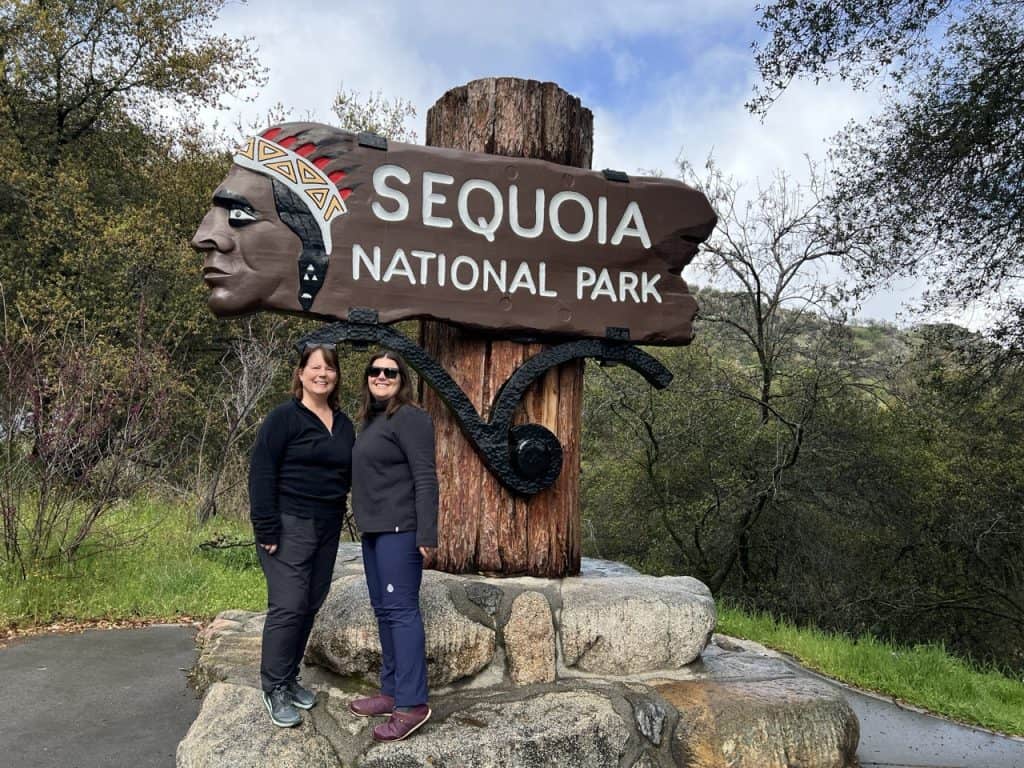
The iconic Sequoia National Park entry sign is located just a couple minute drive past the entrance station – so be sure to pull over and take a picture here. It’s much easier to pull in now than later on your way out.
Pro tip: If you’re driving in from Fresno or driving a vehicle over 22 ft long, I’d take Highway 180 and enter through the Big Stump Entrance at Kings Canyon before driving south to Sequoia National Park. This road is easier to drive. But if you want to see the Foothills, I’d do this part of the drive in the morning and go back to Fresno via 180.
2. Generals Highway Scenic Drive and Viewpoints
The Generals Highway is a long, winding road that takes you from around 1,000 feet in elevation in the Foothills to over 7,000 feet in elevation at the Giant Forest, where the majority of the best spots in Sequoia are.
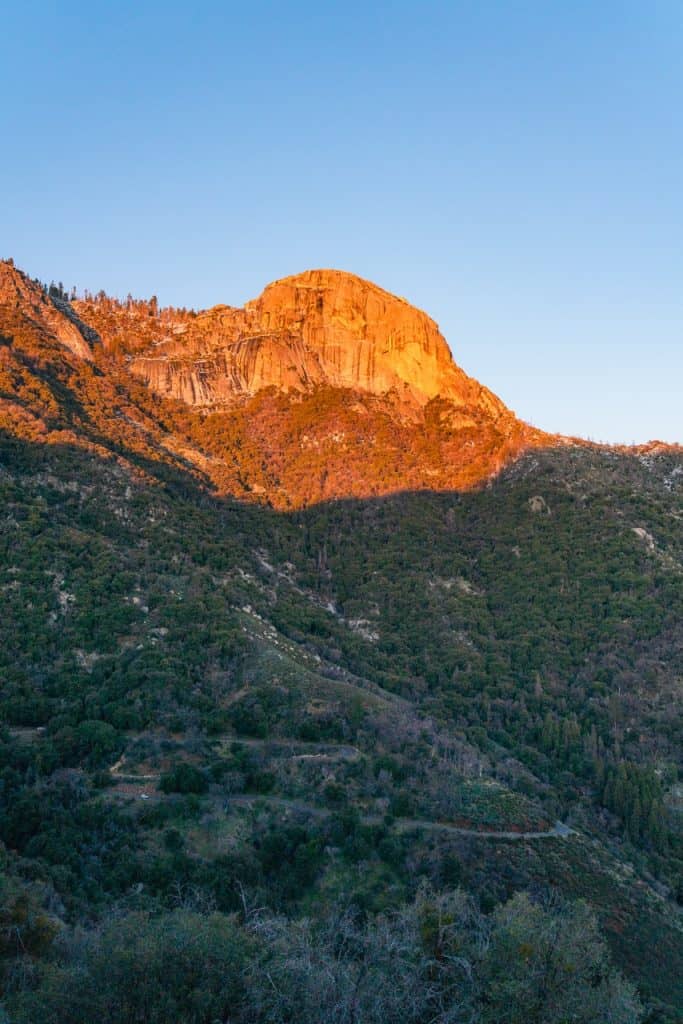
There’s a lot of turn outs, but my favorite viewpoint is Amphitheater Point. This overlook has views of Moro Rock from below, the road you were driving, and various other mountain views.
Take 5-10 minutes here and then continue driving up to see the trees!
3. General Sherman Tree
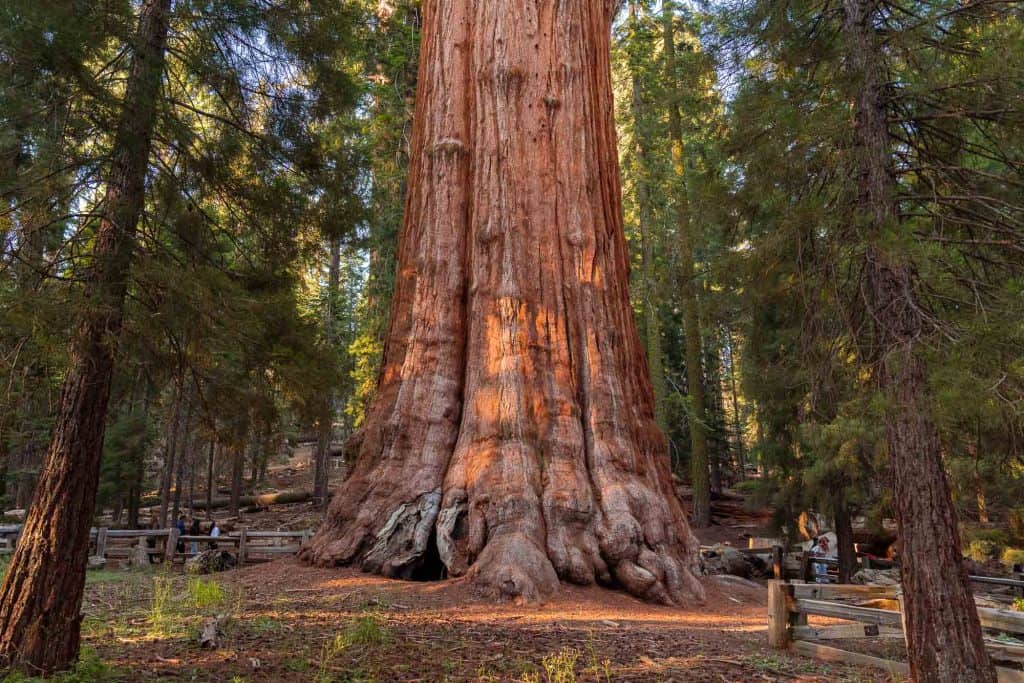
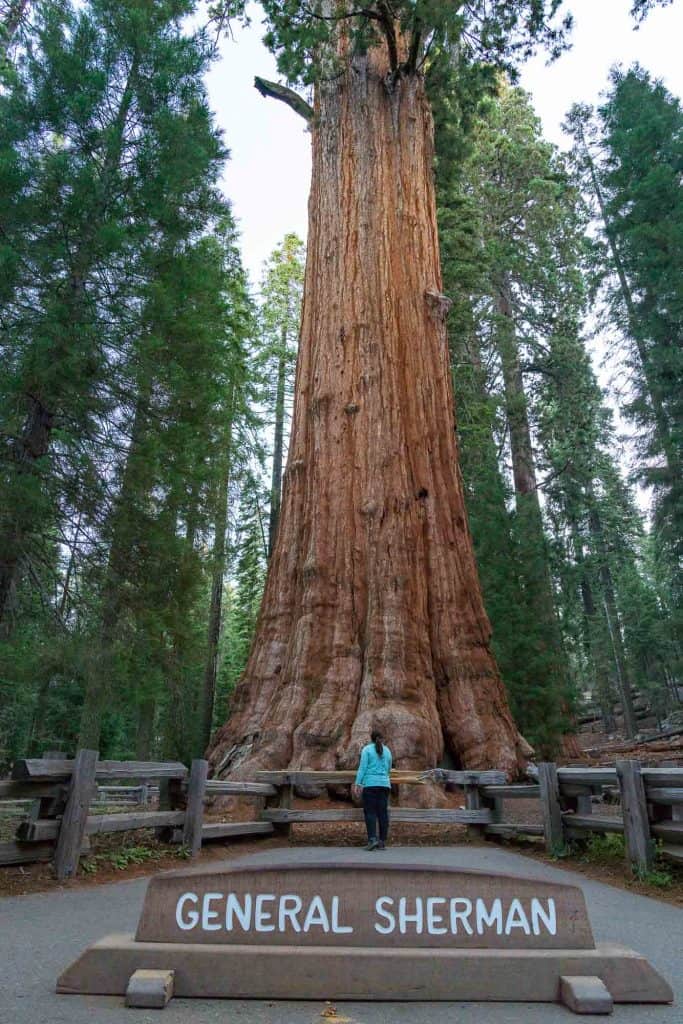
The General Sherman Tree is the biggest tree by volume in the world! So this is pretty much the must-see thing at Sequoia, in my opinion.
I’ve gone to Sequoia multiple times, and I visit General Sherman each time. It’s really that special and amazing. Seeing this tree next to the smaller sequoias in the grove just puts things into perspective.
When I last visited in summer, I got to the parking area around 6:45 am and I had the Sherman all to myself once I hiked down there. So if solitude is important to you, I’d aim for that time. Otherwise, I’d just try to get there before 9:00 am to get a parking spot.
Hike Stats
- Distance: 1.1 miles
- Elevation Gain/ Loss: 200 feet
- Trail Type: Out & Back
- Difficulty: Easy
- Check current conditions and download on AllTrails
4. Hike the Congress Trail
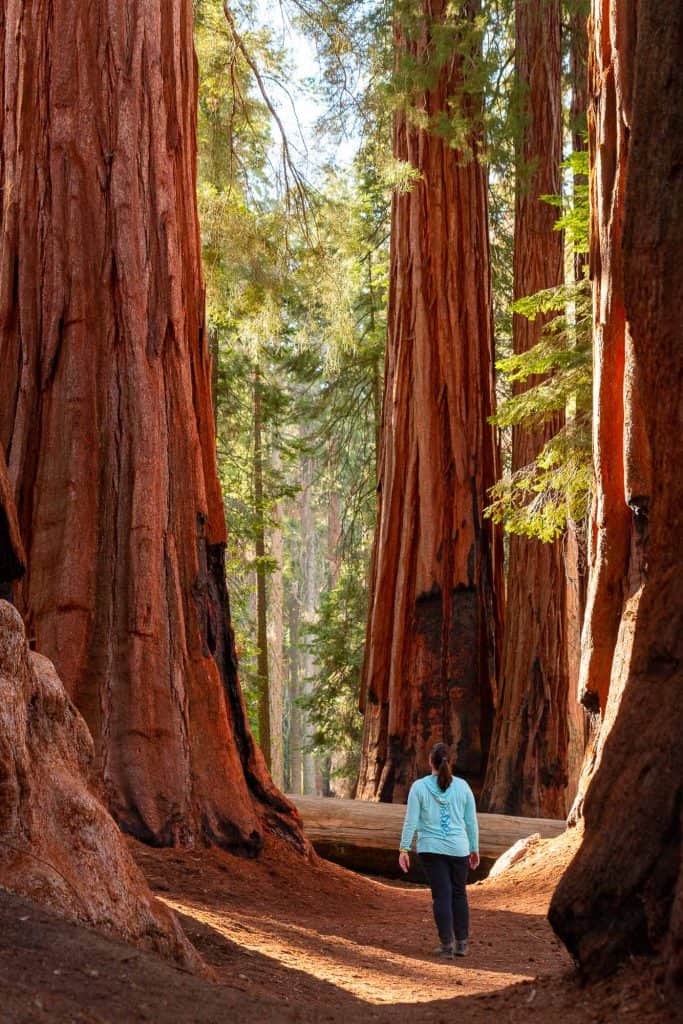
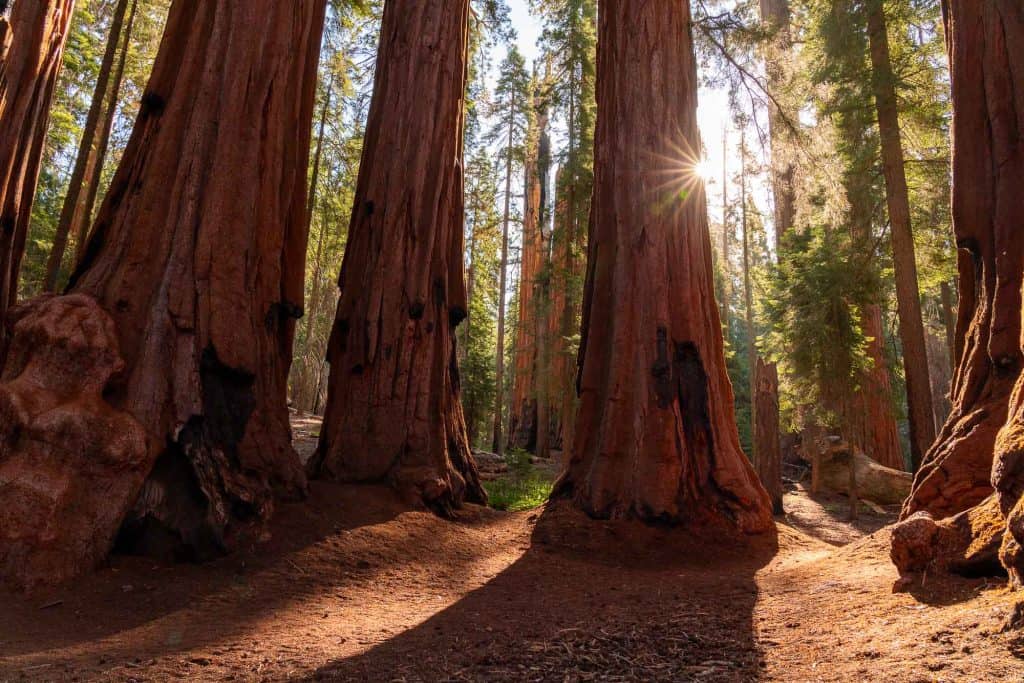
The Congress Trail starts right next to the General Sherman Tree. It’s a loop trail through the Giant Forest and takes you to other mighty giants like the McKinley Tree, President Tree, Chief Sequoyah Tree, and the House and Senate groups (hence, the name of the trail: Congress).
This is the best sequoia tree hike in the park because of how up close and personal you can get to the trees on this trail. Unlike near the Sherman tree, where the trees are fenced off, just walking down the Congress Trail allows you to stand right next to these giants – and still be on trail!
And if you’re lucky, in July the grove sees lupine blooms – one of my favorite wildflowers. I was nearly in tears just seeing them blowing in the breeze next to these massive trees. Nature is amazing!
Hike Stats
- Distance: 3 miles
- Elevation Gain/ Loss: 500 feet
- Trail Type: Loop
- Difficulty: Easy
- Check current conditions and download on AllTrails
5. Hike Tokopah Falls Trail
After taking in the sequoias, it’s time to experience a different part of the park: the beautiful granite features!
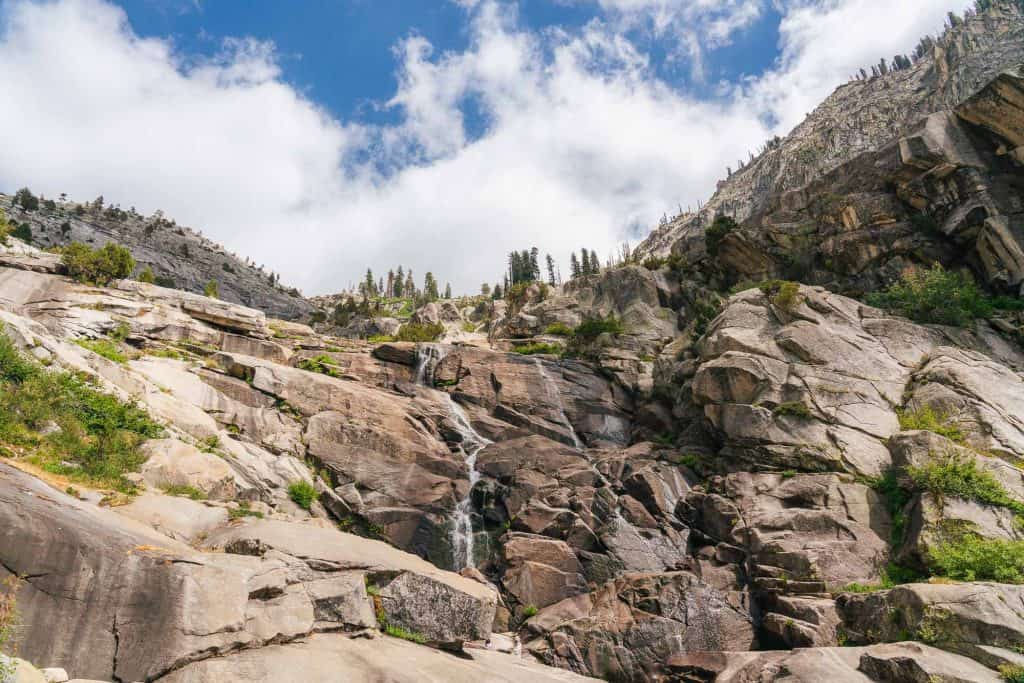
You’ll hike through the forest along the Marble Fork before popping out and getting amazing views of the huge granite walls and mountains around you like the Watchtower.
The hike to Tokopah Falls is moderate, and the best views of the waterfall will be in early summer when the water is flowing the strongest. When I did this hike, it was mid-July after a low-snow winter and the falls were basically a trickle.
It was still beautiful though! And I’d actually still recommend it even later in summer because the mountain views are really beautiful and hanging out by the river is a nice midday treat.
Hike Stats
- Distance: 4.25 miles
- Elevation Gain/ Loss: 650 feet
- Trail Type: Out & Back
- Difficulty: Moderate
- Check current conditions and download on AllTrails
Pro tip: If you’re visiting in early spring and there is still snow on the trail, or in the fall and there’s no more water flow, you may want to swap this hike for the Big Trees Trail or Tharp’s Log Loop. See more options in my guide to hiking in Sequoia National Park.
6. Eat lunch at Tokopah Falls or Lodgepole Market
The end of the Tokopah Falls trail is a perfect place to eat lunch with plenty of huge boulders to lounge on. Or you could eat lunch closer to the trailhead by the river – there’s plenty of little nooks along the trail to dip down to the creek – perfect spots to sit, soak in the river, and eat some packed food!
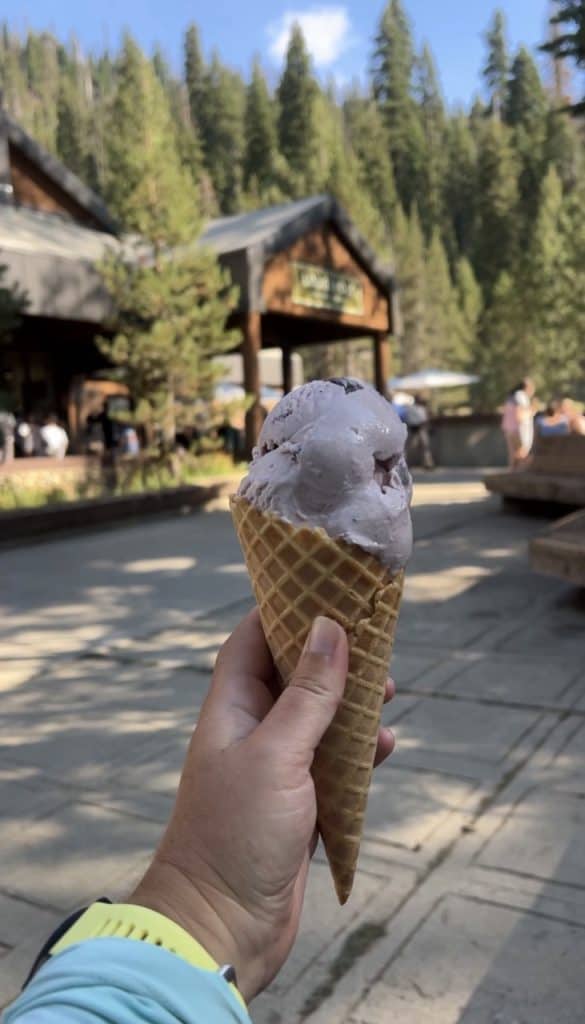
Or if you didn’t pack lunch or want more amenities (or ice cream!), head over to the Lodgepole Market for your midday break. This is also the spot to grab T shirts and sweatshirts if you’re looking for clothing souvenirs.
7. Visit the Giant Forest Museum
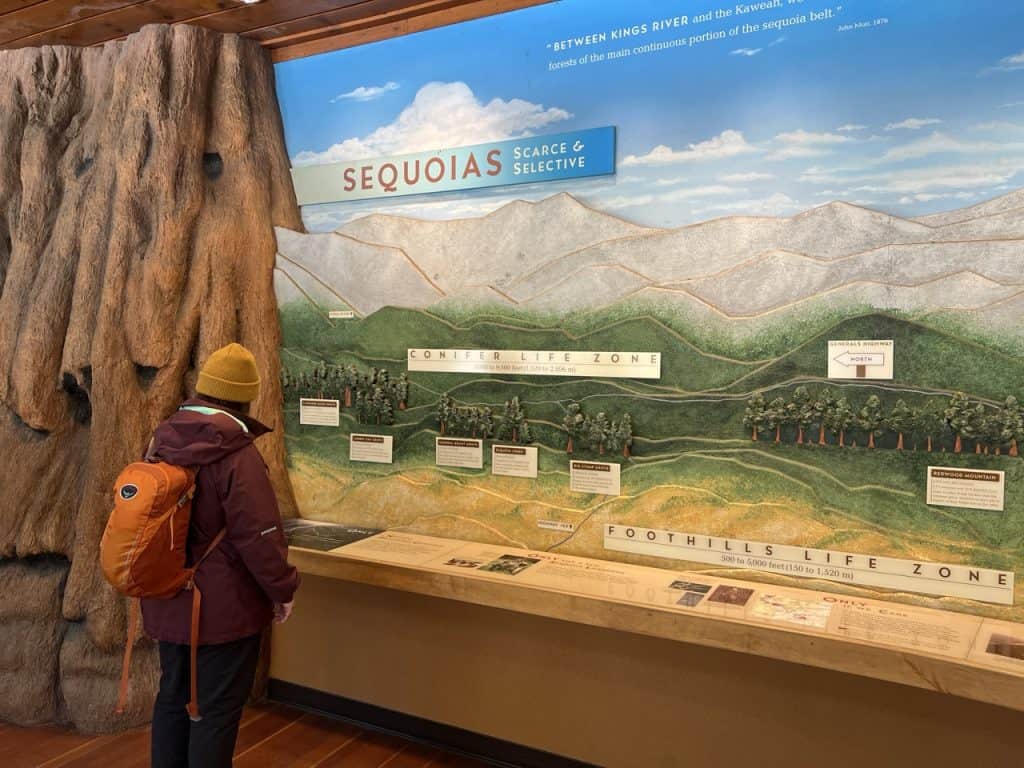
The Giant Forest Museum is the best spot to learn all about sequoia trees and their lifecycle. You can also chat with park rangers here if you have any questions about the park!
I like visiting this spot later in the day to escape the heat and relax after a morning of hiking.
Pro tip: The next few stops — Crescent Meadow, Tunnel Log, and Moro Rock — are all connected by the Crescent Meadow Road, which begins at the Giant Forest Museum, so your exact order may depend on whether private cars are allowed or whether you’re using the shuttle.
8. Explore Crescent Meadow
Crescent Meadow is an idyllic green meadow flanked on all sides by sequoia trees. It’s a really beautiful and peaceful place to just take in the grandeur of the trees. To me, it feels a little more “wild” than the General Sherman and Big Trees trails.
You can make your walk by the meadow as short as 0.25 miles or as long as 1.5 miles.
Driving tip: The road to Crescent Meadow is closed to private vehicles on weekends and holidays when the free park shuttle is running. So you’ll need to wait until after 6 pm if you’d like to drive your own car. Honestly, the parking here kind of sucks, so I’d take the shuttle anyways from the Giant Forest Museum.
9. Drive through Tunnel Log
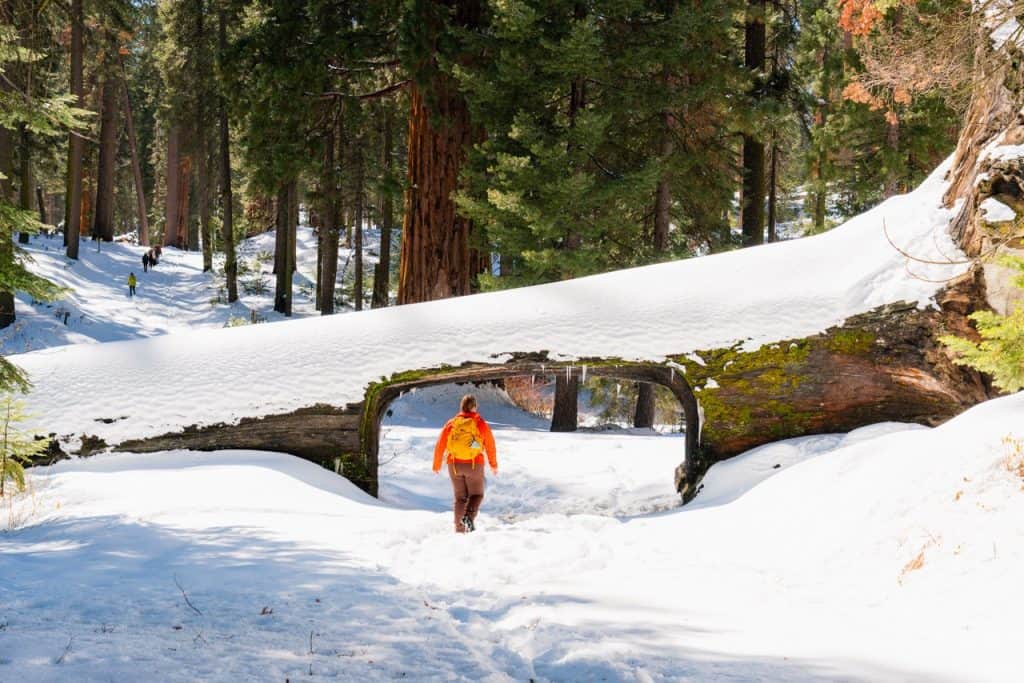
Tunnel Log is a huge, fallen sequoia tree that you can drive through! It’s a great photo op spot, but it can be hard to get a picture if there are lots of cars waiting and also trying to get a photo. Early evenings and mornings will be your best shot. Otherwise, just enjoy the experience!
Tunnel Log is actually on the road between Moro Rock and Crescent Meadow. If you’re driving yourself to Crescent Meadow vs. taking the park shuttle, you’ll drive through it on your way there.
The park shuttle actually doesn’t fit under the tree and takes the bypass.
So depending on what day of the week you’re visiting and what time it is, you’ll need to decide how to time your visit to Tunnel Log (after 6 pm everyday will be best to drive yourself).
10. Watch sunset from Moro Rock
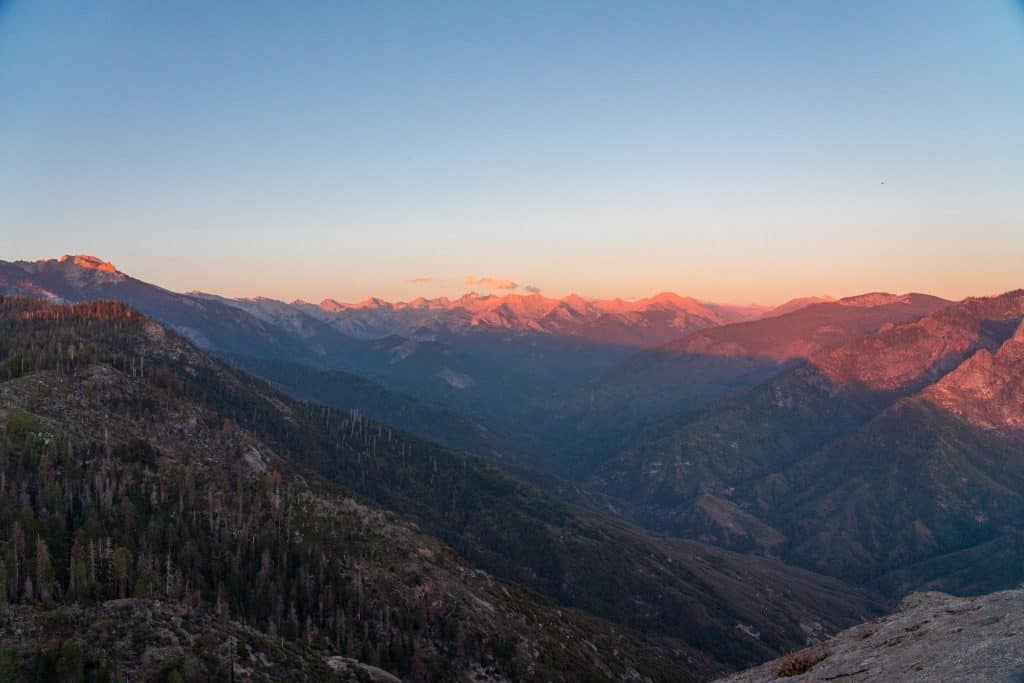
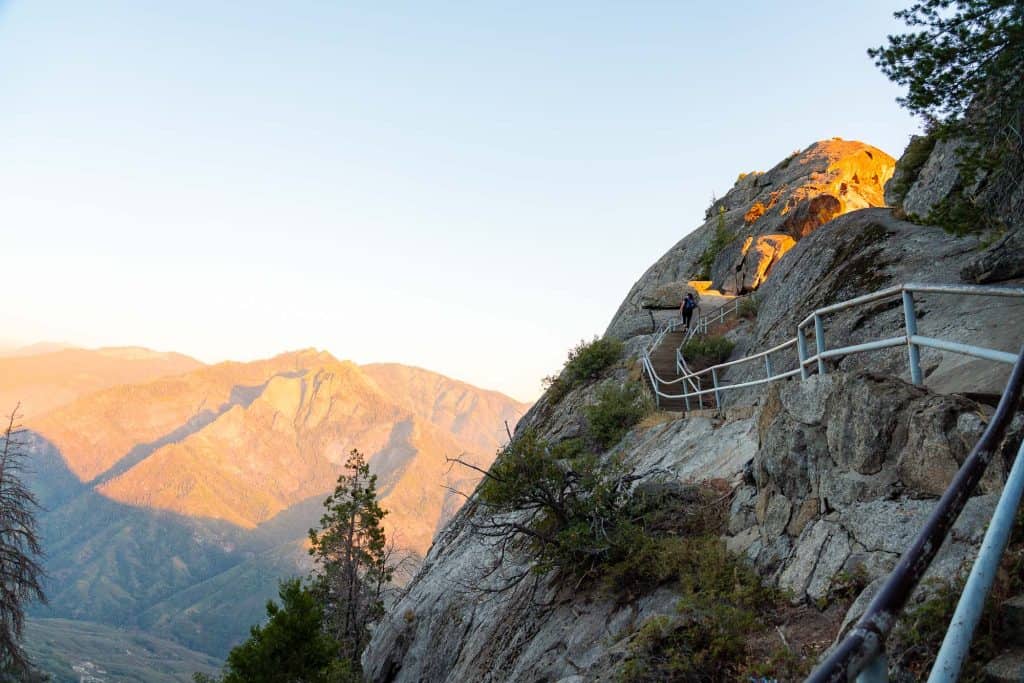
End your day by climbing up the 200+ steps to the top of Moro Rock to witness one of the best sunsets of your life!
I think sunset here is best vs. morning or sunrise because you can watch the alpenglow turn the Kaweah mountains pink-red. And you get to watch the sun dip down below the Foothills into the Central Valley – where you drove up from this morning!
It’s incredibly gorgeous and should not be missed. But if you have a huge fear of heights, you may want to swap this for the Hanging Rock Trail.
Either way, make sure you bring a headlamp – one of the 10 essentials – with you on this sunset hike! It can get dark fast, and you don’t want to misstep on Moro Rock.
Hike Stats
- Distance: 0.5 miles
- Elevation Gain/ Loss: 200 feet
- Trail Type: Out & Back
- Difficulty: Moderate
- Check current conditions and download on AllTrails
Pro tip: This is a super small parking lot. But because this hike is so short, people tend to come and go regularly, so I’d wait for a spot to open up before giving up.
Best Time to Do a Sequoia Day Trip
While most of what I’ve mentioned in this itinerary is open year-round, I’d recommend your first visit be between June and October. This is when the snow has melted and all of the roads in the Giant Forest area will be open, making it easier to get around and enjoy your visit.
How This Itinerary Changes by Season
The biggest changes to this itinerary will be in spring, where the weather is the most variable depending on the previous winter and current spring!
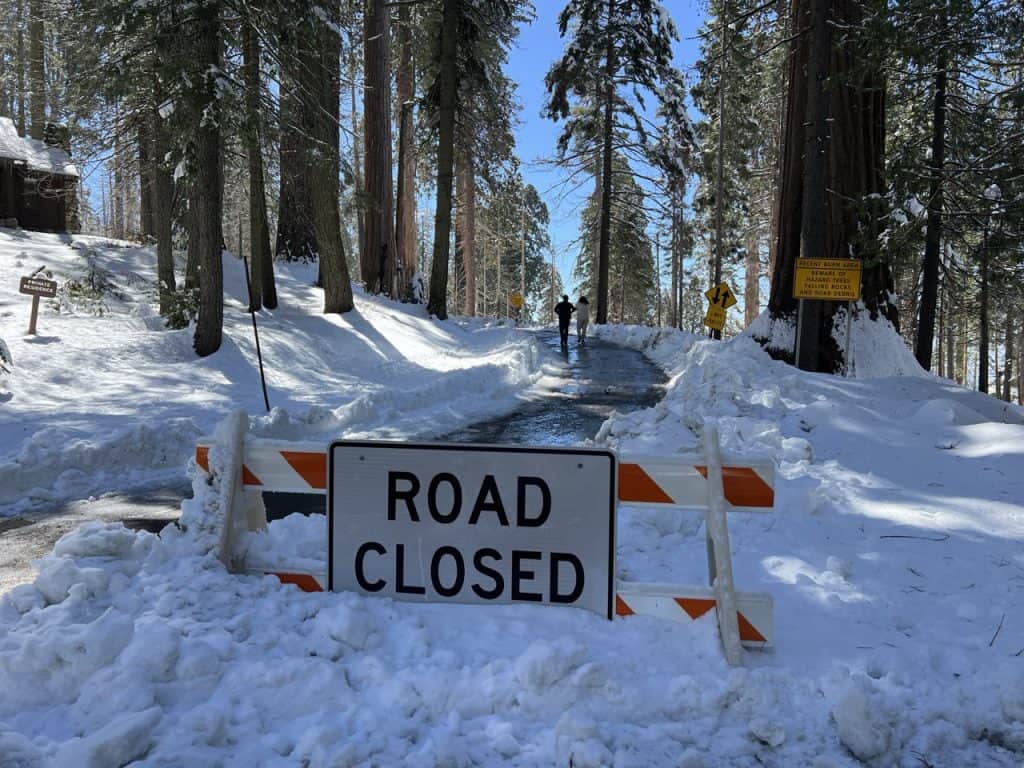
In 2026, the road to Moro Rock and Crescent Meadow was still closed for most of May, for example, which definitely would change how you spend your day in the park!
If Crescent Meadow Road Is Closed
If Crescent Meadow Road is closed and the park shuttle is not running, you’ll lose easy access to Moro Rock, Tunnel Log, and Crescent Meadow by car. In that case, keep the day focused around General Sherman, Congress Trail, the Giant Forest Museum and Big Trees Trail.
If you’re up for hiking to Moro Rock from the Giant Forest Museum, I’d still highly recommend it. Just probably not for sunset unless you don’t mind miles of night hiking after. You’ll either hike the road or the trail adjacent to the road depending on how much snow is around.
If You Can’t Do Moro Rock at Sunset
If you can’t do Moro Rock for sunset, use Amphitheater Point as your backup. It’s right off Generals Highway, so it’s a much easier stop if the road to Moro Rock is closed, you’re short on time, or you don’t want to hike back in the dark.
If You’re Visiting in Winter or Early Spring
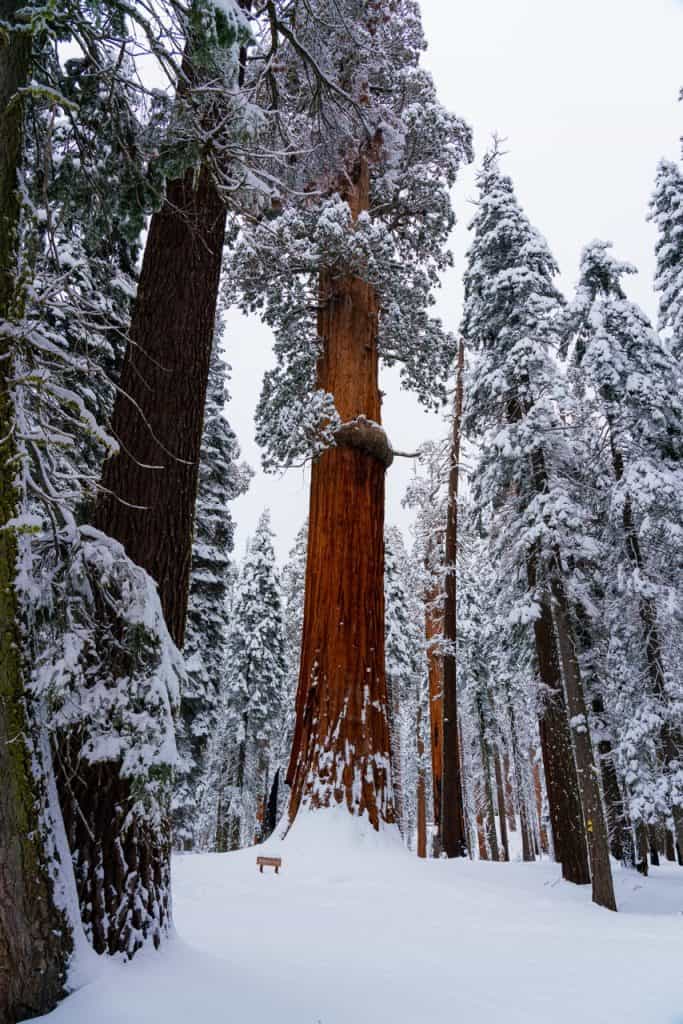
If you’re visiting in winter or early spring, don’t follow this itinerary exactly. Snow, chain requirements, shuttle access, and road closures can change what is realistic in one day.
For winter, I’d treat this as a Giant Forest-focused trip instead of trying to fit in Tokopah Falls, Crescent Meadow, Tunnel Log, and a Moro Rock sunset.
Go see the General Sherman, snowshoe the Congress Trail, and hike the Big Trees Trail.
What I’d Skip With Only One Day in the Park
Like I said, you can’t see everything in the Sequoia area in one day. I’d skip the following places if you only have a day to enjoy the park:
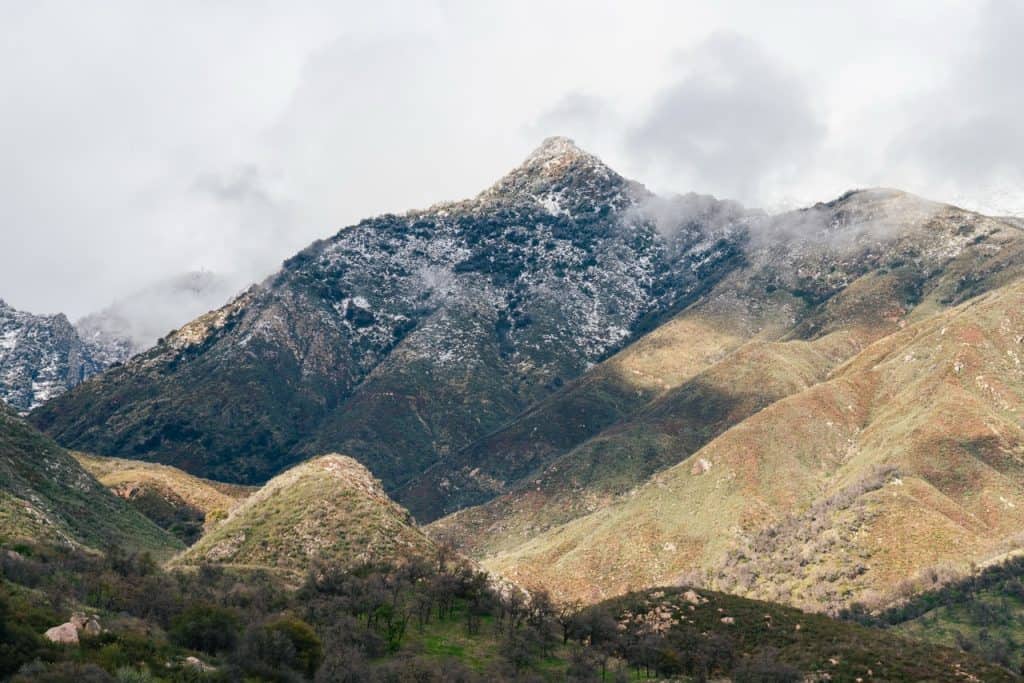
- Foothills area: pretty, but not worth prioritizing over the Giant Forest on a first visit.
- Mineral King area: stunning, but too remote for a one-day Sequoia itinerary.
- Crystal Cave: only worth adding if you already have tickets and are willing to cut a hike.
- Long day hikes like Pear Lake and Alta Peak: amazing, but they need their own full day.
- Kings Canyon National Park: absolutely worth visiting, but Kings Canyon deserves its own day.
These places are still worth visiting with more time, so use my lists of the best things to do in Sequoia National Park and top Kings Canyon National Park sights if you’re building a longer itinerary.
Tips for Visiting Sequoia National Park With Limited Time
Arrive Early
If you want to make the most of your one day in the park, I’d enter as early as you can.
Like I said earlier, I got to the General Sherman Tree at 6:45 am on a summer weekday and had it to myself and was the first in the lot. You might need to be even earlier on a weekend if you also want it to yourself.
But for most people, I’d recommend entering before 8 am. Especially because the Ash Mountain Entrance only has 1 entrance booth and can get backed up if you wait any longer – especially in summer and on weekends.
Park Shuttles
Sequoia National Park runs shuttles in the Giant Forest and Lodgepole Area during the summer and some winter holiday weekends.
In 2026, those times and dates are: 8:00 am – 6:00 pm from May 22 – September 7, 2026.
If you don’t want to worry about driving around and parking, especially on busy summer days, I’d park at the Giant Forest Museum and then take the shuttle lines to all of your stops for the day.
Every spot I’ve mentioned in this itinerary has a corresponding shuttle stop (except Tunnel Log), so you won’t miss out!
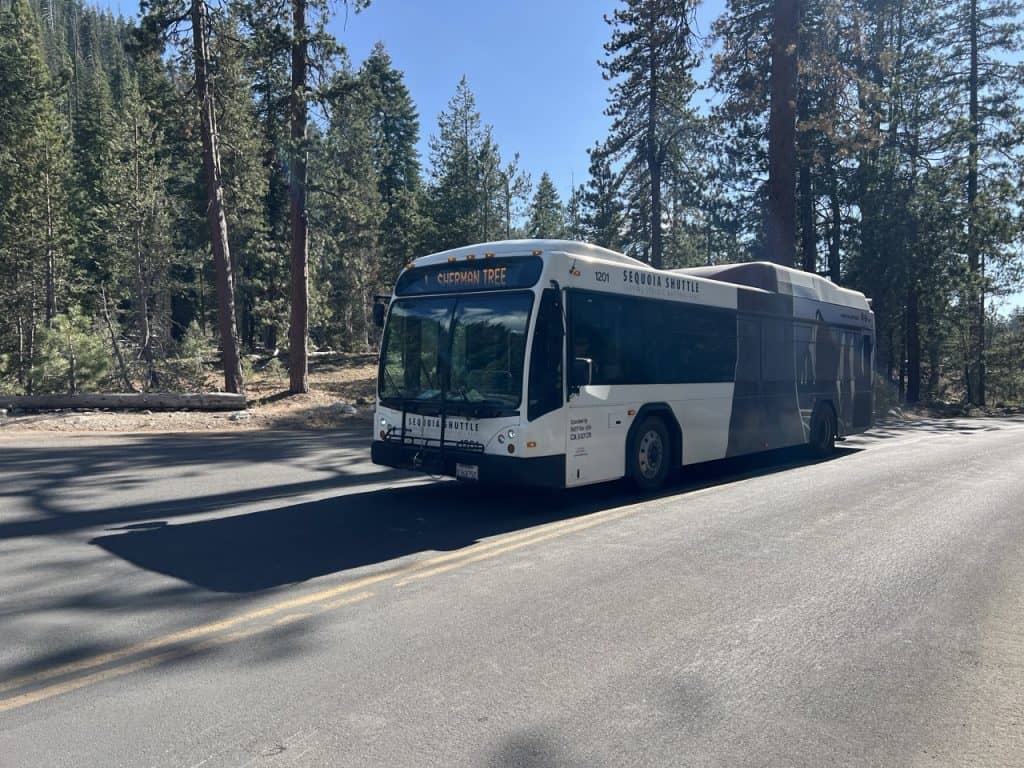
If you’re visiting from Visalia and don’t want to drive at all (or can’t drive) – and don’t mind missing sunrise and sunset in the park – you can book a trip on the Sequoia Shuttle and then use the free park shuttles to get around the park.
Know Before You Go: More Sequoia Tips
Leave No Trace
Adhering to the 7 principles of Leave No Trace ensures that we keep our wild spaces healthy and beautiful, and keep a good wilderness experience for the land and fellow hikers.
Doing things like staying on the designated trails, not littering, not playing music out loud, and adhering to fire restrictions, are all examples of “leaving no trace”.
Remember that in areas where there are fences around sequoia trees, you should NOT climb over the fences to get closer to the trees. There are plenty of hikes in the park where there are no fences around the trees – do these hikes if you want to hug a tree.
The 7 principles are:
- Plan Ahead and Prepare
- Travel and Camp on Durable Surfaces
- Dispose of Waste Properly
- Leave What You Find
- Minimize Campfire Impacts
- Respect Wildlife
- Be Considerate of Other Visitors
Park Entrance Fees
It costs $35 to enter Sequoia National Park per car. There is a $100/person surcharge if you are not a US resident.
I highly recommend everyone purchase an America the Beautiful Pass. It’s $80 for US-residents and $250 for non-US residents for the entire year.
Black Bears
Sequoia is home to black bears, and you can see them anywhere in the park at any time.
You need to protect your food from bears, and shouldn’t leave any food or scented items in your car overnight.
If you come across a bear on a hiking trail, don’t run! Back away slowly, put space in between you and the bear, and just yell at it – it will probably run away faster than you think.
It’s illegal to deploy bear spray in the park, so just practice safe bear habits.
Download Offline Maps and Apps
There is virtually no service in Sequoia National Park. So make sure you download driving and hiking maps ahead of time.
If you are in a pinch, there is WiFi at the Foothills Visitor Center and the Lodgepole Market, but it’s not the fastest.
I also love to download the park on the National Park Service app. It’s almost like having a park ranger in your pocket while you’re out exploring!
Try AllTrails+
Download offline maps, preview trails in 3D, access National Park guides and more! Use code “backcountryemily30” to get 30% off of AllTrails+.
Pack Layers
Even in summer, the weather can swing wildly in the mountains! Making sure you pack a warm jacket and a rain jacket is a good idea, especially when you’re adventuring away from your car.
I always make sure I’m carrying the 10 essentials with me when I’m day hiking to be prepared in case of an emergency.
Dogs on Trail
Sequoia is not a dog friendly park. Dogs are not allowed on any trails or in any park buildings in Sequoia, though they are allowed at campgrounds, picnic areas, parking lots, and they can stay with you in Wuksachi Lodge.
The one place you can take a picture of your dog with a sequoia tree is at the Sentinel Tree, outside of the Giant Forest Museum.
Where to Stay in Sequoia National Park
If you want to be right in the Giant Forest area, you’ve got 2 options: the Wuksachi Lodge hotel or camping at Lodgepole Campground.
Both of these spots are hard to get stays at, and camping can be a ton of work for just one day, so I’d actually recommend staying in Three Rivers the night before if you can. It puts you close to the Ash Mountain Entrance, which makes it much easier to get to General Sherman early.
I love Autocamp, and while I haven’t stayed at this location, it’s got such a great vibe (airstream trailers!!) and they have a location in Three Rivers!
Think a Guided Sequoia Day Tour Might Be Better?
I know that day trips can feel like such a hassle, especially if you just don’t feel like driving all over the place and just want to enjoy your day.
I’d especially consider a guided tour if you’re staying in Fresno or Visalia without a rental car, nervous about mountain roads, or visiting during a season when parking and shuttle logistics feel like too much.
I haven’t done a guided tour to Sequoia myself, but check out some of these highly rated day trips if this sounds more your speed!
FAQs About Visiting Sequoia National Park For the Day
What to do in Sequoia National Park in one day?
With one day in Sequoia National Park, I’d focus on the Giant Forest area. Visit the General Sherman Tree, hike Congress Trail, add Tokopah Falls if you want a longer hike, stop at Tunnel Log and Crescent Meadow if the road is open, and end at Moro Rock for sunset.
Is one day enough for Sequoia National Park?
One day is enough time to see the main sights in the Giant Forest area, but it’s not enough time to explore the deeper parts of the park like Mineral King, Crystal Cave, Mt. Whitney, or longer alpine hikes.
Can you visit Sequoia National Park as a day trip from Fresno?
Yes, it’s very doable to visit Sequoia from Fresno for the day. I’d recommend driving in via Highway 180 and entering via the Big Stump Entrance.
Can you visit Sequoia National Park as a day trip from Visalia?
Yes! It’s very easy to do this. You can either drive yourself or take the paid shuttle from Visalia to the Giant Forest Museum.
Can you see Sequoia and Kings Canyon in one day?
No. There is not enough time to also explore the best of Kings Canyon in the same day as Sequoia. If you just wanted to drive through the park and the Giant Sequoia National Monument, you could, but you won’t see the best parts of Sequoia or Kings Canyon if you do this.
Do you need a reservation for Sequoia National Park?
You don’t need a reservation to enter Sequoia. But you will need reservations for camping and lodging.
Can you drive through Sequoia National Park in one day?
Yes, you could drive a loop from Fresno or Visalia up the General’s Highway and then out through the Big Stump Entrance at Kings Canyon if you’d like, but you’ll spend more time driving outside of the park than exploring inside of it, so I wouldn’t really recommend it unless you’re just looking for a scenic drive vs. hiking.
Make the Most of Your Sequoia National Park Day Trip
One day in Sequoia National Park is not enough to see the entire park, but it is enough to understand why this place is so special.
If you start early, focus your time around the Giant Forest, and resist the urge to add Kings Canyon or big alpine hikes, you can see the largest tree in the world, walk among giant sequoias, hike to a waterfall, and end your day with sunset from Moro Rock.
And if this first visit leaves you wanting more, start planning a longer Sequoia and Kings Canyon itinerary next — this park only gets better when you have more time to explore.


Hi Emily!
Thank you very much for this article. It is so helpful!
May I ask what area is the first picture of you with the trees taken.
I would love to get a picture of us with the trees in the background like that.
Thank you!
Hi Eiko,
You’ll find this along the Congress Trail in the main groves – along with tons of other beautiful sequoia tree and grove compositions!