
Patagonia Without a Car: Bus Travel in Chile & Argentina
Planning how to get around Patagonia can be one of the most confusing parts of organizing a trip – especially if you’re planning a hiking-heavy itinerary and don’t want to rent a car that will sit unused for days.
That was exactly my situation when planning my three-week Patagonia trip. I knew I’d be spending multiple nights backpacking, so renting a car just to leave it in trailhead parking lots didn’t make much sense.
After researching different options, I discovered that Patagonia’s long-distance bus network is actually one of the easiest and most affordable ways to travel between major destinations.
During my three-week (partially solo) trip through Chilean and Argentinian Patagonia, I relied entirely on buses between major trekking and transportation hubs like El Chaltén, El Calafate, Puerto Natales, and Punta Arenas.
And while I was a little nervous at first, my experience was overall incredibly positive and gave me more confidence to travel without a vehicle in the future. Taking the bus around the popular destinations in Patagonia is something I now recommend to the majority of travelers – especially for backpackers and people on a budget.
In this guide, I’ll explain how to travel around Patagonia using buses, what to expect, which routes I took, the companies I used, and why buses can be the easiest way to travel between hiking destinations.
Backcountry Emily contains affiliate links and I may receive compensation - at no extra cost to you! As an Amazon Associate I earn from qualifying purchases. See my Privacy Policy for more information.
Can You Explore Patagonia Without a Car?
Short answer: yes. It’s surprisingly easy to explore Patagonia without a car. Many travelers rely on private bus systems that connect the major towns across both Argentina and Chile.
During my trip, I traveled between places like Puerto Natales, El Calafate, and El Chaltén entirely by bus, taxis, tours, and my own legs, and it worked surprisingly well.
Here are the main ways to get around Patagonia without a car:
- Buses: The most common and affordable option for traveling between towns
- Guided tours: Great for visiting major attractions like Perito Moreno Glacier or Torres del Paine
- Private transfers: Faster but much more expensive transportation between destinations
- Taxis: Best for short local rides, not long distances
- Hitchhiking: Can be done, but not something I personally relied on
Let’s break down how each option works.
Buses (The Main Way to Get Around)
Private bus companies are the most common and affordable way to travel between towns. The schedules vary by season, but in general they make it very possible to move around Patagonia without renting a car.
🚌 Easily book your bus tickets here!
Taxis
Taxis are easy to find at major transportation hubs like Punta Arenas, Puerto Natales, and the bus stations in El Calafate and El Chaltén. They’re useful for short trips around town or getting to hotels, but they’re too expensive for traveling between destinations.
Guided Tours With Transportation
Another convenient option is booking guided tours that include transportation. Many excursions from towns like El Calafate provide round-trip transport to major attractions.
For example, when I arrived in El Calafate, I booked a guided tour to Perito Moreno Glacier. Transportation from town to the glacier and back was included, which made the entire experience simple without needing a car.
Private Transfers
Some companies offer private transportation between destinations – for example from Torres del Paine to El Calafate. This can save a lot of time compared to buses, which may require multiple connections over two days.
These transfers are usually booked through platforms like Viator or GetYourGuide. They’re much faster, but significantly more expensive than buses, so they’re best for travelers with larger budgets and limited time.
Hitchhiking
Hitchhiking is relatively common in parts of southern Patagonia, especially around climbing and mountaineering areas where a strong backpacker community exists.
That said, I didn’t hitchhike during my trip. As a solo female traveler who doesn’t speak Spanish, it wasn’t something I personally felt comfortable relying on. I’ve hitchhiked before while hiking the Pacific Crest Trail in the United States, but I had more luggage than just a backpack on this trip.
While some budget travelers do use it, I’d only consider hitchhiking if you’re experienced with it, comfortable with the risks, and traveling super light.
Why Travel Patagonia by Bus?
I’m not going to lie – I was a little stressed about relinquishing entire control over my day and schedule by not renting a car and needing to adhere to bus schedules.
But I actually loved traveling by bus in Patagonia and it was the answer to a lot of logistical issues with the amount of hiking and backpacking I was planning to do.
Here’s why I recommend the bus for most travelers:
1. It’s much cheaper than renting a car. Rental cars in Patagonia can be expensive, especially once you add insurance and gas. Plus, if you’re going to be backpacking and not using the car for multiple days, you won’t waste money with the car just sitting in a parking lot.
2. You don’t need to deal with parking. Lots of smaller hotels and Airbnbs don’t have dedicated parking lots – so you’ll need to drive around the towns looking for places you can legally park the car overnight.
3. You don’t have to worry about long driving distances. Patagonia is huge. Many destinations are several hours apart, and buses allow you to relax instead of focusing on the road.
4. Bus routes already connect the major travel hubs. Places like Punta Arenas, Puerto Natales, Ushuaia, El Calafate, and El Chaltén are already linked by regular bus routes.
5. Border crossings are easier. Crossing between Chile and Argentina involves paperwork and inspections. When you take a bus, the companies handle the process every day and guide passengers through it. If you rent a car, you’ll need to make sure you have permission to cross country lines (if you are visiting both countries) and most likely pay an extra fee to do so.
🚌 Compare multiple bus companies schedules and pricing here.
What It’s Like Taking the Bus in Patagonia (My Experience)
Before my trip, I wasn’t sure what to expect from long-distance buses in Patagonia. But overall, the experience was surprisingly comfortable and straightforward.
The routes are run by private bus companies rather than government transit, and the buses are designed for long-distance travel.
Here’s what the experience is typically like:
Buying Tickets
You can buy tickets online in advance or directly at bus stations in town. I bought mine in advance for peace of mind since I was working with a tight schedule and my Spanish is not good.
You need your passport to book these tickets online – they ask for nationality and your passport ID at booking. You’ll also select your seats at booking: you don’t get to arrive and pick any seat.
I printed my tickets out at home and brought them with me because I think it’s always good to have a hard copy in case something happens to your phone.
Comfort and Seating
The buses I took were large coach-style buses with reclining seats, overhead storage, and luggage compartments underneath.
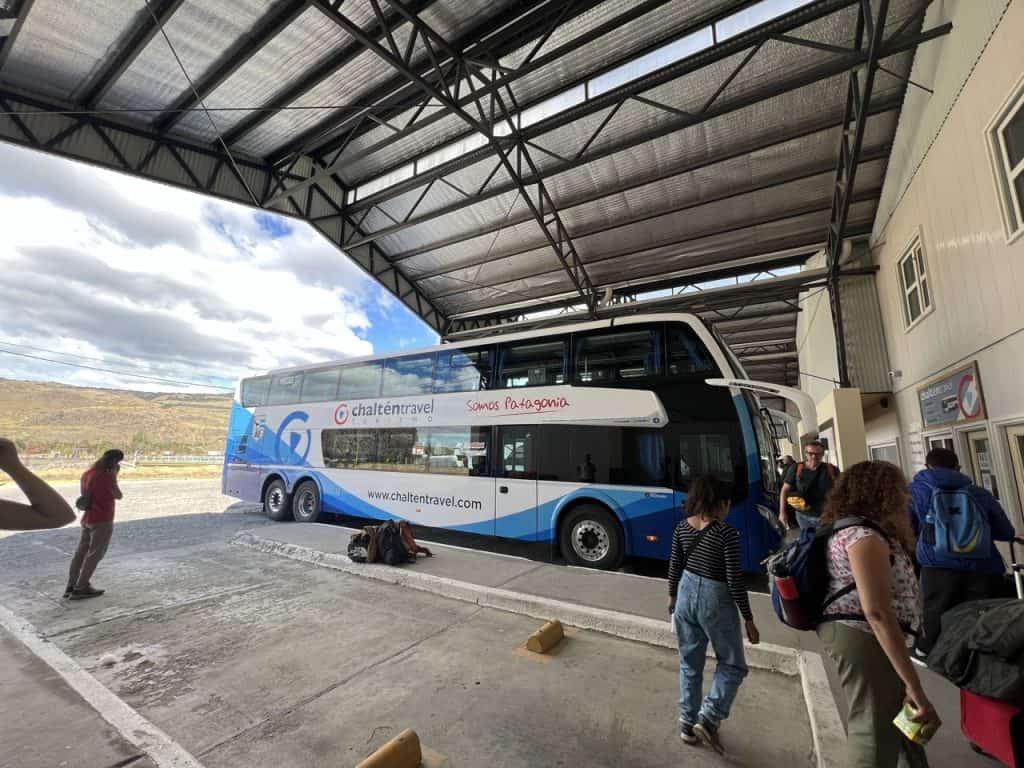
The comfort varied between providers. I took Bus Sur in Chile and ChalténTravel in Argentina. Bus Sur was a little more cramped – think economy airline seats but even less leg room – it was fine though. Chaltén Travel was a double decker bus between El Calafate and El Chaltén with much more spacious seats, reclining seats, and lots of legroom.
Luggage
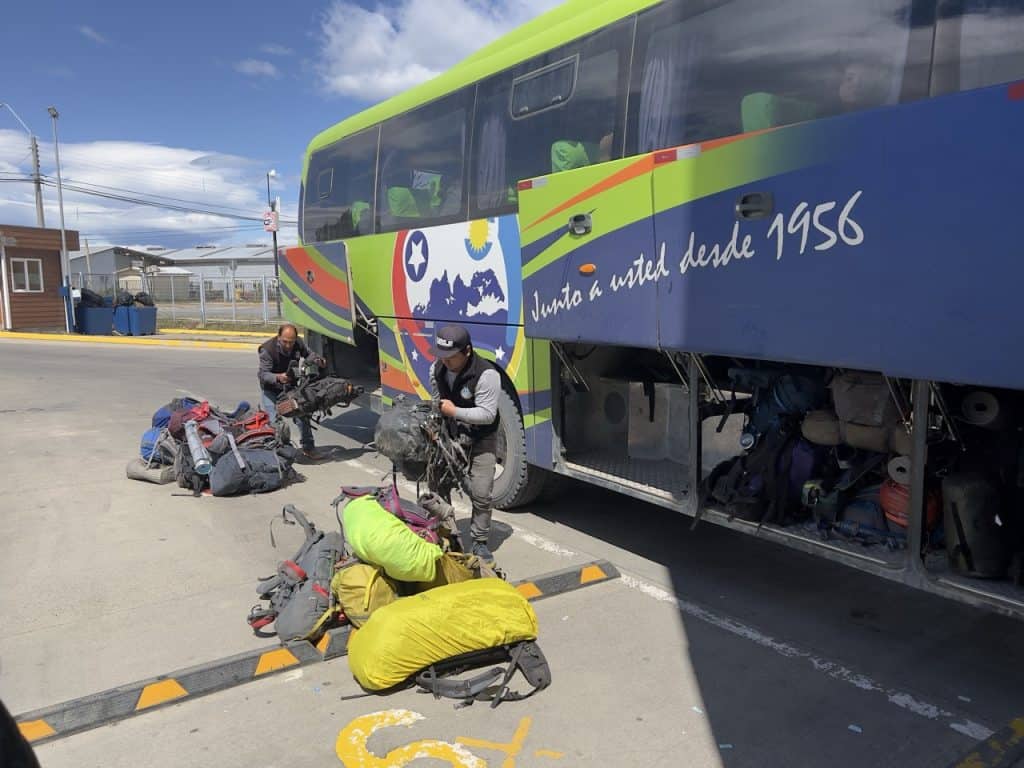
Your larger bags are stored under the bus, similar to airport baggage storage, while you can keep a small bag with you.
I was able to put 2 bags (my roller duffel and my backpacking pack) in the cargo area without paying extra.
On Board Amenities
I had USB-A charging ports on all of my buses. A couple times they didn’t work, but the majority of the time they did.
There are also bathrooms on board the buses, but I did not use them.
On two of my Bus Sur routes I was given a small fruit drink and cracker snack, but I’d recommend bringing your own food if you think you’ll get hungry.
Bus Stations
The towns have small but organized bus terminals where multiple companies depart from. They have bathrooms, small convenience stores, and seating inside and outside.
Delays
I took 6 buses during my trip and only experienced 1 delayed bus. It happened on my route from Puerto Natales to Torres del Paine with Bus Sur. The bus arrived about 45 minutes late for pickup, but we still reached the park on time.
After seeing how the shuttle system works inside Torres del Paine, I suspect the driver may have been waiting for late hikers or dealing with passengers who didn’t have return tickets.
👉 Check bus routes in Patagonia here via 12Go.
My Patagonia Itinerary Without a Car – 3 Weeks
Here’s my exact travel itinerary including flying days and the cities I transported between during my backpacking vacation in Patagonia.
- Days 1-2: Fly from SFO – Santiago, Chile – Punta Arenas, Chile. Taxi from airport to town.
- Day 3: Punta Arenas. Guided King Penguin full-day tour.
- Day 4: Bus 1 from Punta Arenas to Puerto Natales. Bus 2 from Puerto Natales to Torres del Paine.
- Days 5 – 13: Torres del Paine + Backpack the O Circuit
- Day 13: Bus from Torres del Paine to Puerto Natales
- Day 14: Bus from Puerto Natales to El Calafate, Argentina
- Day 15: Guided Perito Moreno Glacier Tour
- Day 16: Bus from El Calafate to El Chaltén
- Day 16 – 19: Backpacking in Los Glaciares
- Day 20: El Chaltén
- Day 21: Bus from El Chaltén to El Calafate
- Day 22: Taxi from El Calafate to Airport – begin travel home
As you can see, I tried to keep travel days as travel days and not do a ton of other things on them just because I wanted padding in case of weather issues, and I wanted personal resting time. On travel days I explored the cities and chilled out more.

Most Common Bus Routes in Patagonia
As you might guess, there aren’t endless bus routes through the Patagonia region. Even though the area is vast, the private bus companies only have routes to the most popular destinations.
Routes like the Carretera Austral are not bus-friendly.
Punta Arenas → Puerto Natales
If you are flying into Chile, you’re probably going to fly to Punta Arenas vs. Puerto Natales since there are many more flights and they’re less expensive. Because of this, there are a lot of bus departures daily from Punta Arenas to Puerto Natales.
- Time: ~3 hours
- Cost: $10-15 USD one way
I flew into Punta Arenas from Santiago and decided to spend 2 nights and do a full day tour, leaving for Puerto Natales and Torres del Paine the following morning.
If you are trying to go directly Punta Arenas – Torres del Paine: you can’t. You need to book a ticket for PA – PN and then PN – TDP.
👉 Check route timing for Punta Arenas to Puerto Natales here.
Puerto Natales → Torres del Paine
This is one of the most common ways hikers get to Torres del Paine National Park. I guarantee you’ll be on the bus with tons of other people beginning their W and O Trek journeys!
- Time: ~2 hours
- Cost: ~$20 one way (~$30 to transport to Lago Grey)
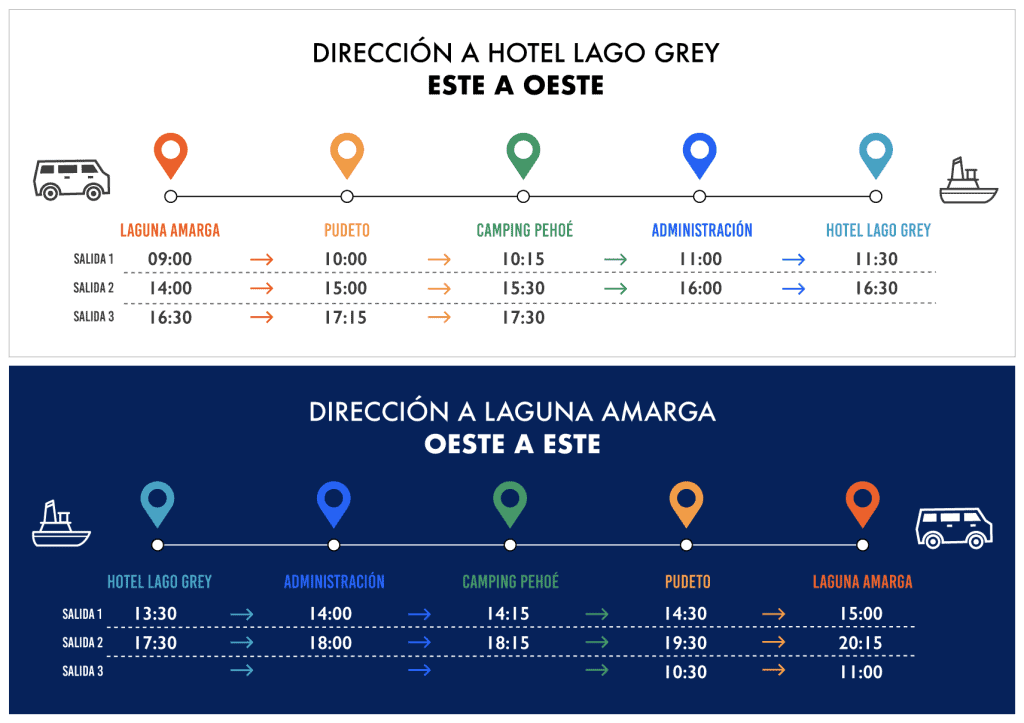
The bus stops at numerous places in Torres del Paine, which you can see from the image below. The most important stops for hikers are Laguna Amarga and Pudeto. My first stop on my trip was Camping Pehoé since I stayed there an extra night before starting the O Circuit.
If you’re hiking to Base Torres, or starting your O or W Treks from Central – just note that the bus doesn’t take you to the trailhead. You need to hop on the Las Torres-run shuttle from Laguna Amarga to go to Central. This shuttle costs 5,000CLP/person (as of 2023) in cash so make sure you have it on you.
You’ll also take this shuttle back to Laguna Amarga to get your bus back to Puerto Natales. The Welcome Center at Central will have a time chart posted for what time you should take the shuttle back to make your bus on time.
👉 Check availability for Puerto Natales to Torres del Paine here.
Puerto Natales → El Calafate
This is the route to get to Argentine Patagonia from Chile, and you do cross the international border. You’ll be asked to exit the bus and go through customs/ immigration with your passport.
If you are going from Chile → Argentina, make sure you have the immigration paper that was handed to you in the airport or at your previous port of entry to Chile!! This is necessary. Don’t lose it! If you’re crossing into Chile, you’ll probably be handed this paper and need to hand it over when you leave the country.
The travel time listed includes the border crossing and a short stop to stretch the legs – but could take longer if the border crossing is backed up. I’d try to leave on the first bus of the day to avoid this, and wouldn’t plan anything for El Calafate on the same day.
- Time: ~6 hours
- Cost: $40-55 one way
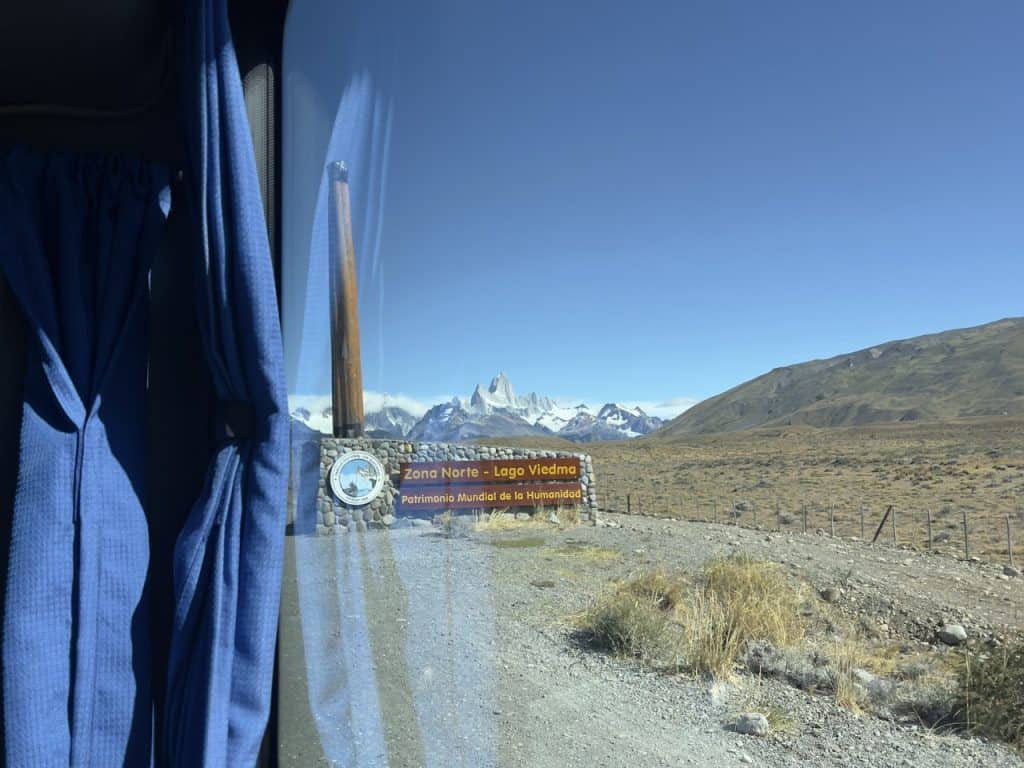
El Calafate → El Chaltén
This is the route you’ll take to get to the popular hikes like Fitz Roy in Patagonia. There isn’t a direct bus to El Chaltén from any city in Chile.
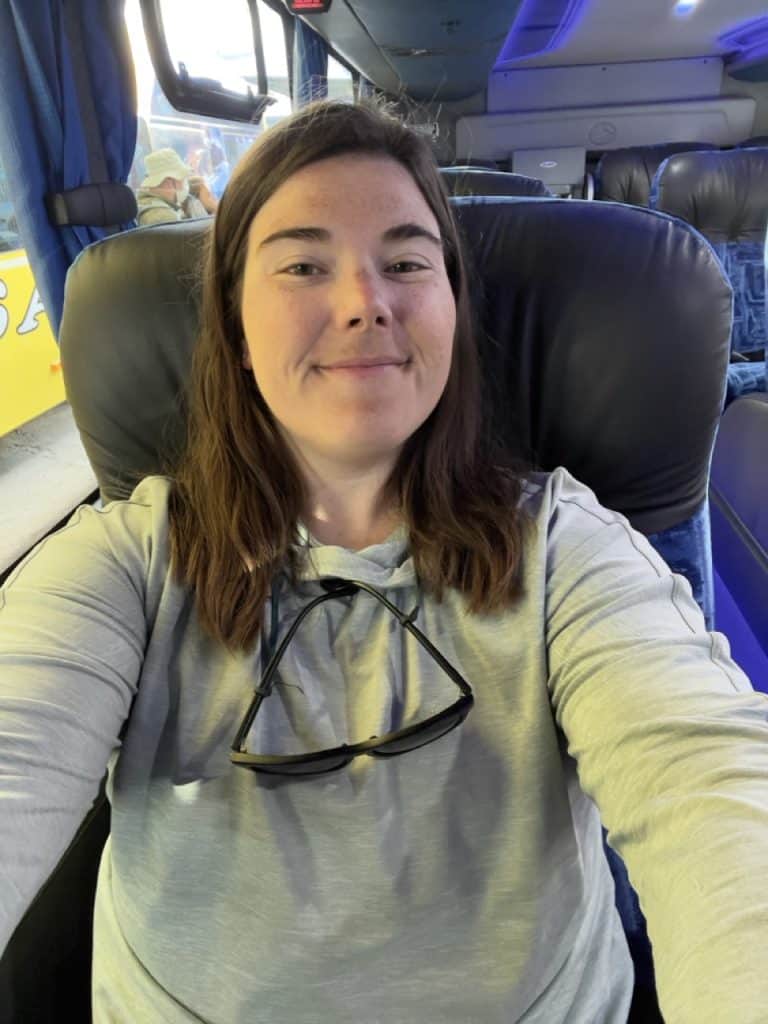
The bus seemed to take a while, but I had the comfiest seat of the trip on my bus with ChalténTravel Turismo. It was like business class for a bus (definitely book the single seat).
Something that surprised me was that you were required to tip the people who loaded your luggage onto the bus in Argentina at the bus station. This was not a thing in Chile. I’m also very unsure if these people actually worked for the bus company, but they were yelling at us and would not let you put your own bag into the luggage hold on the bus (they would block you), so you had to pay them for it to get loaded.
Luckily my friend had gotten some pesos and covered me on the way there, I needed to get cash for the way back specifically for this.
- Time: ~3 hours
- Cost: $40 one way
👉 Get the comfiest bus seat with ChalténTravel.
Ushuaia → Punta Arenas
- Time: 10-12 hours
- Cost: $58-69 one way
This is the most economical way to get in between the countries. Flights can cost $700 one way between these two cities (in general, it’s pretty expensive to fly between Chile and Argentina – any city)! So while the bus ride is long and involves a ferry crossing, it’s a fraction of the price of a flight.
El Calafate → Ushuaia
- Time: 17.5 hours
- Cost: ~$100 one way
I didn’t take this trip, and it’s definitely the longest and most taxing. It will take a full day with the first bus being at 3:00 am. This is not a direct bus. You’ll need to book a ticket from El Calafate to Río Gallegos and then a ticket from Río Gallegos to Ushuaia. The only bus company doing this route is Marga Taqsa.
It is much faster to fly between the two cities, and if you book your flight early enough it will probably cost about the same – but sometimes flight prices get jacked up when you’re actually planning your trip.
Destinations You Can Easily Visit Without a Car
I had no issues seeing everything that I wanted to see in both Chile and Argentina. Every super popular location, sight, or hike that I knew about before visiting was accessible by a combination of bus and guided tour.
El Chaltén
El Chaltén is a very small, walkable town and the trailheads to the most popular spots leave directly from the streets in the town!
You’ll be able to see and hike to places like:
- Fitz Roy
- Lago de los Tres
- Laguna Sucia
- Laguna Torre
Some of the more luxurious hotel stays are not directly in town and are further north on the highway, but there are taxis in El Chaltén, and if you’re staying in these locations, you should inquire with the hotel about the best way to get there from the town.

El Calafate
El Calafate is a larger city – not as walkable as El Chaltén and not as accessible to nature or hikes. There are many taxis and lots of guided tours that leave from the city though!
I only spent 1 full day here in order to do the “Big Ice” Perito Moreno glacier walking tour.

Puerto Natales
Torres del Paine National Park is the main attraction near Puerto Natales.
Many popular places are on the bus line through the park, the biggest problem is the bus only goes through to all of the stops in the park 2-3 times/day – there isn’t a separate National Park-run shuttle system. So if you wanted to do the Mirador Condor hike – a beautiful but very short hike – you’d have to wait a really long time to get a new bus to another spot in the park or just start walking the road and attempting to hitch hike.
The easiest places to get to in the park via bus will be:
- The Laguna Amarga Entrance (and a park-run shuttle to Central where you can hike to Base Las Torres to see the famed Towers)
- Pudeto (to take a ferry to Paine Grande)
- Hotel Grey
The vast majority of the hotels directly outside of the southern entrance of Torres del Paine are NOT accessible by bus. If you are staying in those hotels, you should rent a car or plan for private transportation.

Crossing the Argentina – Chile Border by Bus
You can cross this international border by bus, and I had a very smooth experience with a United States passport and using the Bus-Sur company. I was moving from Chile to Argentina, and was on the first bus time slot of the day leaving Puerto Natales going to El Calafate.
Every passenger was required to disembark from the bus. First we moved through leaving Chile – and I had to give back the small PDI paper that was given to me when I went through customs in Santiago.
Then, we had to enter Argentina. I didn’t need anything except my passport, and didn’t receive anything from the border patrol.
The process was pretty fast for us: I don’t think we spent longer than an hour at the border. However, I have heard that coming into Chile from Argentina can take longer since Chile is more strict with processing, customs, etc.
USA travelers don’t need a visa. If you are traveling with another passport, you should check with your government to see if you need one.

Tips for Traveling Patagonia By Bus
Bring Cash in Argentina
I mentioned this above, but there were people loading and unloading the undercarriage of the bus in Argentina and they would not let you give or take your luggage unless you tipped them in cash. So make sure you have some for each leg of your trip. I can’t remember how much I tipped, probably the equivalent of $5 USD each time.
Bring Food
Bus-Sur did have complimentary snacks for the trip from Punta Arenas to Puerto Natales and Puerto Natales to El Calafate, but they weren’t amazing. These are longer rides, so I’d make sure you have some calories and water to keep you happy for the trip. Try not to bring messy snacks.
Bring a Small Bag
I brought this small, stowable tote bag with me so I could keep valuables on my person on the bus. Patagonia is very safe, but camera gear is expensive and I’m paranoid, and I wanted to make sure that my wallet, passport, and snacks stayed in my lap vs. under the bus.
Locations in Towns
I’m a backpacker, so I thought each bus station was very walkable to town.
The only one that was a bit of a drag was walking from the El Calafate station to downtown. It’s downhill to downtown and uphill back to the station. Taxis do wait near the bus stations, so you can always grab one to take you to your accommodation.
Ticket Counters
Bus stations have ticket counters inside the building. I would arrive at least 15-20 minutes early to see if you need to check-in for your bus at the counter.
The only place I really had to do this was Puerto Natales. Everyone else seemed fine with the reservation from online – but it might vary by company – so I’d make sure you get there early to check in!
👉 Book your Patagonia bus tickets with 12Go!

Renting a Car vs. Taking the Bus
Looking back on my trip, I’m really happy I took the bus everywhere. I love road trips at home, but flying to new countries, hiking a ton every day, dealing with time differences, etc. I was tired a lot of the time in Patagonia, and driving would have just added to that tiredness!
There are 2 places I went that I would rent a car for in the future:
- Torres del Paine – if I wasn’t hiking the W or O.
- El Chaltén area – to explore more outside the town and for more sunrise and sunset photography.
Who should NOT travel Patagonia by bus:
- Travelers who want total schedule flexibility (sunrise/sunset chasing, photography)
- Anyone visiting remote areas like Carretera Austral
- People on a tight schedule who can’t risk delays or overnight connections
- Travelers uncomfortable navigating multiple bus connections
Cost
It’s less expensive to travel by bus vs. car in Patagonia. Car rentals cost more than a bus ticket, and most cars use diesel, and you’ll be driving very long distances – fuel costs are high in this area of the world.
Flexibility
Having your own car to travel around in does open your schedule up more and you can explore on your own time vs. a strict bus schedule.
Parking
Parking in the towns isn’t terribly hard. Most hotels won’t have designated parking areas though, so it will be street parking. Patagonia is a pretty safe place and I wouldn’t worry about car damage or break-ins.
Working
I consider driving to be working. It takes energy and personally, on my vacation, I would have been 20x more tired if I had to drive everywhere that the bus took me. The bus allowed me to relax and even snooze, instead of being alert to wild guanaco running across the highways.
Further Destinations
Renting a car is necessary for some locations that I didn’t visit in Patagonia, like the Carretera Austral. Knowing the extent of your travels and what you really want to do and see in the region will be an important factor in choosing between renting a car or taking the bus!
👉 Renting a car sounds better for your travel style? Check availability for your trip here.
How to Book Bus Tickets in Patagonia
Booking Online vs. Bus Stations
Because I would have been anxious out of my mind if I didn’t have my travel perfectly planned out for my trip, I booked all of my bus tickets ahead of time online, which was super easy to do.
All I needed was my information, passport number, and credit card. Booking online allowed me to see the seat layout of the bus and make my seat selection ahead of time too.
All bus stations in the towns I’ve discussed have an in-person ticket window at the stations – but they’re obviously not open 24 hours/day, and you should have a working knowledge of Spanish to best be able to communicate with the workers.
You can book tickets in person though and if you’re spending more time and have a more flexible schedule in Patagonia, you can definitely do it this way, but during peak season (November – February) bus routes do sell out, so you should be prepared for that.
Where to Book Bus Tickets Online
The 12Go platform makes it super easy to book bus tickets online. The website might look odd because it mainly caters to travel in Asia, but it works for South America too.
This website made it super easy to see every bus line and time of departure and arrival between cities, and easily click around to the different dates to see if there were other times and pricing differences between the companies.
Ready to Book Your Patagonia Bus Routes?
After taking 6 buses across Chile and Argentina, I can confidently say this is one of the easiest and most stress-free ways to get around Patagonia, especially if your trip revolves around hiking like mine did.
I personally booked all of my tickets online in advance so I didn’t have to worry about routes selling out or dealing with ticket counters in Spanish.
If you’re traveling during peak season (November–February), I highly recommend booking your main routes ahead of time especially for:
- Puerto Natales, Chile → El Calafate, Argentina
- Puerto Natales → Torres del Paine
👉 You can check routes, compare companies, and book your buses here.

