
My 7-Day Grand Canyon Dory Trip: What to Expect on the River
Standing on the South Rim during my first visit in 2016, I couldn’t stop wondering what it would be like to get down into the Canyon and experience it from the Colorado River.
That same trip, I met a man who was hiking down to join a river trip the next morning. I had so many questions. What was the Canyon like from the bottom? Did you need rafting experience? How long would you be out there? And how much would it cost?
I put rafting the Grand Canyon on my bucket list for “someday”. Then, in August 2026, OARS invited me on a 7-day Grand Canyon dory trip from Lees Ferry to Pipe Creek.
I’d done one overnight paddle rafting trip before, but nothing like spending seven days on the Colorado River. My biggest worry was the rapids. I trusted our guides, but the thought of getting thrown out of the dory or having to flip a capsized boat back over was pretty intimidating.
But don’t worry – I was whooping and hollering through the biggest rapids on our last day! They were like a rollercoaster, and I had an absolute blast. And that was just one part of a week spent floating between towering canyon walls, hiking into side canyons, camping beside the river, and learning about the history of the river and canyon from our incredible guides.
If you’re a national park lover who wants to experience the Grand Canyon beyond the overlooks, a dory trip might be exactly the adventure you’re looking for.
But it’s a big commitment, especially if you’ve never spent more than a night camping before, let alone a full river trip. And if you’re considering a summer trip like mine, there’s the intense heat and monsoon season to think about, too.
I’ll share what my 7 days on a Grand Canyon dory trip were really like, from the rapids and camping to the side hikes, August weather, and showing up solo, so you can decide whether this adventure is right for you.
Backcountry Emily contains affiliate links and I may receive compensation - at no extra cost to you! As an Amazon Associate I earn from qualifying purchases. See my Privacy Policy for more information.
My 7 Day Upper Grand Canyon Dory Trip at a Glance
- Route: Lees Ferry to Pipe Creek Beach
- Length: 7 days, 6 nights on the river
- Distance: 89 river miles
- Time of year: August
- Boat type: Dory boats for passengers; oar rafts for gear
- Required hiking: 7.7 mile river to rim hike up the Bright Angel Trail at the end of the trip
- Exact Trip: Grand Canyon Dories: Lees Ferry to Pipe Creek by OARS
Why a Grand Canyon River Trip Deserves a Spot on Your Bucket List
Rafting the Grand Canyon had been on my “someday” list for years, but I had no idea just how special it would be until I was deep in the canyon. The rock glowed in the sun, the canyon floor was surprisingly green even in August, and every turn seemed to reveal another view I couldn’t quite believe was real.
Traveling slowly on the river gave me a connection to this place that I couldn’t find from the rim. Our guides shared stories about the river and the people who fought to protect it from dams, and walking into the old dam test tunnels made me so grateful for those efforts.
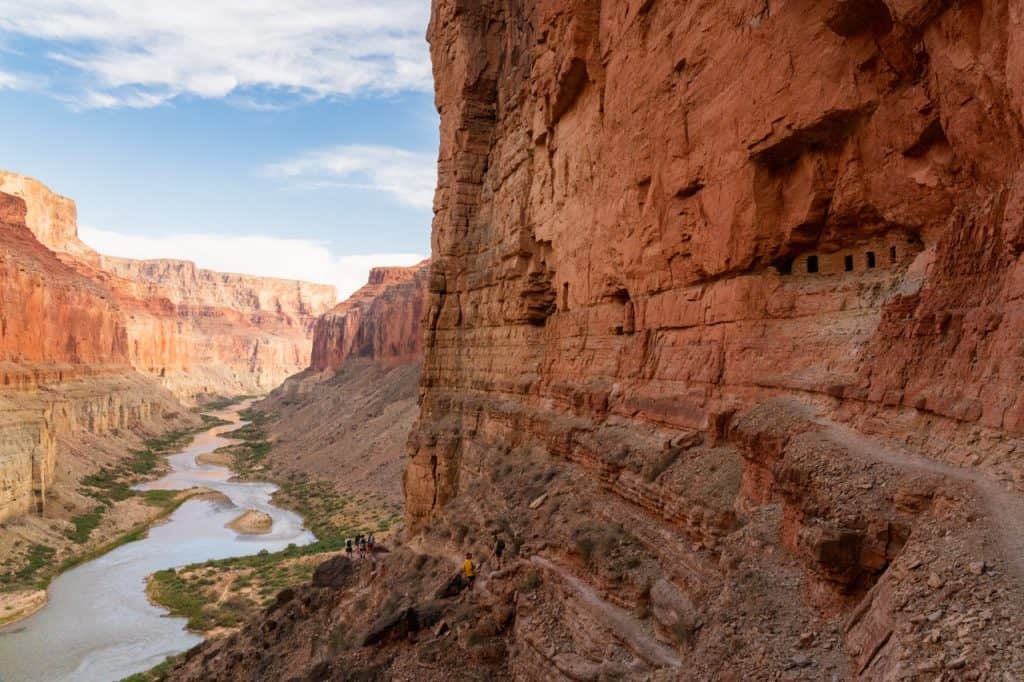
And standing below the Nankoweap Granaries, built into a canyon wall by Ancestral Puebloan people, I was in awe thinking about the generations of Indigenous peoples who have known and cared for this place, and who continue to care for it today.
Then there was the pure joy of the rapids. I was laughing like a kid at a theme park! Our guides had run these rapids countless times, but they shared in our excitement – whooping with us after a good splash.
If you have even an inkling of curiosity or desire to experience the Grand Canyon from the river – I’m here to say you need to do it. You can’t see me getting choked up writing about this, but I am. I’ve done some life-changing things (like thru-hiking the Pacific Crest Trail), and taking a dory down the Colorado River earned its spot on the life-changing experience list.
What Is a Dory Boat and Is It Right For Your Trip?
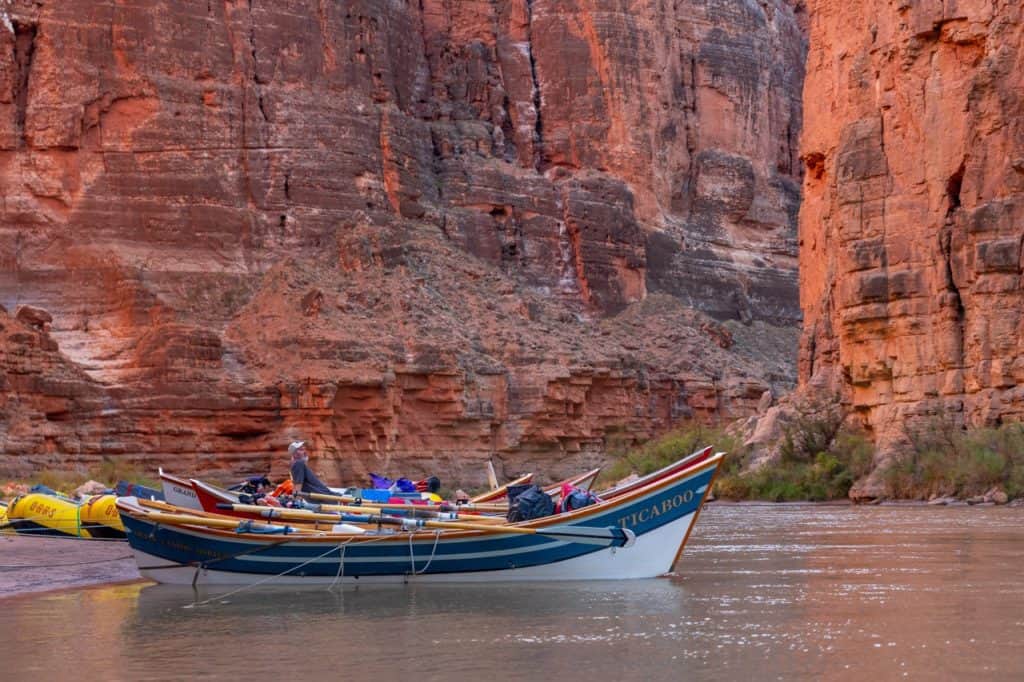
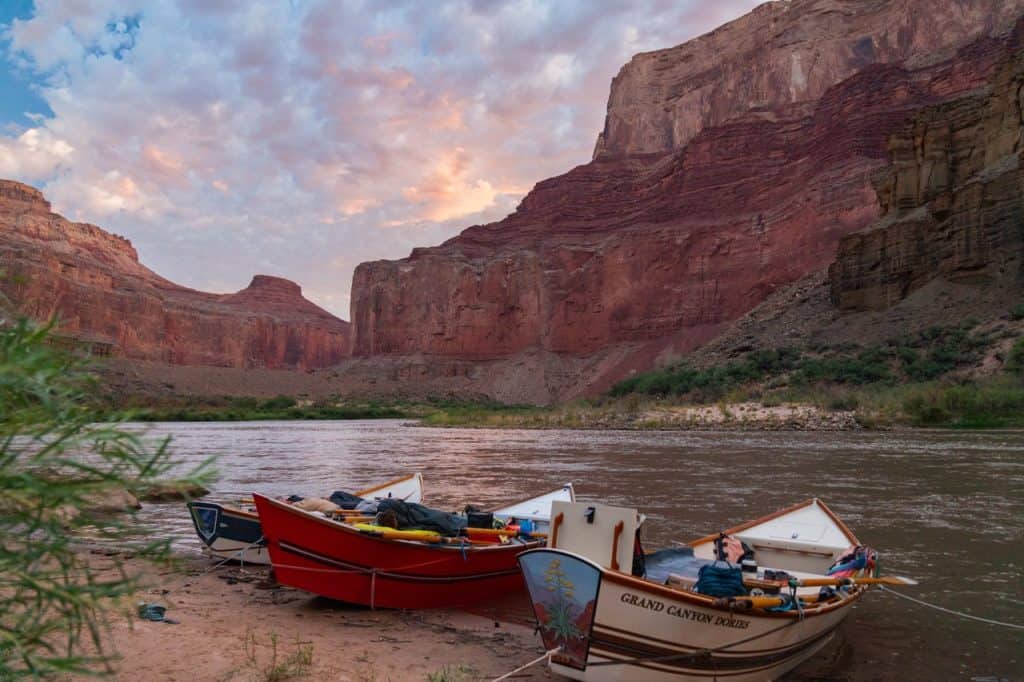
A dory boat is a specialized, human-powered, hard-sided boat for river running. Some people consider it the “old fashioned” way to experience the river because that’s what they built boats out of back in the 1800s when the river was first traveled!
Rubber rafts weren’t invented until much later, let alone the large, motorized rafts.
I’m going to be honest with you: I had no idea what a dory boat was until a couple of months before my trip.
I met an older woman in Kings Canyon who had rafted the Colorado River multiple times but had yet to do it in a dory. And she basically told me I’d be an idiot if I had the chance to experience the Grand Canyon in a dory boat and chose a rubber raft instead. So I listened to her, and I’m so glad I did.
What It’s Like to Ride in a Dory
I’ve done a decent amount of rubber raft paddle trips – where you, the passenger – are sitting at an angle on the side of the rubber raft and having to contribute to the paddling and steering of your raft.
And a dory boat is nothing like that for a passenger (thank goodness, tbh).
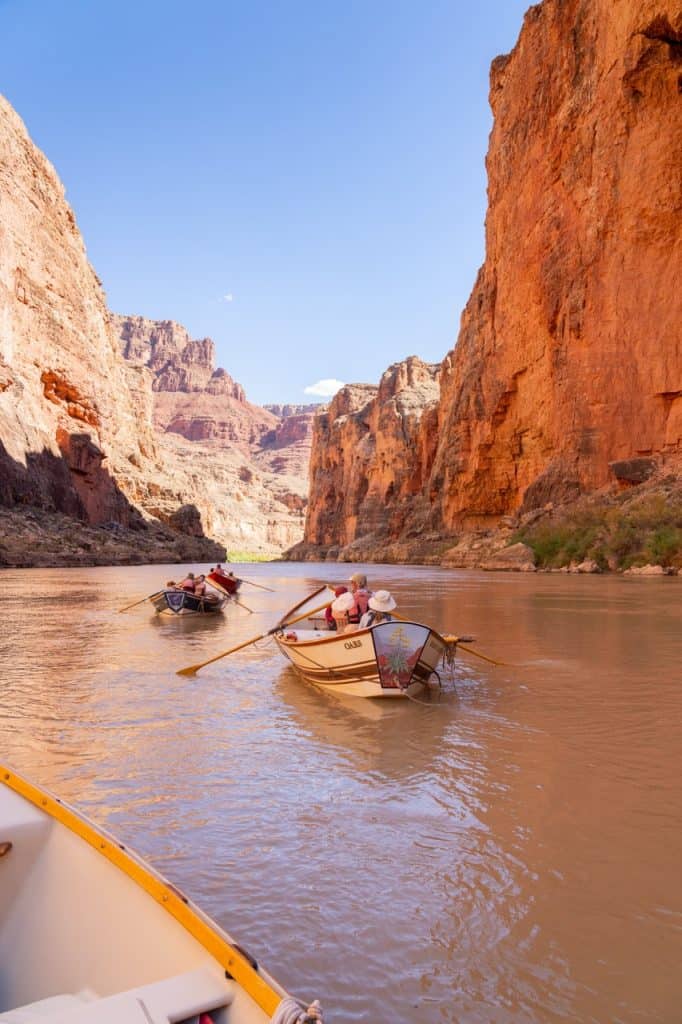
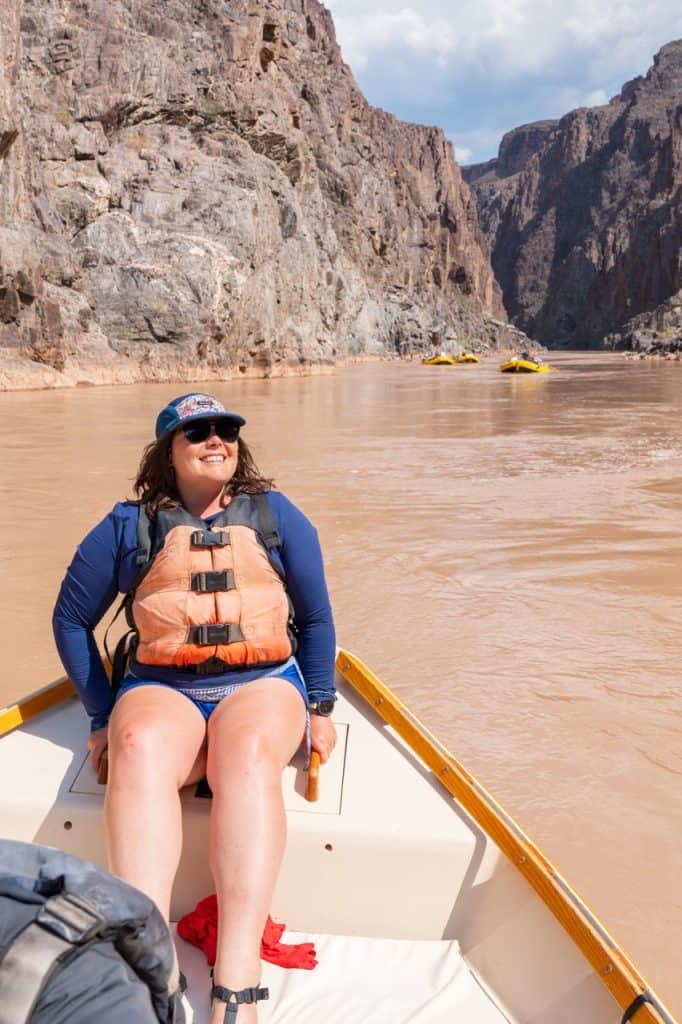
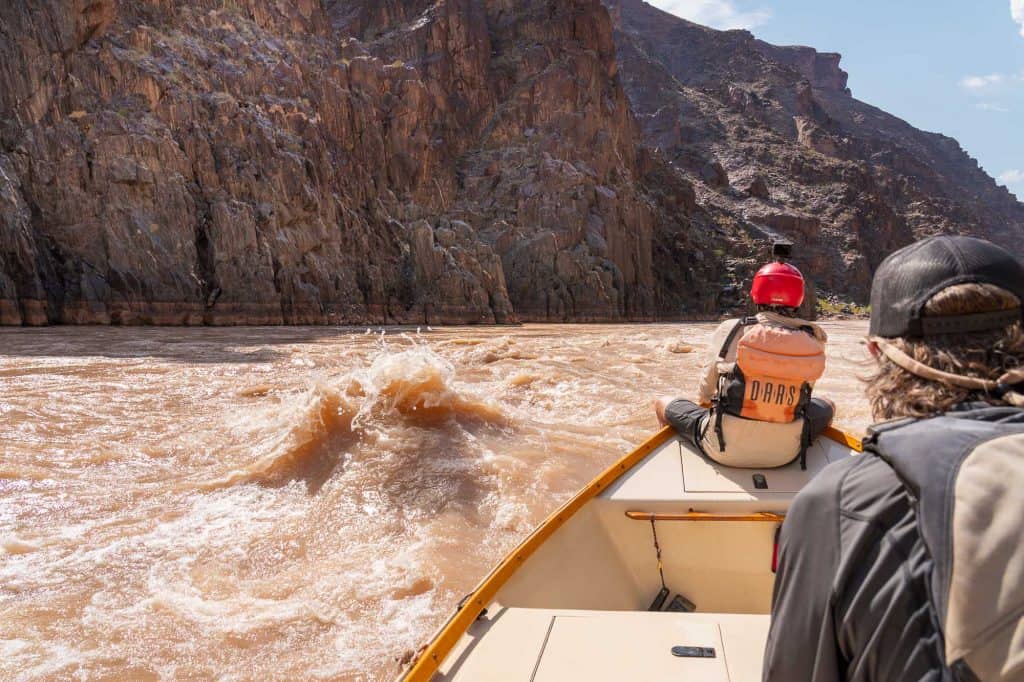
A dory boat has 3 sections: the front seat for 2 passengers behind the bow, the middle single seat for the guide to row the oars, and the back seat for another 2 passengers in front of the stern.
All of the seating is padded and you can sit perfectly upright with your legs comfortably below you – pretty much just like sitting in a chair. If you’re super tall, it might be less comfy than a chair, but either way, you still have your feet below you at a basically 90° angle.
There are spots to hold on at when you’re going through rapids that are secure. At no point did I really feel like I could be thrown out of the boat if I was holding on: unlike how I’ve felt on trips when half my butt feels like it’s not properly on the raft.
I was told that riding in a dory feels more “intimate” with the river and rapids. And yes, I definitely could feel the rocking up and down and side to side that probably made the river feel more thrilling, especially at the lower summer water level.
And when I would stand up in calm sections to take photos, I had to balance myself and move intentionally. But I still felt way more secure on the dory than a rubber paddle raft.
As a dory passenger, you’re pretty passive. You don’t need to paddle – dories are for the best of the best river guides to handle (but if you ask to try your hand at rowing, they’ll probably let you in a quiet section).
The most work you’ll do is bail water out of the boat when you take in water on a splashy rapid, and move your body to the “high side” through a rapid. And it’s a lot of work sometimes – but nowhere near as hard as active paddling or rowing.
Dories vs. Other Grand Canyon Rafting Styles
There are 3 other main ways to experience the Colorado River:
- Rubber paddle raft (you, the passenger, are actively paddling)
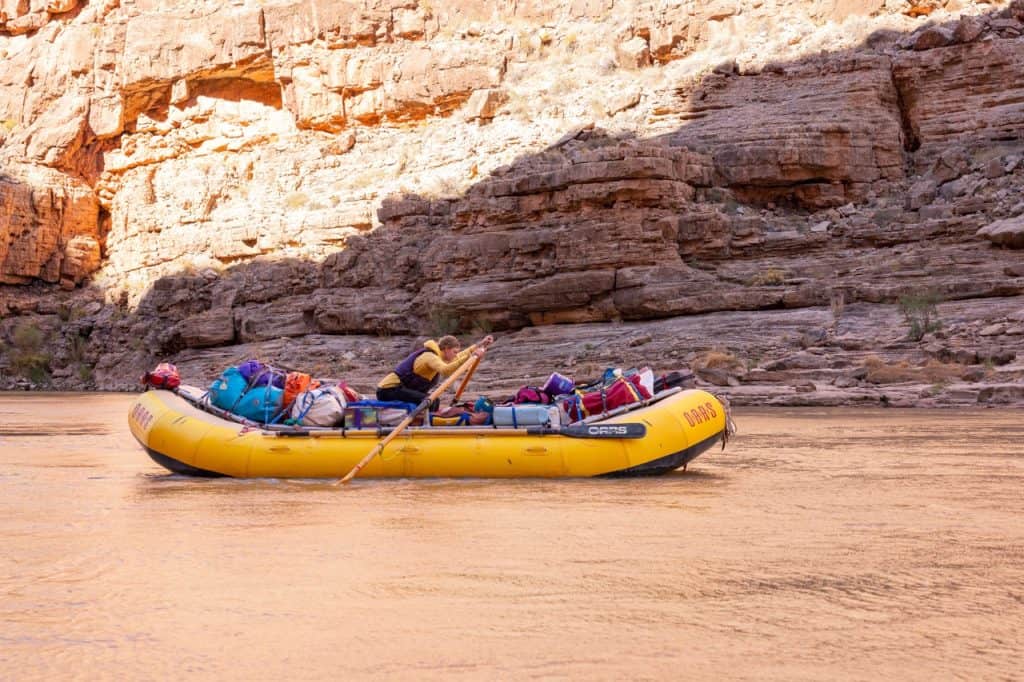
- Oar-powered, self-bailing rubber raft (you’re a passenger on a bigger rubber raft with a guide who is paddling)
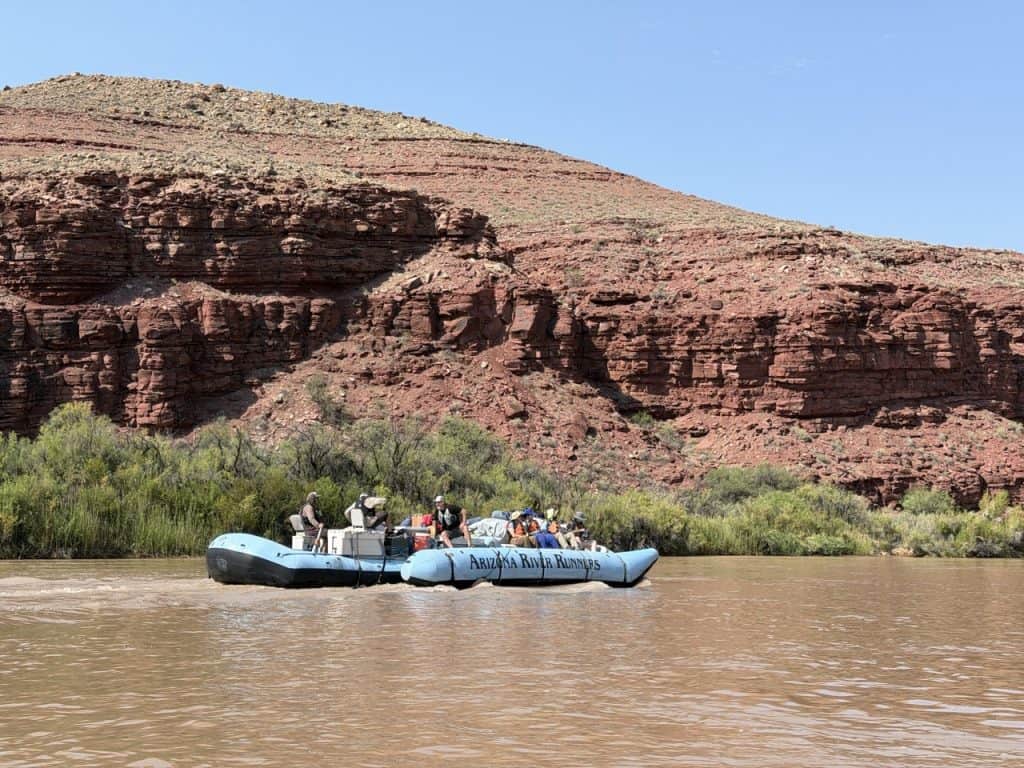
- Large, motor-powered rubber raft
I saw all of these types of trips during my week on the river. And while I only have the experience of the dory on the Colorado, I do think it is the most comfortable boat type on the river.
Some of the positions I saw the motorized passengers in looked somewhat uncomfortable (scrunched sitting, facing sideways), and I just know the paddle-powered rafters must have been absolutely wrecked each day on the river from my experience on day trips on those rafts. The oar-powered rubber rafts looked like they were the next most comfortable for a passenger.
But the main differences between the human-powered boats and the motor-powered boats are not just sitting style: speed on the river and how fast you can complete a trip, ambient noise (the motor makes a sound), and how close you are to the water and the rapids – how much you “feel” the rapids – are all other factors.
Motorized rafting trips are faster – you can do practically the entire length of the river in 10 days, noisier, and you’re further from the water surface vertically. Sometimes these trips also have more guests than the human-powered ones, but not always. These trips are usually less expensive than the human-powered options.
Which style you end up doing usually depends on your budget, the time you have for your trip, and how much of the canyon you want to see.
What a Day on a Grand Canyon Dory Trip Is Like
Not every day on the river is exactly the same, but there is a nice rhythm to a river trip, just like a backpacking trip.
I’m not going to go into my full 7 day itinerary here because no guided trip can guarantee exact campsites or side canyon hikes due to conditions and other groups on the river, but this is what an average day looks like on a dory trip.
Mornings and Getting on the River
Mornings were one of my favorite times of the day. It was the coolest part of the day, temperature-wise, and I loved watching the sunrise light up the clouds and canyon walls.
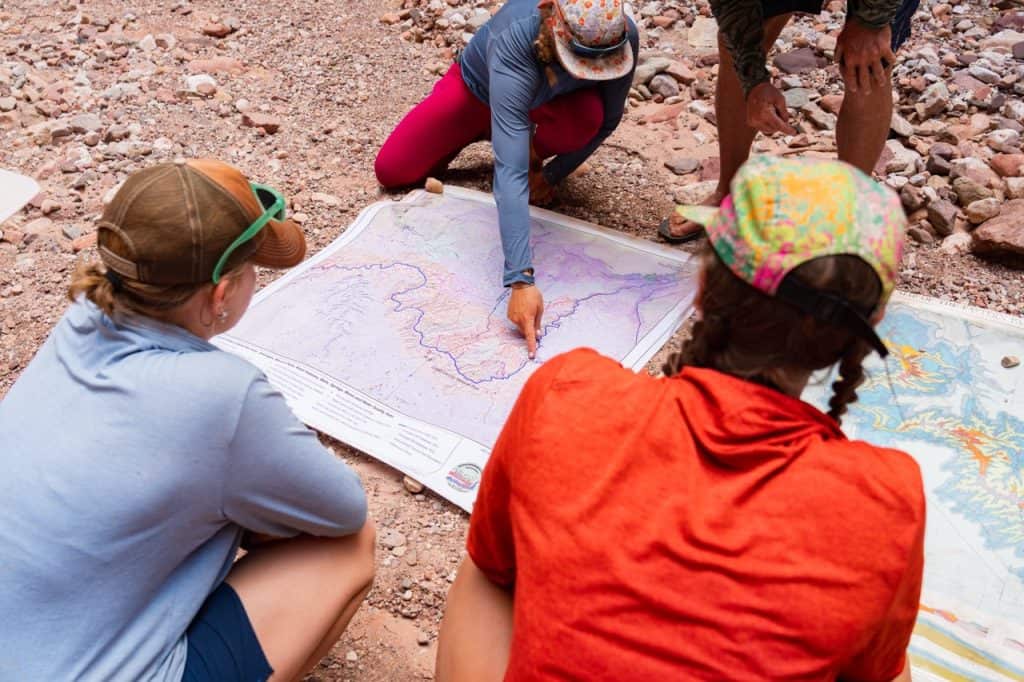
Our guides usually discussed the next day’s plan with us the night before, including when we’d have breakfast and get on the river.
I’d always wake up, use the groover (toilet), get dressed in my swimsuit, and start packing the inside of my tent up into the dry bags.
Then I’d hear the “COFFEE” yell from our guides at the kitchen area, which was my sign to drop everything and fill up on coffee for the morning in my thermos. Depending on breakfast ETA, I’d either continue packing up or just hang out in the kitchen area, chatting with my groupmates until it was time to eat.
After breakfast, we finished taking down our tents and brought our bags and camp chairs to the gear boats. I’d fill my water bottles for the day, and once everything was loaded, we’d hop into the dories and head downriver.
Most mornings we launched right after breakfast, but one day we started with a hike from camp before getting on the water.
On the River: Rapids, Calm Water, and Canyon Views
Once we got on the water, time seemed to slow down in the best way.
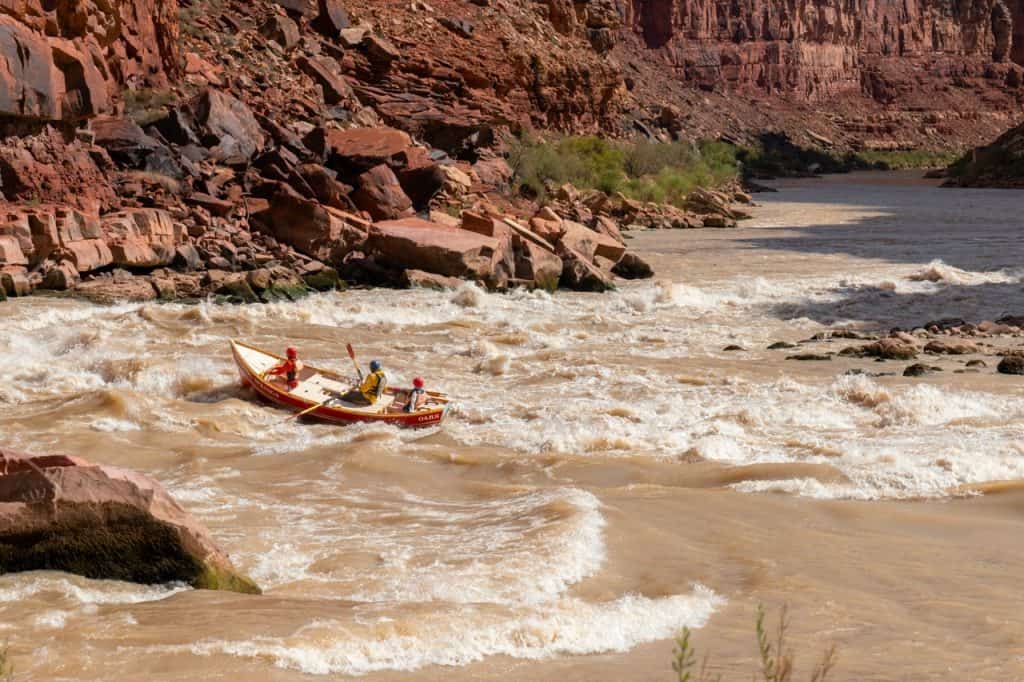
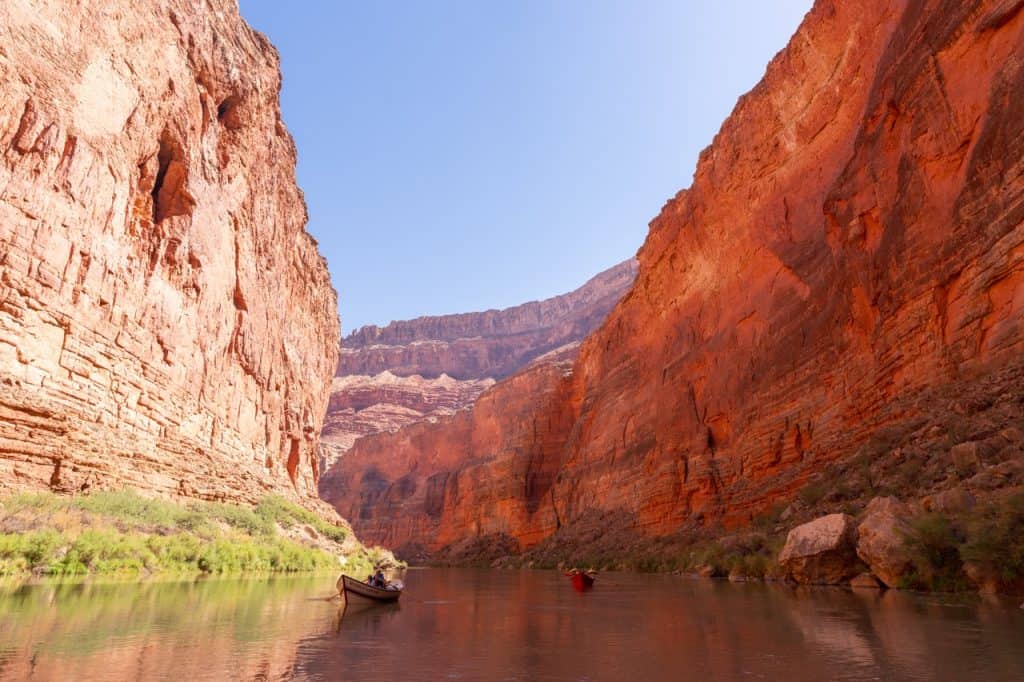
We definitely had thrilling rapids – especially during the first two days and our final full day – but we also spent plenty of time floating through quiet stretches. I loved looking up at the canyon walls, spotting wildlife, and photographing the beautiful scenes.
Something really special about my upper canyon trip was getting to start at “the top” of the canyon, geologically speaking, and descend through to the older layers of rock. Our guides would always talk to us about the changing rock layers and when we’d unearth another one.
Our guides shared so much along the way, from geology and river history to their own stories from years of guiding. We also had plenty of time to chat with our groupmates and get to know each other.
When we approached a bigger rapid, our guides would get our attention, remind us what to do, and tell us when to put on our helmets. Then it was time to hold on and enjoy the ride!
Throughout the day, we’d also pull over for side hikes or short stops. One of my favorites was seeing fossilized seashells in the canyon rock. Yes, ocean shells in the Grand Canyon!! Science is just so freaking cool.
Lunchtime
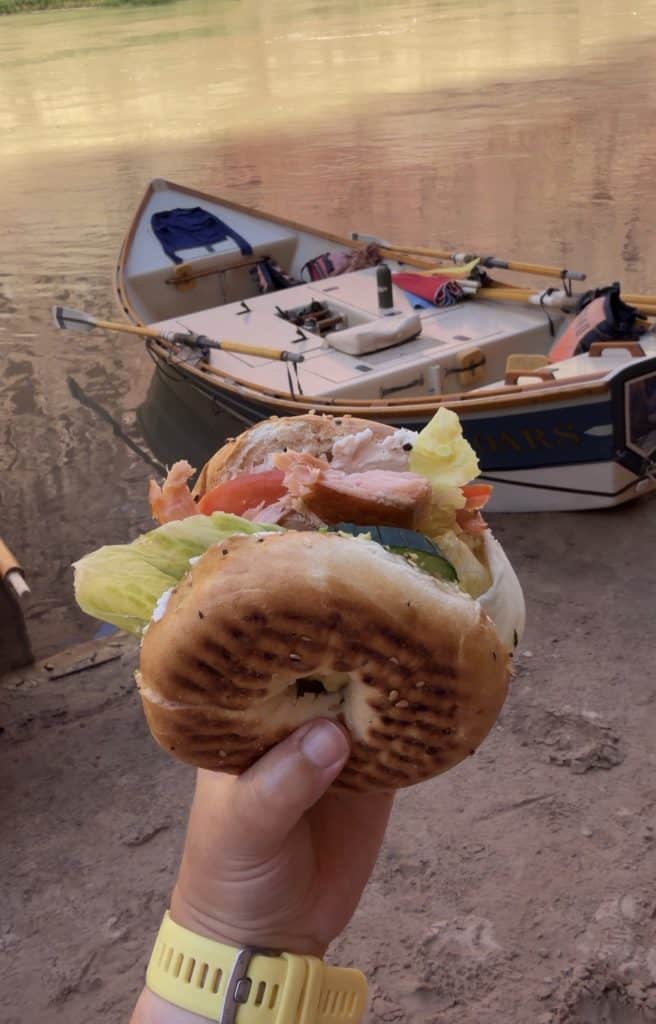
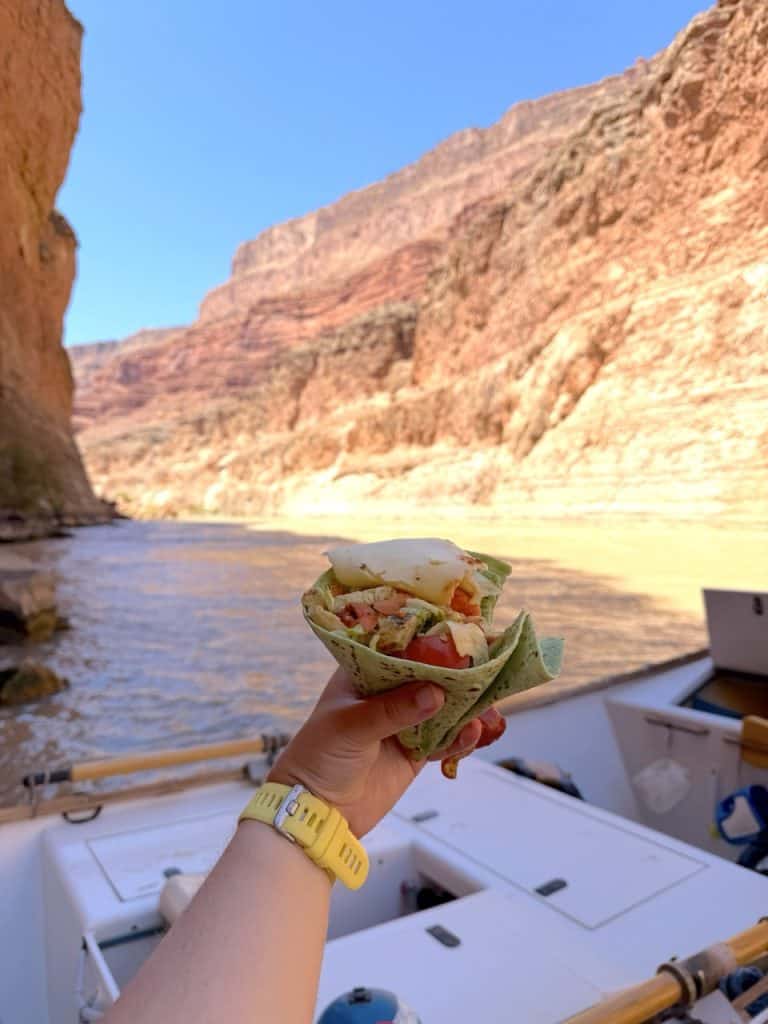
Most days, we stopped on a beach for lunch, and our guides always seemed to have an eye out for the best shade. They’d set out chips, crackers, cookies, and fruit for us to snack on while they prepared lunch – usually sandwiches or a big salad with protein.
Everything was delicious, and I’d usually go back for seconds. Lunch was also a great chance to jump in the river and cool off before getting back on the boat.
Some stops included an excursion, too. One morning, we packed our lunches at breakfast and carried them on a hike along the Little Colorado River so we could eat away from the boats.
Afternoons and Evenings at Camp
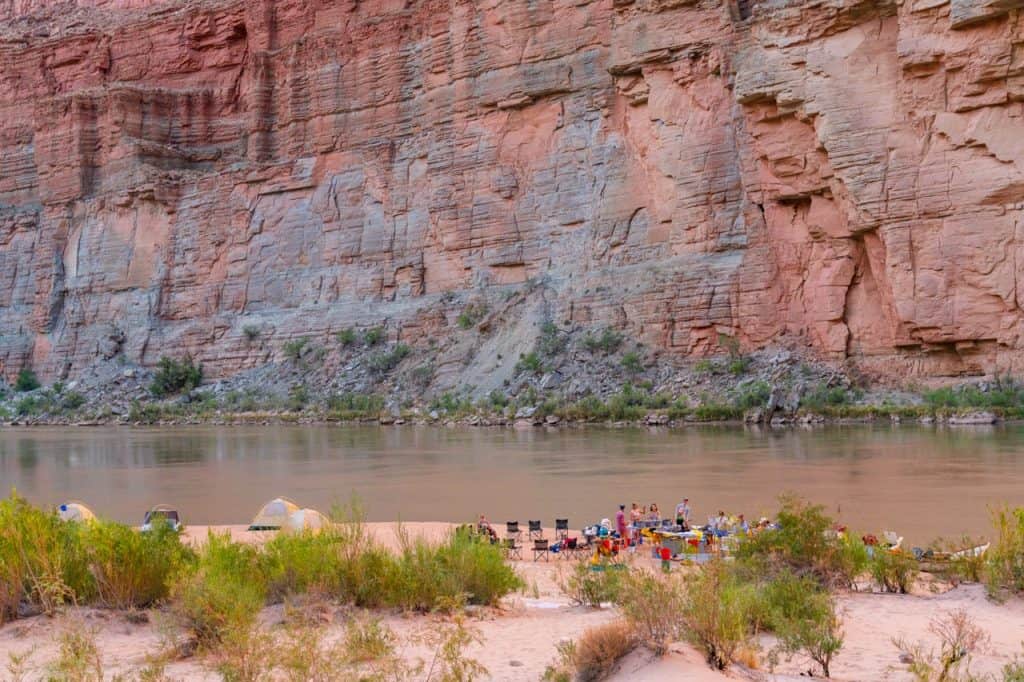
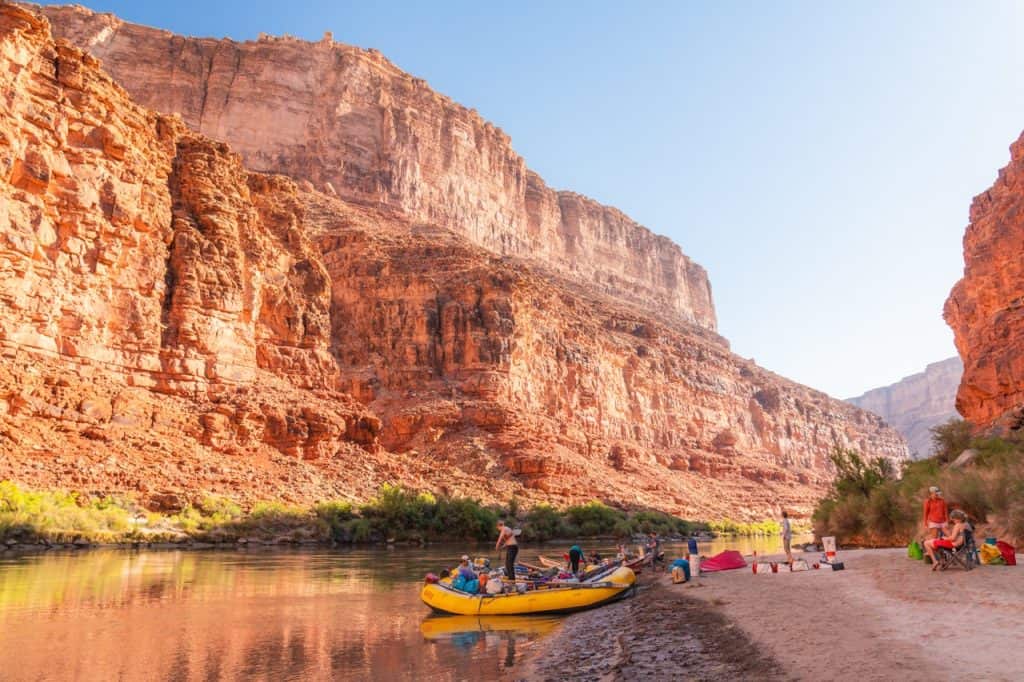
Our arrival time at camp varied from day to day. Once the guides found a spot, we’d help unload the boats and get the group gear onto the beach. After that, we had time to swim, set up our sleeping spots, read, or just hang out. At a couple of camps, we did an afternoon hike when the shade came in.
I loved having so much time at camp! On my backpacking trips, I don’t usually bring much to do once I’m done hiking for the day. Here, our guides had a little library, and some evenings we’d play bocce ball or another game together.
Meanwhile, the guides set up the kitchen and bathroom and started preparing dinner. They’d also put out “river hors d’oeuvres” for us to snack on, and we absolutely gorged ourselves.
When the conch shell blew, we knew it was dinnertime! After dinner and dessert, we’d help with dishes, hear about the plan for the next day, and relax until it got dark and we went to our tents to sleep.
Side Hikes and Stops Along the Colorado River
Obviously rafting the rapids and being on the river in boats is kind of the point of a river trip. But one of the most special parts of this trip is you get to see places in Grand Canyon National Park that you literally can’t access unless you’re on the river.
So getting to dock the boats on the shore and take short hikes deeper into the canyon walls felt like exploring the canyon in a whole different way, and was a highlight of the trip.
What the Canyon Hikes Are Like
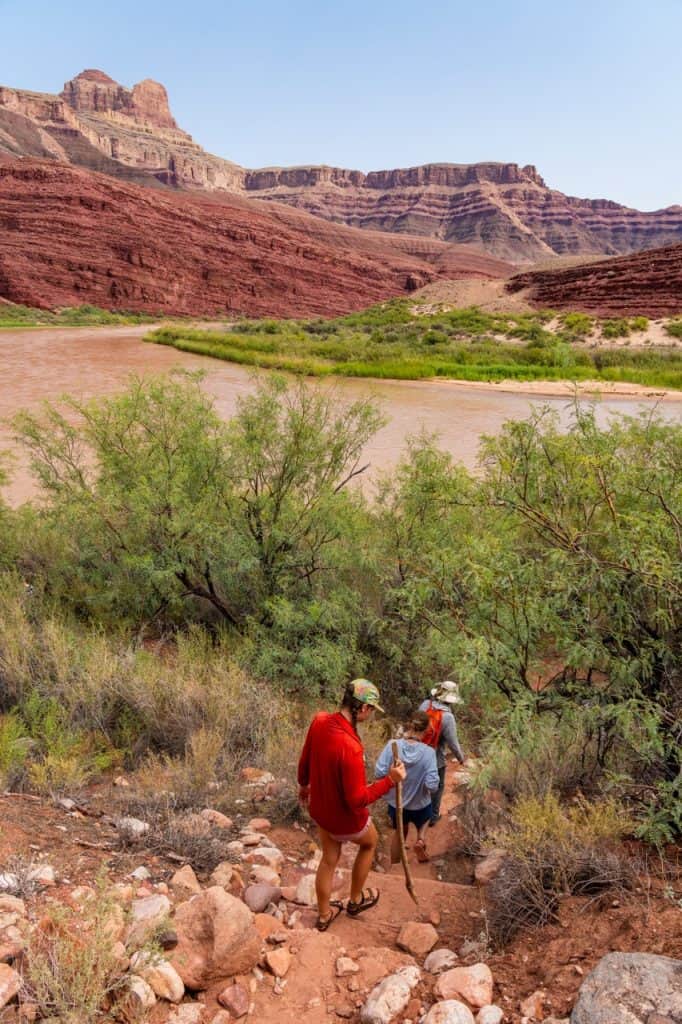
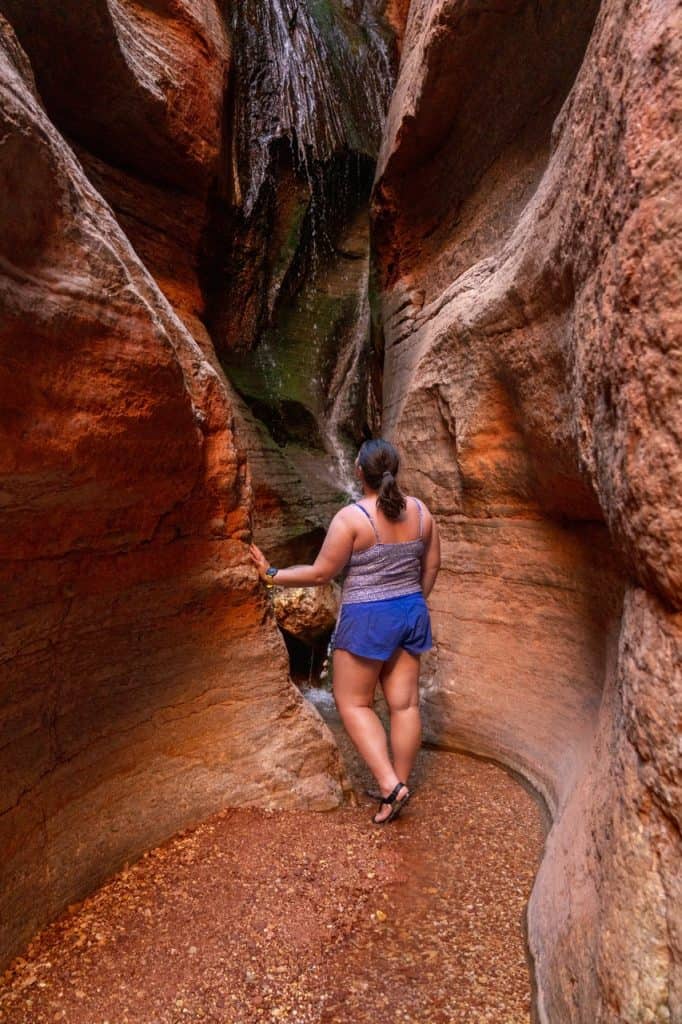
Like most things, they vary! But, the majority of our side hikes were in “side canyons”. These side canyons sometimes don’t even look like you can hike back in there – and you’d have no idea they existed unless your guide brought you there.
Most of these hikes aren’t on designated trails. They’re pretty much just faint footpaths that have been traveled by river trips over the years. They usually start by weaving through the shrubs on the shore, then climbing up rises in the land until you reach the opening of the side canyon.
From here there was usually a wash we’d hike through – a large opening of the canyon walls with obvious remnants of flash flooding washing through the area – and then sometimes we’d reach the destination here, or other times we’d have to hike more and sometimes need to scramble a little bit – using our hands to help us.
All the side hikes are optional, and the guides are with you and there to help you navigate any difficult spots.
For example, there was a “hike” on our second day that I couldn’t do. Because it involved the guides rigging up a rope and us needing to use it to ascend a slanted rock wall from a pool of water – so basically light canyoneering.
I just could not get my feet in the right placement and kept slipping and couldn’t pull myself up. So I sat that one out with another person. And it wasn’t a big deal (obviously I was a little disappointed in myself, but it’s ultimately ok).
Since my trip took place in the first week of August, it was super hot. So our hikes were always very short. I tracked them with GPS (but GPS has a hard time with the canyon walls) and our longest hike was 3 miles – but that’s probably overstating mileage due to the inaccurate GPS readings. I’d say nothing was longer than 2-2.5 miles round trip.
My Favorite Places On the Upper Portion of the River
Not every stopping spot had a hike attached to it, but most had some kind of walking over rock or sand to participate in.
During our pre-trip meeting the night before launching, our trip leader asked us if there were any spots we really wanted to experience on our trip – so I want you to know the names of some places so you can research them and tell your guides if you want to experience them.
These were my favorite places we got to experience in the upper portion of the Colorado River:
- “Shell Rock” (can’t remember if it had an actual name!)
- Vasey’s Paradise (sadly this spring wasn’t flowing due to drought on my trip but some smaller springs in the area were)
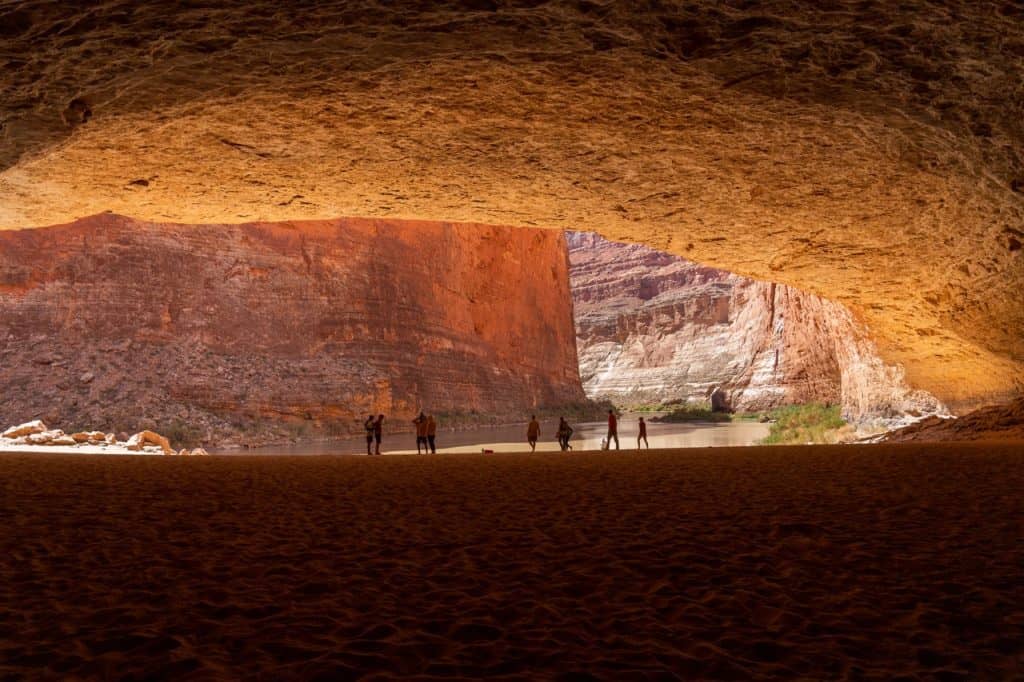
- Redwall Cavern
- Marble Canyon Dam Site
- Buck Farm Canyon (hike)
- Saddle Canyon (hike) & favorite campsite (Saddle Beach)
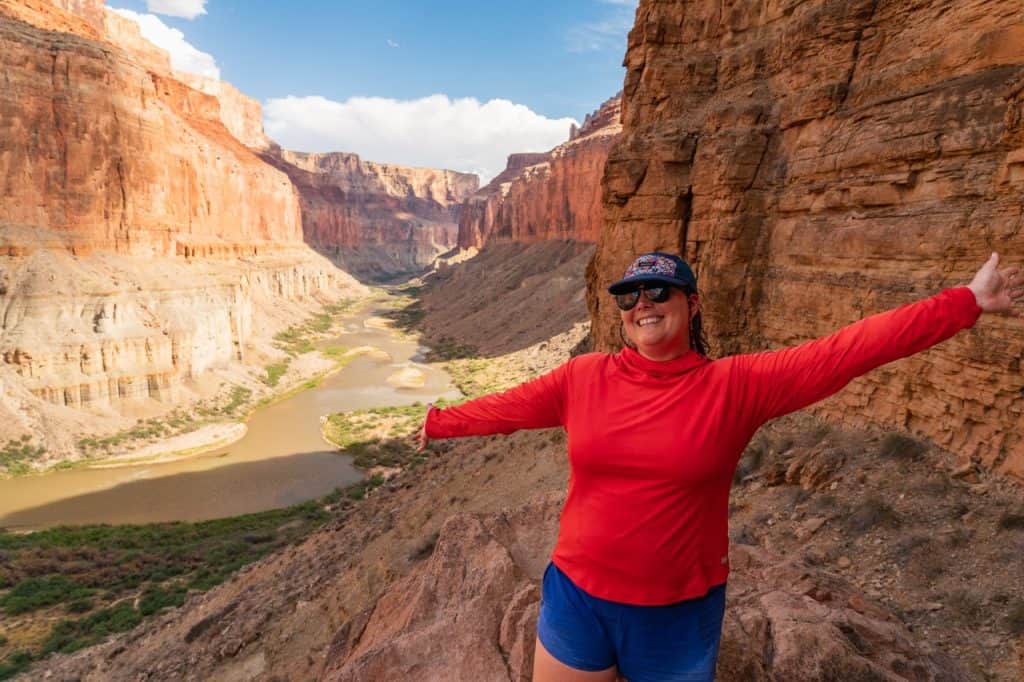
- Nankoweap Granaries (hike)
- Little Colorado River (hike)
- Carbon Canyon (hike)
- Unkar Delta (hike)
I’m not going to go crazy in-depth here, but I think my top 3 experiences were Redwall Cavern, Saddle Canyon, and the Nankoweap Granaries. They were each super unique. And knowing that ancient peoples had been storing their farmed food right where we were standing – on the side of a canyon wall – was simply mindblowing.
What Camping on a Grand Canyon Rafting Trip Is Like
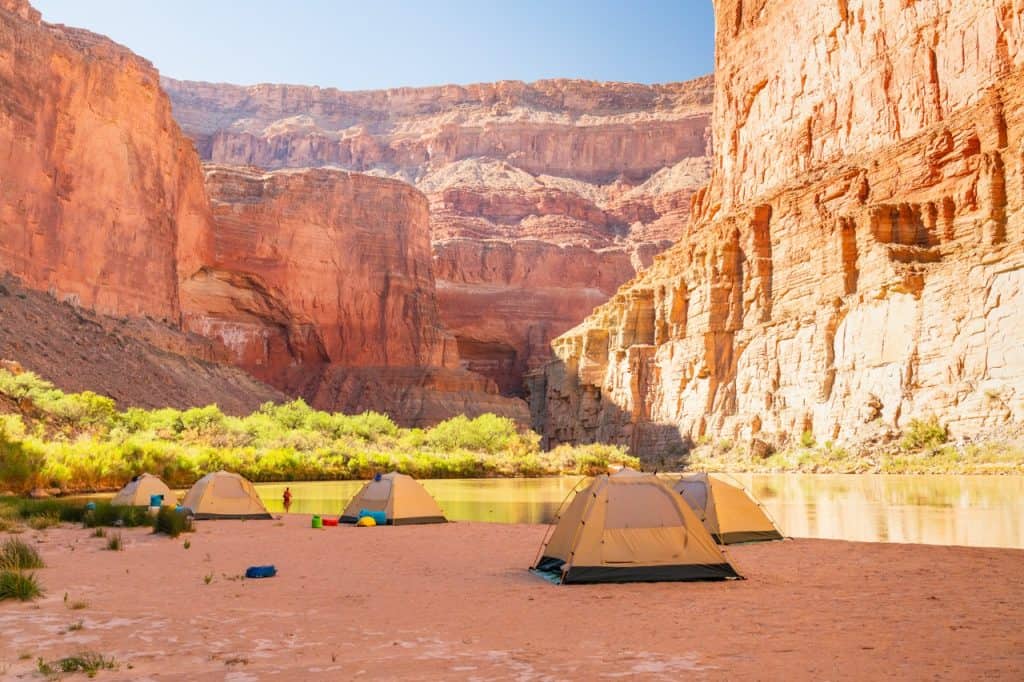
Camping along the Colorado River was a little different from my usual backpacking trips, but I loved it. Our guides handled the group kitchen and bathroom setup, OARS provided our sleeping gear, and we had plenty of time to settle in and enjoy each campsite.
The biggest adjustment for me? The sand gets everywhere. And since I went in August, I also had to figure out how to stay comfortable on some very hot nights.
Sleeping and Campsite Set Up
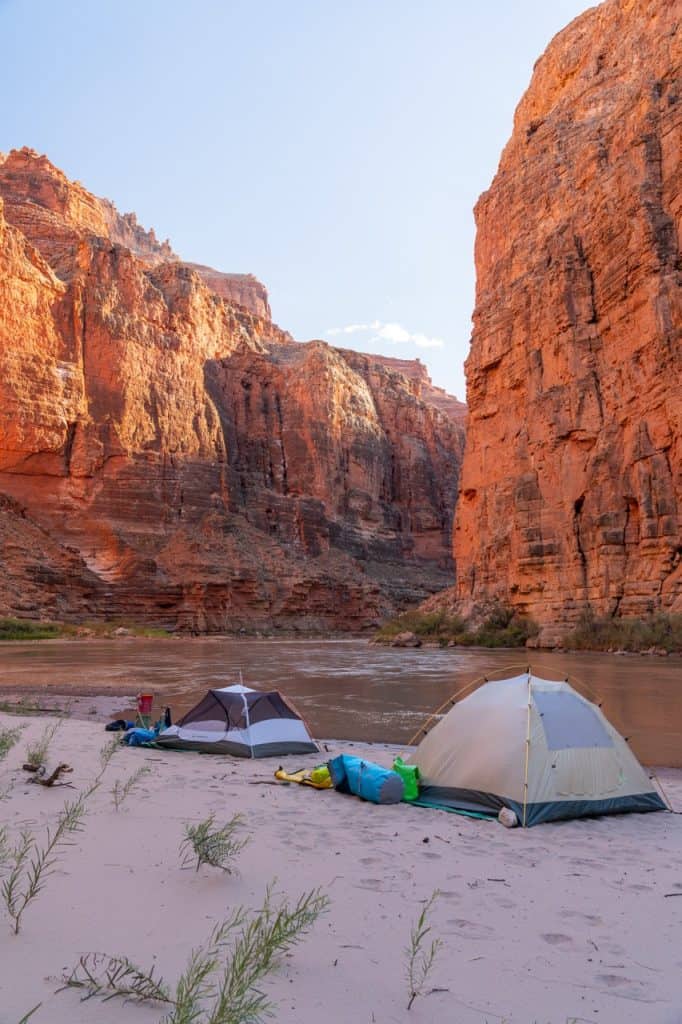
Our campsites varied each night, but we usually had a communal area near the boats where the guides set up the kitchen and we gathered our camp chairs. The guides found a more secluded spot for the groover and marked the way from the handwashing station.
We chose our own sleeping spots around camp, usually fairly close to the river where it was cooler. There was some space to spread out, but don’t expect complete privacy!
OARS provided a tent, inflatable sleeping pad, sleeping bag, pillow, and cotton sheet for camping. They also gave us a large dry bag for our overnight gear. I kept my sleep clothes, layers, toiletries, and camera tripod in mine; it went on the gear boats during the day and came back to me at camp each evening.
You could sleep under the stars without a tent, but I’m personally not a fan of cowboy camping. I can’t stop thinking about bugs and other creepy crawlies getting on me, so I chose my tent every night. It also gave me some protection from the wind, which got intense one night.
The downside? My tent got hot. Our guides taught us to pour buckets of river water over the sand before pitching our tents to help cool the ground. One night, I was too lazy to do it and I could feel the heat radiating through the ground all night. I majorly regretted skipping that chore!
I also wet my cotton sheet before bed for some evaporative cooling. I never touched my sleeping bag during our August trip, but what you need at night will depend on when you go and the conditions you experience.
Food and Drinking Water
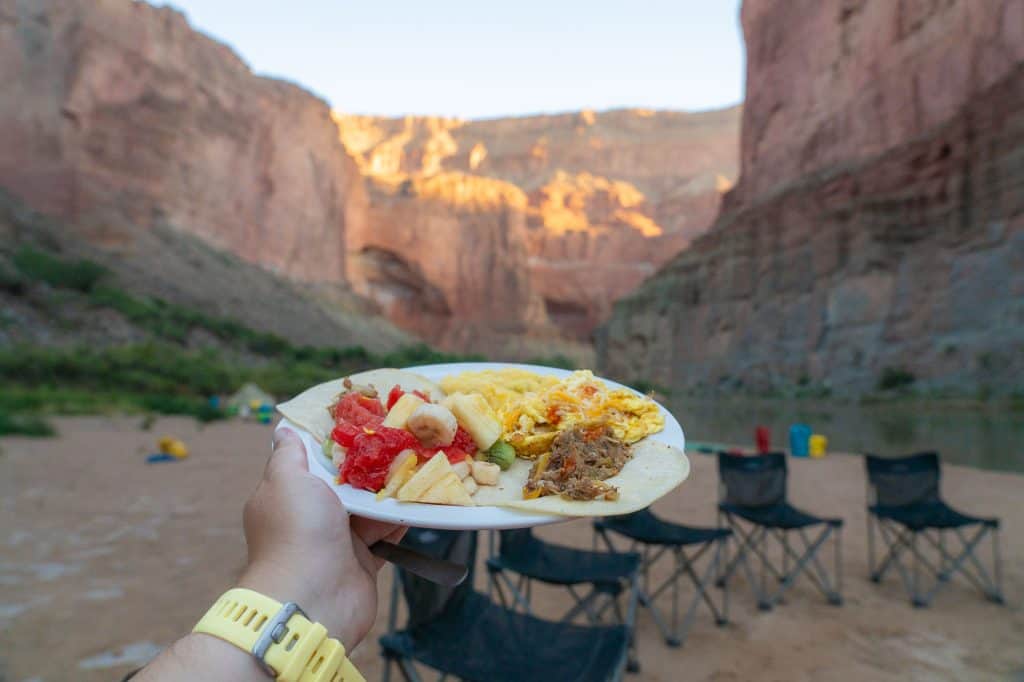
Food and water were never an issue on this trip. I felt like royalty for every single meal due to our guides. The meals were incredible. They cooked us steaks, biscuits & gravy, french toast, bacon, salads, salmon, veggies, fresh fruit, tacos, chocolate cake, peach cobbler… I could go on and on.
We didn’t have any guests with food allergies or restrictions on our trip, but if you do, you’ll want to talk to the company beforehand to ensure you can be safe & accommodated.
For drinking water: the guides have a very intense filtering method to filter the river water to make it safe for drinking. And they did a great job! No one got sick on our trip. And they have lots of electrolyte powder options to flavor the water and keep it salted for the hot August days.
I’ll just say though – if you’re someone who doesn’t like warm/ room temperature water… you need to be prepared to deal with that on a summer trip. The water was always ambient temperature – hot. So keep that in mind!
Bathrooms, Bathing, and Staying Clean
Let’s talk about the bathroom situation, because I know some of you are wondering.
The groover is the group toilet for poop. It’s a large container that travels downriver with the group, and the guides set it up with a toilet seat at camp. They’ll explain exactly how to use it.
Honestly, I didn’t think it was bad at all. It sometimes smelled like a well-ventilated porta-potty, but overall it was fine.
On our trip, we used a pee bucket near the groover or peed in the river. We also got small buckets to keep by our tents at night to pee into, which we emptied into the river in the morning. Our guides explained the system, including what to do when we were away from camp. Follow your own guides’ instructions, since procedures can vary.
I know it seems kinda gross to be talking about peeing in the body of water we’re also swimming in and eventually becomes drinking water, but this is commonly done in large rivers like the Colorado – pee is diluted very quickly and this river water is treated before becoming drinking water.
The guides set up handwashing stations at camp, including one near the groover and another by the kitchen. Wash your hands with soap and water after using the bathroom and before handling food – nobody wants to spend their river trip sick!
As for feeling clean, I actually felt cleaner on this trip than I do on most backpacking trips, probably because I swam so often. But my feet took a beating from being wet and sandy during the day, then drying out at night. I cleaned and moisturized them in the evening and put socks on afterward, which helped me feel more comfortable.
“Monkey butt” was starting to happen on my swimsuit line and butt though too: again, from sand rubbing and being wet. I brought Vagisil for this to rub on my creases and it worked well to prevent worse issues.
I also brought my Lemosho face cleanser and used it to wash my face and armpits in the evenings and mornings and it worked great to keep me feeling fresh. Otherwise, I brought most of my normal backpacking toiletries on the trip!
Why OARS Guides Make the Experience
Our guides were the lifeblood of our river trip. They are just some of the coolest people you’ll ever meet.
I felt so lucky to be guided by some of the most experienced river runners of all time: Cindell, Roger, and Peter Dale, and Tony Wolkowinsky, plus our gear raft crew – Wesley, Maile, and Drew. They were so incredibly knowledgeable about the river, the Grand Canyon… everything. And amazing cooks too!
I felt so welcomed by them and so honored to share the river with them. They make guiding seem so effortless even though I know they’re working their tails off to make sure we have a trip of a lifetime.
Your guides are there to row you, cook for you, and make sure you are safe and learn about this amazing place. They share their decades of knowledge and love for the Grand Canyon with you and have seen so much change in this environment over the years.
I was so impressed by the way they just knew which rock layers we were looking at all the time, they had their favorite side canyons they wanted to “say hi to” and see if it changed after the last flash flood, they could identify a rare flying red cardinal (thanks Roger!).
I just can’t say enough good things about them and they’ve reminded me that guided experiences from people who live and breathe their zone of expertise can make your trip so much better than you could have ever imagined.
I feel like I shouldn’t have to say this, but treat them well and tip them after your trip.
The Last Day: Hiking Out of the Canyon on the Bright Angel Trail
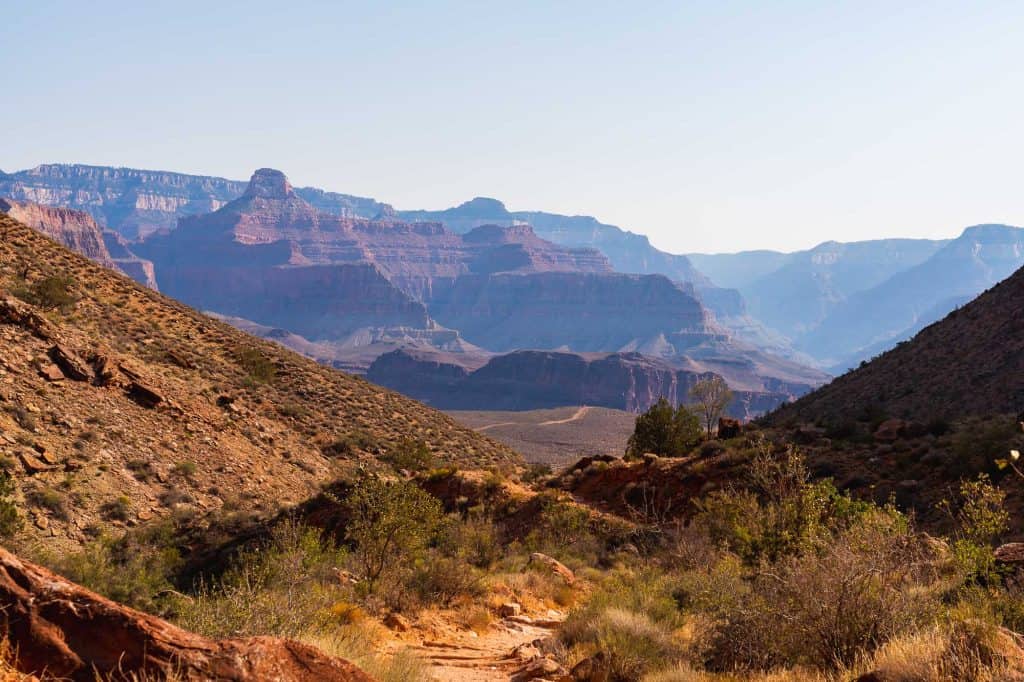
My trip ended at Pipe Creek Beach, just past the bridge to Phantom Ranch. From there, we had to hike up Bright Angel Trail to reach the South Rim and officially finish our adventure.
According to my GPS, the hike was about 8 miles with 4,500 feet of elevation gain. If you don’t want to hike this trail in or out of the Canyon for your river trip, you will need to start at Lees Ferry and end your trip at Whitmore Wash, Diamond Creek, or Pearce Ferry – which are longer trips.
What the Final Day Involved
The night before, we camped at Lower Cremation and packed most of our personal belongings into our larger backpacks. We also prepared bag lunches for the hike out.
We got an early start on day 7, changing into our hiking clothes and saying goodbye to the crew members staying behind. By 5:30 am, we were on the dories for one last stretch of river. About 20 minutes later, we landed at Pipe Creek Beach, rearranged our gear, and started hiking at 6:15 am.
Two of our boat guides hiked with us until we met our hiking guides and the next group of guests coming down to begin their river trip. After the handoff, we officially said goodbye to our boat guides and continued toward the rim.
Our hiking guides were super cool and stayed at the back of the group. I’m a slow hiker and a chatterbox, so I spent quite a bit of time with them and got to hear some of their stories. They also carried extra snacks and first-aid supplies.
I can’t lie: the hike out was pretty difficult. I stuck to a slow and steady pace, and the trail felt enjoyable until we reached the Three-Mile Resthouse. By then, I was so hot and knew I needed real food and a break, which our guides always encouraged.
The stretch between the Three-Mile and Mile-and-a-Half resthouses was the worst for me. The exposed switchbacks felt long and tedious, but after the Mile-and-a-Half Resthouse, the climb felt a little easier and we had more shade.
It was close to 100°F during our hike, so I kept reminding myself not to be too hard on myself! This is a challenging hike, and you need to be prepared for it. We reached the South Rim around 12:45 p.m., about 6.5 hours after we started.
One nice thing about Bright Angel Trail is that it has established places to stop: Havasupai Gardens and the Three-Mile and Mile-and-a-Half resthouses. Water was available during my hike, and I soaked myself at the spigots to help cool down.
Our trip was before the insane flash flooding and water pipeline break that happened in late August of 2026, so water availability was not a concern on the trail at that time. Check the park’s current trail updates and follow your guide’s guidance before you go.
Carrying Gear Up the Bright Angel Trail
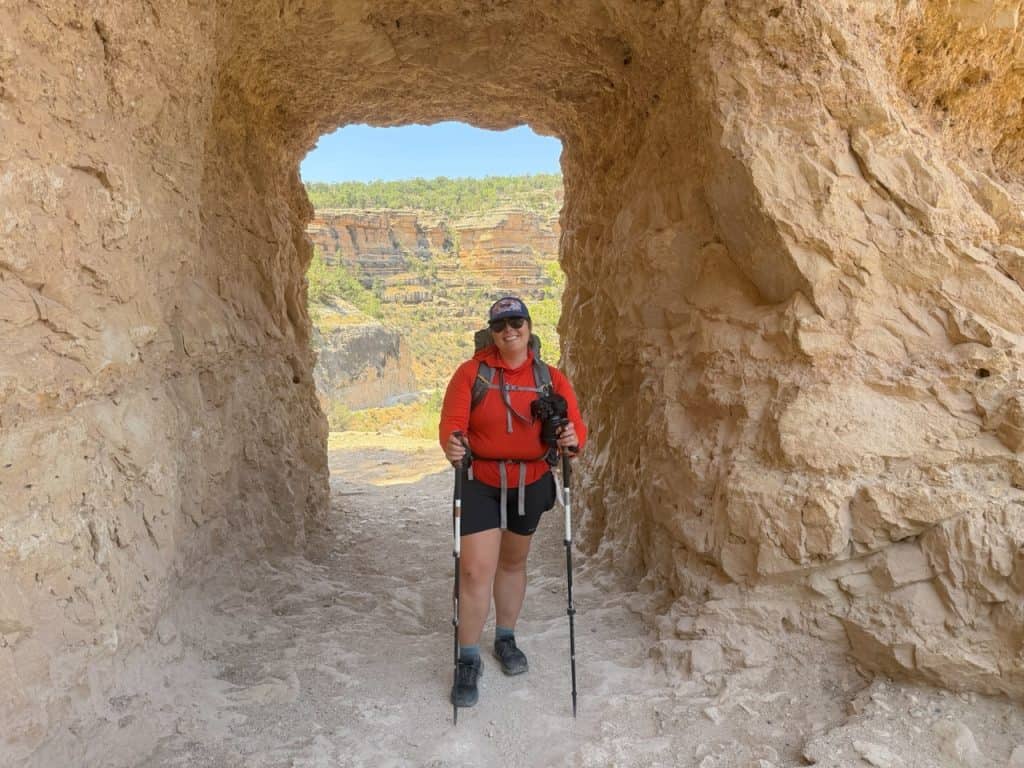
You have to carry everything you brought on the boats up the trail with you. Which can make packing for this trip a bit tricky, especially if you’re a photographer like me and brought a tripod and multiple camera lenses with you to capture the beauty of the river.
Even if you’re not toting tons of camera gear, you’ll still want to pack light and not bring a ton of extra unnecessary gear. My pack ended up weighing about 40 pounds with my camera gear and water protection for it and food and water. This is definitely on the heavy side. It’s heavier than my normal backpacking set up!
What It’s Like to Raft the Grand Canyon in August
I never really thought about the best time to be in the Grand Canyon on the river before this trip. I knew it was crazy hot in the summer and cold in the winter, and otherwise didn’t really know what the conditions were like.
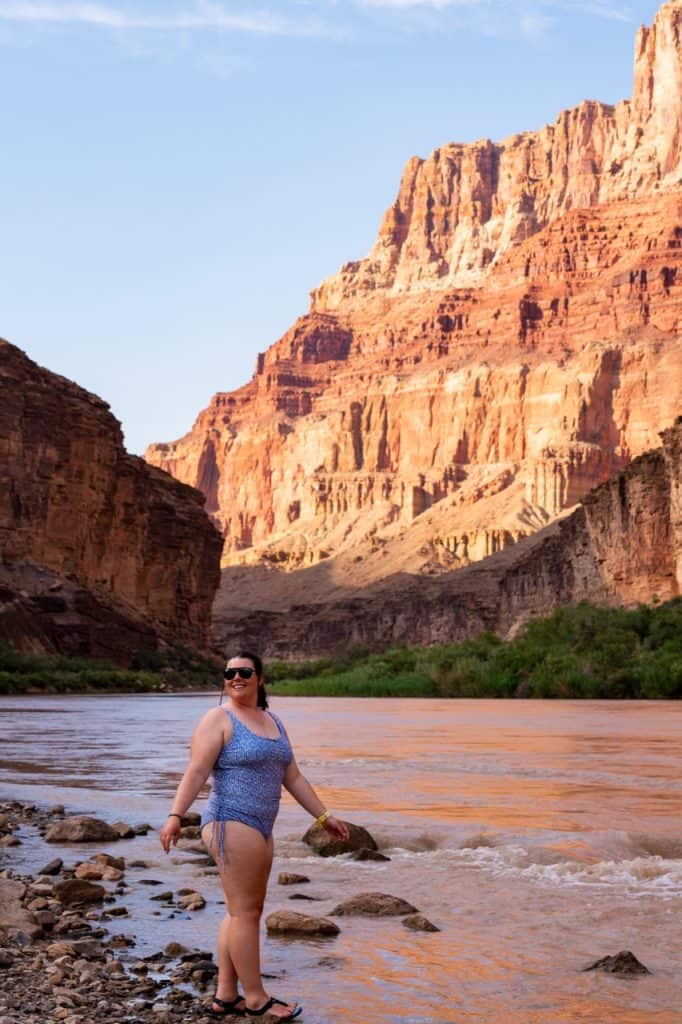
Having experienced this trip in August, I can say that I really enjoyed myself. Yes, it was hot during the day and night, but that made shade and swimming coveted, and I enjoyed just being in my bathing suit all day. And not worrying about keeping myself warm.
We did experience some scary looking storm clouds, but never got rained on (we saw it happening in other parts of the canyon though). I do know the group after us got drenched a few times from the monsoon rains, so we just lucked out with our weather window!
Here’s what you should know and be aware of on a summer trip.
Heat
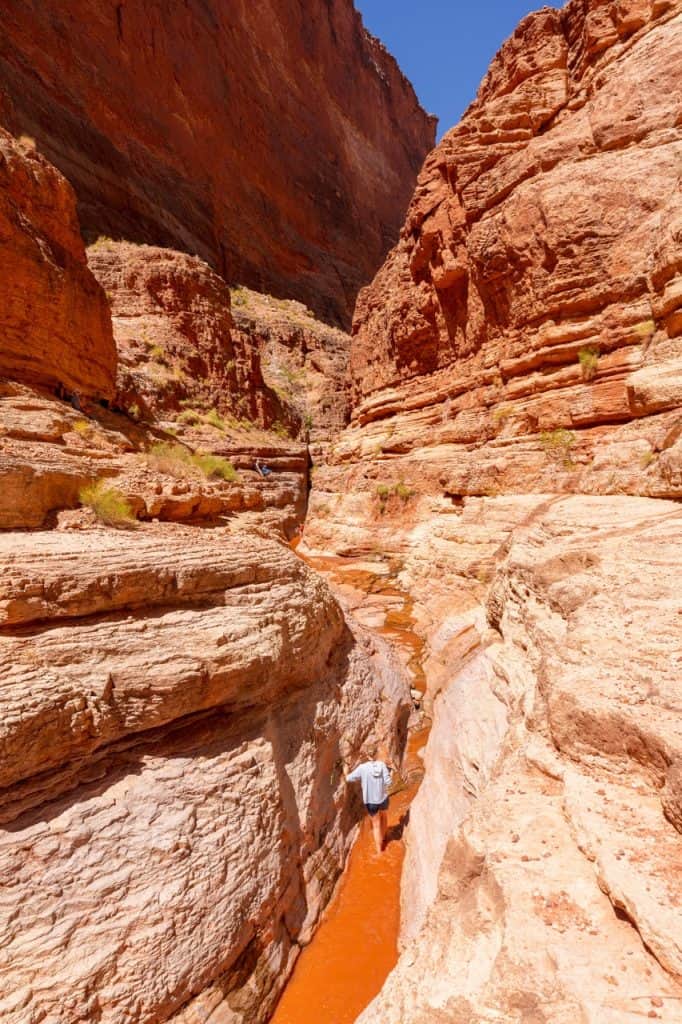
It’s hot in August. On average, the highs can be over 100°F at the river level and the lows get down to the 70s at night.
I felt like I was damp from the water or my own sweat for 90% of my time on this trip – can’t lie. But, the heat didn’t totally get to me as bad as I thought it would.
I took lots of precautions, like drinking at least 4-5 liters of water per day, and I used my UPF rashguard to protect my arms from the sun, and draped my sun hoody over my legs while on the boat.
Monsoon Season
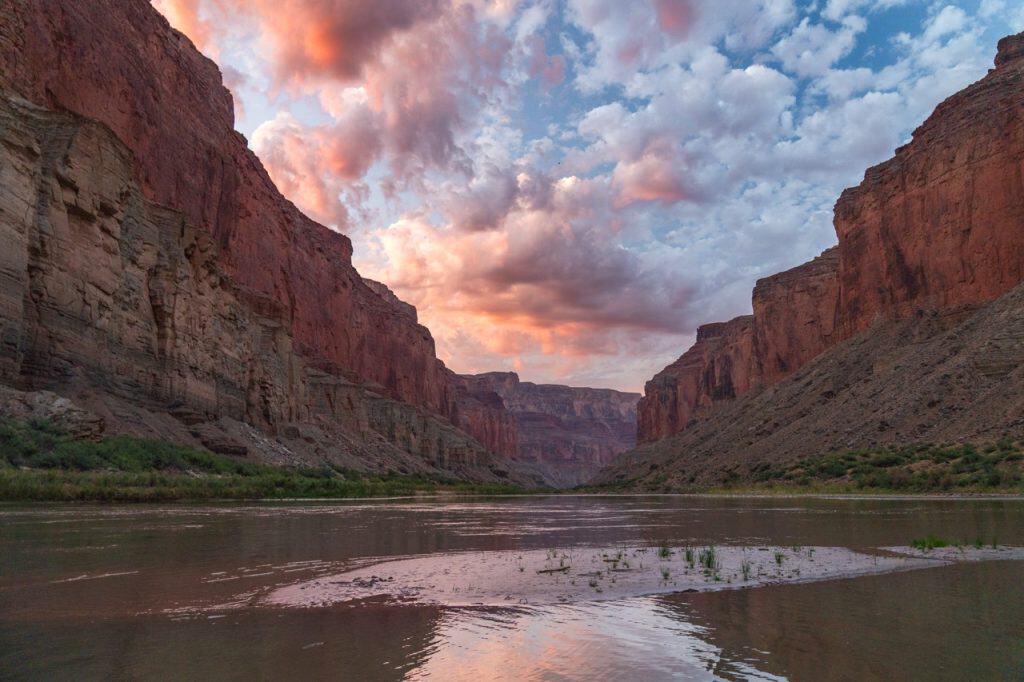
Late summer is monsoon season in the southwest and I experienced this on my trip to Arizona, but amazingly, not during my week on the river!
Monsoons can bring tremendous amounts of rain in a very short time, and can actually bring really scary conditions to the canyon and river – like the flash flooding that sadly killed 3 people on the North Kaibab Trail a few weeks after my trip.
Our guides were really great at explaining what would happen if we experienced more dangerous monsoon conditions and the safety protocol if a sudden rainstorm happened.
What we did experience on our trip was lots of brown, muddy water – there were some canyon flash flooding events the week before my trip, which basically clears out debris in side canyons and brings it down to the Colorado. So we had murky water and lots of driftwood in the river.
This also meant that when we got to the Little Colorado River, we didn’t get to experience its electric blue color. This is very normal for desert waterways this time of year, it’s just something to be aware of if you weren’t already.
We also had some crazy wind barreling through the canyon on our second to last night due to storms in the area. Wind is more common in the spring, but monsoon storms can bring wind events too. We all woke up covered in sand, even when sleeping inside our tents.
Water Levels
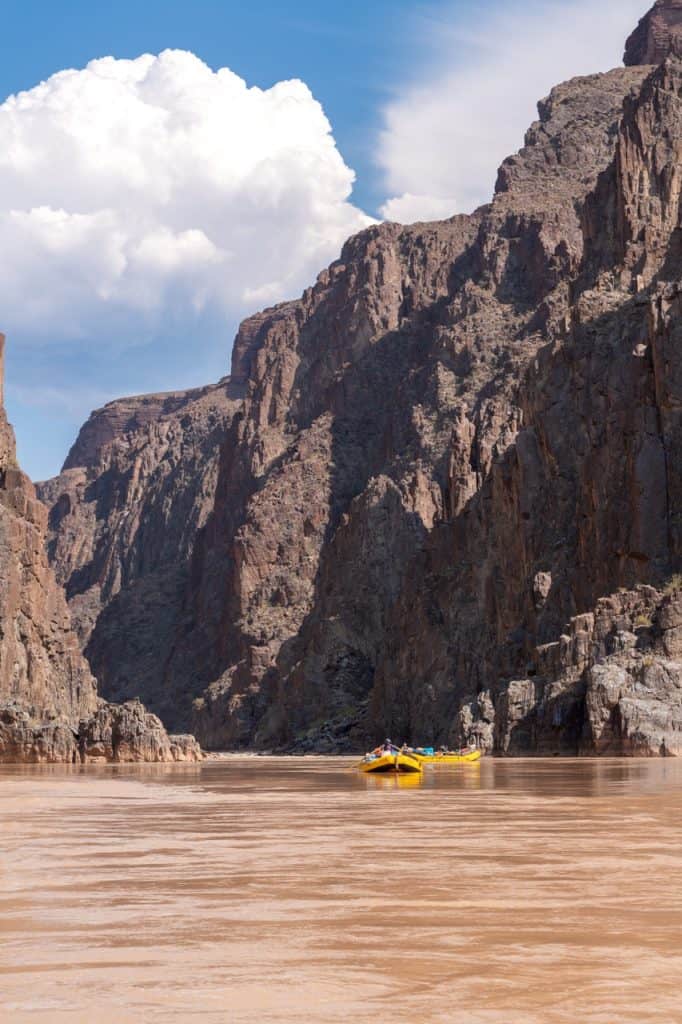
The river water levels are pretty consistent throughout the year because it’s all based on water releases from the Glen Canyon Dam, upstream of Lees Ferry.
During my trip, our guides told us the water was low compared to what they’d experienced in other years. I noticed how hard they had to work to row through some of the flatter sections, and they explained that the lower water made navigating certain rapids trickier.
Some of the most interesting conversations we had on the river were about how much the canyon has changed during our guides’ decades of running it. They talked about drought, water use, and the future of the Colorado River – a river that supports communities across seven states, Tribal Nations, and Mexico.
I’m not going to get too deep into the water issues here, but hearing about them while floating through the canyon gave me a lot to think about. If you want to learn more about the river’s history before your trip, I highly recommend reading The Emerald Mile, too!
Would I Choose August Again?
Based on the conditions we experienced, I would choose August again. I’m not sure I would say the same thing if we had lots of stormy weather.
I really enjoyed the more “summery” aspect of this trip, like being happy in my swimsuit all day, not worrying about getting cold or too much wind, and feeling like I was on vacation more than a “trip”.
I also hate getting wet and swimming if it’s below like 75°F, so I loved just being able to swim in the river as much as I wanted.
All that being said, now that I’ve experienced August, I think I’d like my next trip to be in the spring so I can see the canyon with potentially more clear, blue water, and see wildflowers blooming.
I asked each of my guides (all with years of experience rafting the river in all conditions) what their favorite months were and I got the answers of April, April, September, and October. So do with that what you will.
What It Was Like Going on a Guided River Trip Solo
I do quite a bit of traveling solo, so I wasn’t too nervous about joining a group trip without knowing anyone, but it does always bring up a little social anxiety. Am I going to be the annoying one? Will everyone else be cool and like doing things? I have to introduce myself multiple times – UGH.
But it was great. And I wasn’t the only solo traveler on our trip. It was me, him, and then a family of 4 with 2 teen daughters, and a mom and teen son duo – so honestly I was in my element as a chronically online young millennial woman.
We had a small group, but the group hiking in after us was larger. So we had 4 dory boats between the 8 of us passengers – which meant it was 2 per boat + 1 guide for our rafting days. Which was pretty luxurious – 1 sat in front, 1 in the back, which was nice to have so much space!
We also mixed it up with who we rode with – passenger and guide-wise so we all got to spend time with each other vs. being sequestered to the same people each day, which I loved. I also got my own tent and it was nice to have solo space at the end of the day.
Obviously, group dynamics can vary greatly, but I loved our group and didn’t feel limited or intimidated by being a solo woman traveler. We all got dinner together at El Tovar on our final night, and tears may or may not have been shed when we said goodbye. I always feel like I luck out with groups and just get to meet the best people, and I’m so happy that was the case here.
Is a Partial Colorado River Dory Trip Worth It?
Yes. Wholeheartedly, yes.
Would I go back for a full river trip? Absolutely. But wanting to see more of the canyon doesn’t mean the upper section wasn’t worth doing.
I loved watching the rock layers change as we traveled downstream, hearing our guides explain what we were seeing, and getting out of the boats to explore side canyons. I appreciated the flat water between rapids. It made the rapids even more thrilling and exciting when we got to them.
I know that a full river trip isn’t feasible for many people for many reasons. So I do have to say, I think getting to experience any part of the Colorado River in the Grand Canyon is worth it, and I think a dory boat gives you that intimacy with the river that makes a partial river trip feel worth it.
Who I Think Would Love This Trip
This trip could be a great fit for you if you:
- Want a weeklong river adventure rather than a full-canyon dory expedition.
- Prefer floating between rapids without the sound of a motor.
- Enjoy taking in the scenery and chatting while a guide handles the rowing.
- Like the idea of a small boat with a bouncy, up-and-down ride through rapids.
- Look forward to side hikes and beach camping as much as the boating.
What to Consider Before Booking
A few things I’d weigh when choosing your trip:
- Vacation time: Count travel days and the pre-trip meeting, not just the seven-day itinerary.
- Pace versus mileage: Consider whether you’d rather explore one section slowly or cover more river during your vacation.
- Budget: Consider the trip price, travel expenses, guide gratuities, and potentially buying a new toy, like an action camera, to document your trip.
- Hike preparation: Are you physically fit enough and will you train for hiking in or out of the canyon (hiking down to the river can be just as hard on the body).
Ready to See the Grand Canyon From the River?
Back in 2016, I stood on the South Rim wondering what it would be like down on the river. Now that I’ve spent a week there, I’d happily go back – and stay longer.
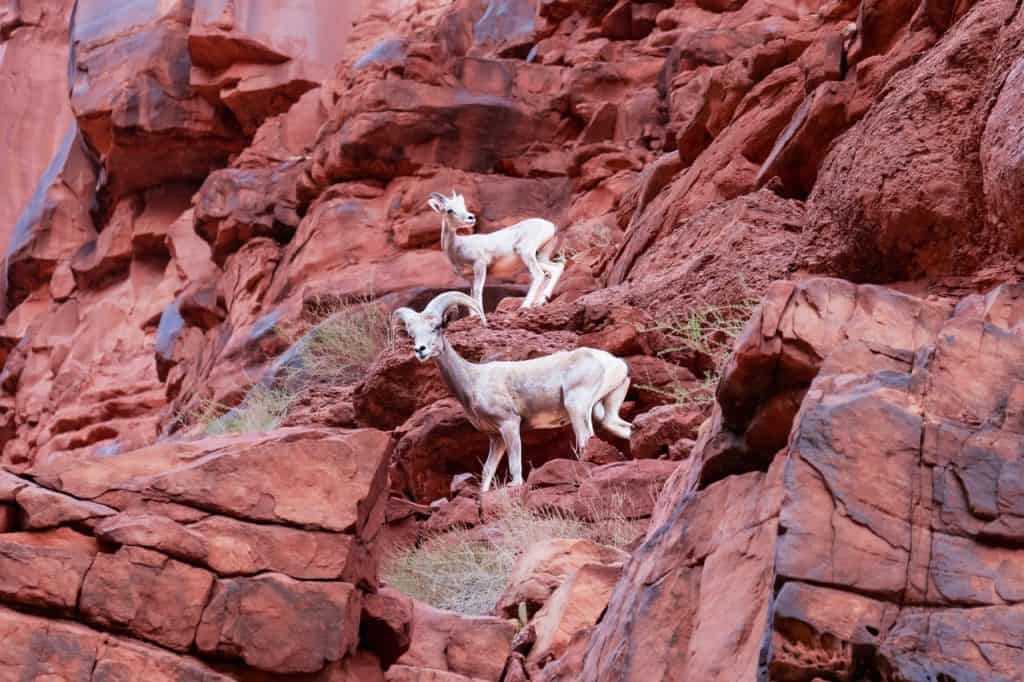
Yes, the rapids were a blast. But I reveled in the quieter parts and hiking too. Floating between canyon walls while our guides explained the rock layers, seeing bighorn sheep navigate the canyon walls, exploring side canyons I wouldn’t have known to look for, and hearing the “COFFEE!” call across camp each morning were all huge highlights of the trip.
Getting to spend a whole week in that rhythm was what made this trip so special. And our OARS guides were a huge part of it, sharing their favorite places and helping me understand so much of what I was seeing.
For anyone who’s looked into the Grand Canyon and wondered what’s happening all the way down there, I believe a river trip is the way to go. It’s life-changing, and I mean it.
Explore OARS’ Grand Canyon Dories: Lees Ferry to Pipe Creek to see the trip I took, or browse their other Grand Canyon trips to find the river experience that sounds best to you.

